Asher Pollock
A Contribution of Care
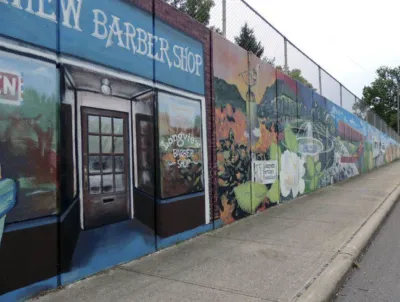
My personal background is as an artist. I had artists in my family and a very supportive upbringing toward the arts. I am a graduate of Columbus City Schools, and in my senior year I received the Jack G. Gibbs Award of Excellence for my work in the art portfolio career center, which included painting the Longview Barbershop featured on the Clintonville Historical Society mural on North Broadway in 2013.
My return to Columbus City Schools as a teacher was a decision made with the need to focus on community and justice in mind. As an educator, I’ve come to better understand what I can and cannot change as a teacher, and focusing on what I can do to make improvements has led to some exciting work, which I would like to put forward as arts-based research. My research is about questioning conventional limits and exploring the possibilities of revolutionary pedagogy.
I received my BFA in painting and drawing from Ohio University in 2017, and I earned my MA in the philosophy of art, aesthetics, and cultural institutions at the University of Liverpool in 2018, during a year spent abroad in Europe, where I first dipped my toes into teaching through yoga. From yoga, I learned the importance of listening to oneself, sensing within the body, and quieting the mind. Mindfulness can provide a profound power in realizing what is in need of attention, strengthening, relaxation, or stimulation. I found a quiet and calming voice; teaching was a form of sharing and exchanging knowledge with my classmates.
I lived an exciting life in Liverpool, and then I came home to Columbus to find myself hard-pressed to find a decent job in my field.
I had made all of these discoveries with an open mind that had been cultivated and nurtured throughout my education, a mostly public education. When I started trying to get jobs in Columbus in my chosen field, as an artist or art institution professional, I was asked if I had classroom teaching experience. I had to admit I didn’t, and from there I began taking steps toward teaching in order to support myself doing a respectable and available job using my skills as an artist.
Ultimately, this led to me going back to school during the COVID-19 pandemic, earning my M.Ed. in visual arts education with full teaching licensure from Ohio University in 2021. Student-teaching during COVID could be its own reflective essay; suffice to say, I did learn how education, especially public education, is constantly changing.
In the course of my M.Ed. study, I learned that teaching is one of the most embattled professions in our country, and, on a relevant sidenote, that dealing with anti-LGBTQ prejudice on a daily basis makes it very difficult, emotionally, to sustain one’s peace of mind as a gay teacher. I learned this in theory in 2020–2021, and in practice ever since, as I am now in my fourth year of teaching. So, my journey has been full of tremendous moments of joy where I feel like I am making an impact on my students’ lives and artistic journeys, but I have also had my share of deeply painful experiences, disheartening realizations, and exposure to students who don’t get the kind of academic, cultural, or emotional support I got as a child growing up.
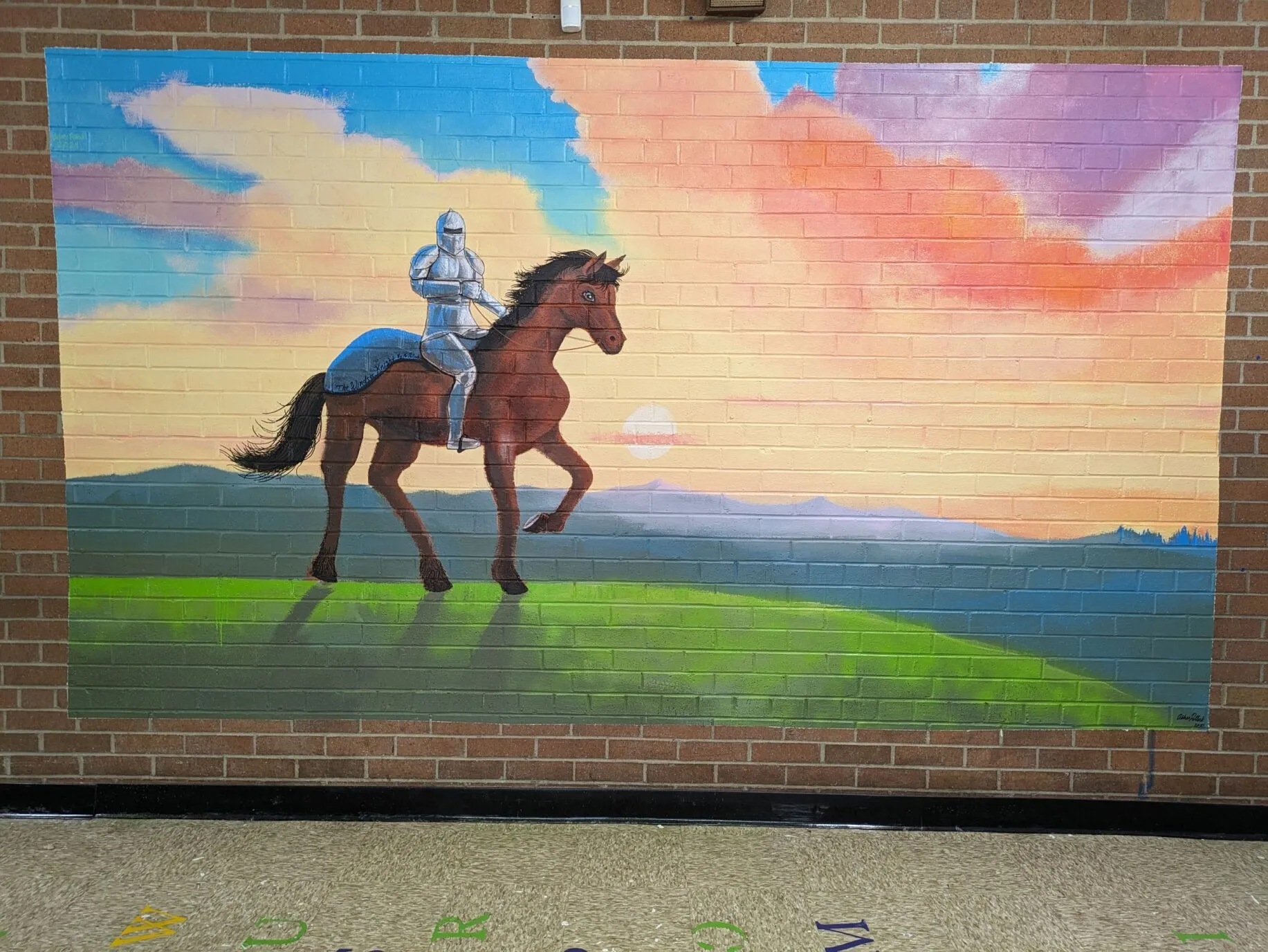
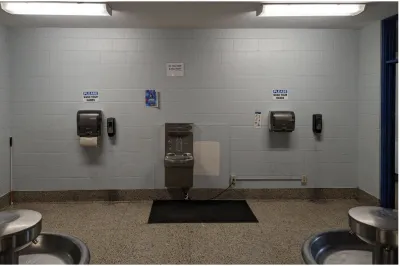
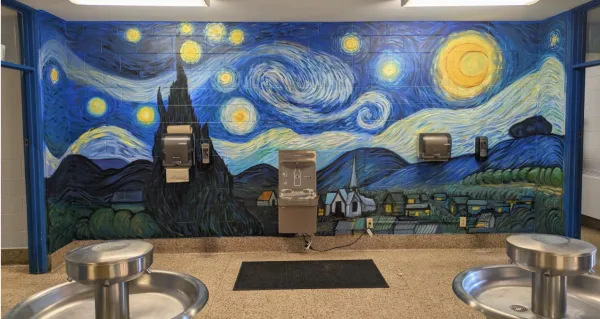
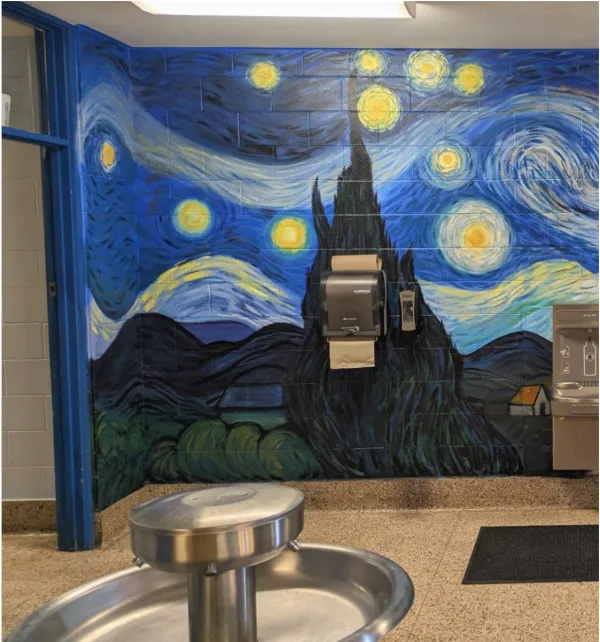
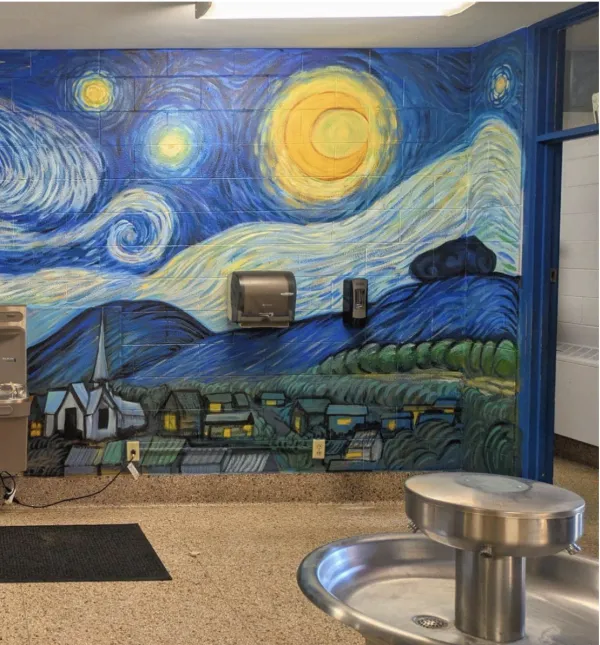
As an elementary art teacher at Windsor STEM Academy, located in central Linden, I aim to empower my students; I do this by teaching my students artistic behaviors (studio habits of artists, such as envisioning, observation, developing craft, and engaging and persisting) and by engaging and persisting in my own artistic practice outside of school. This is one of the foundations of my teaching philosophy: I must be an artist myself to teach my students how to be an artist. Put into practice, this philosophy can sometimes allow my professional work to transcend the classroom. The blank, brick and cinder block walls of our school—specifically in the bathrooms and hallways—have, over the past year, become the site for a creative vision: beautifully painted communal spaces that foster positive behaviors, spark imagination, and nurture a sense of belonging.
These mural projects came about as acts of care and cultural investment—my personal way of nurturing justice through the power of public art in an underserved community. Creating murals that will ultimately outlast my time at the school also has been a reflective exercise that has helped me understand my place as a community member with a specific gift to give the community. These murals have been completed during the course of my professional responsibilities during school hours, or sponsored by the Columbus Rotary Club and completed over the 2024 summer break.
Creating murals in a school bathroom or hallway isn’t just about making a place look nicer. It’s about building a space that says, “You matter here,” to students who may not always feel seen. The transformation of blank walls into works of art is a form of care—an emotional investment in a place where students spend a great deal of time. It says, “Your space deserves to be beautiful, and you deserve to feel good here.”
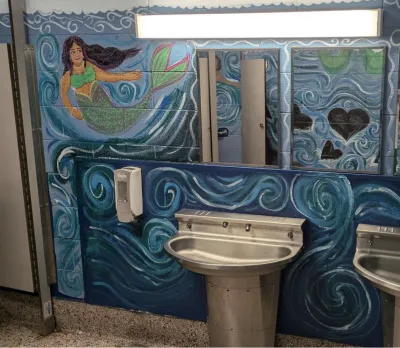
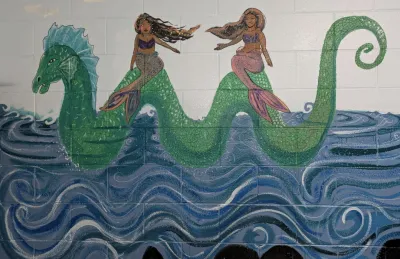
The murals feature mermaids, dragons and thunderstorms, Pegasus with rainbow tails, sunsets and stars—imagery that invites students to dream, to see themselves as powerful creators and adventurers.
This visual language serves as a cultural bridge, speaking directly to the diverse and imaginative minds of the students. It is my hope that these images offer not only a reflection of their worlds but an invitation to reimagine them. At Windsor, where so many face financial hardships, the power of imagination is an essential part of survival and growth.
The act of creating these murals is a statement about justice—about what is owed to these students and their families. It is about challenging the inequity that exists in schools, where underfunded institutions are often left to operate in environments that are uninspiring and utilitarian. By transforming these spaces, I am advocating for a broader vision of justice—one where beauty and creativity are accessible to all, regardless of socioeconomic status.
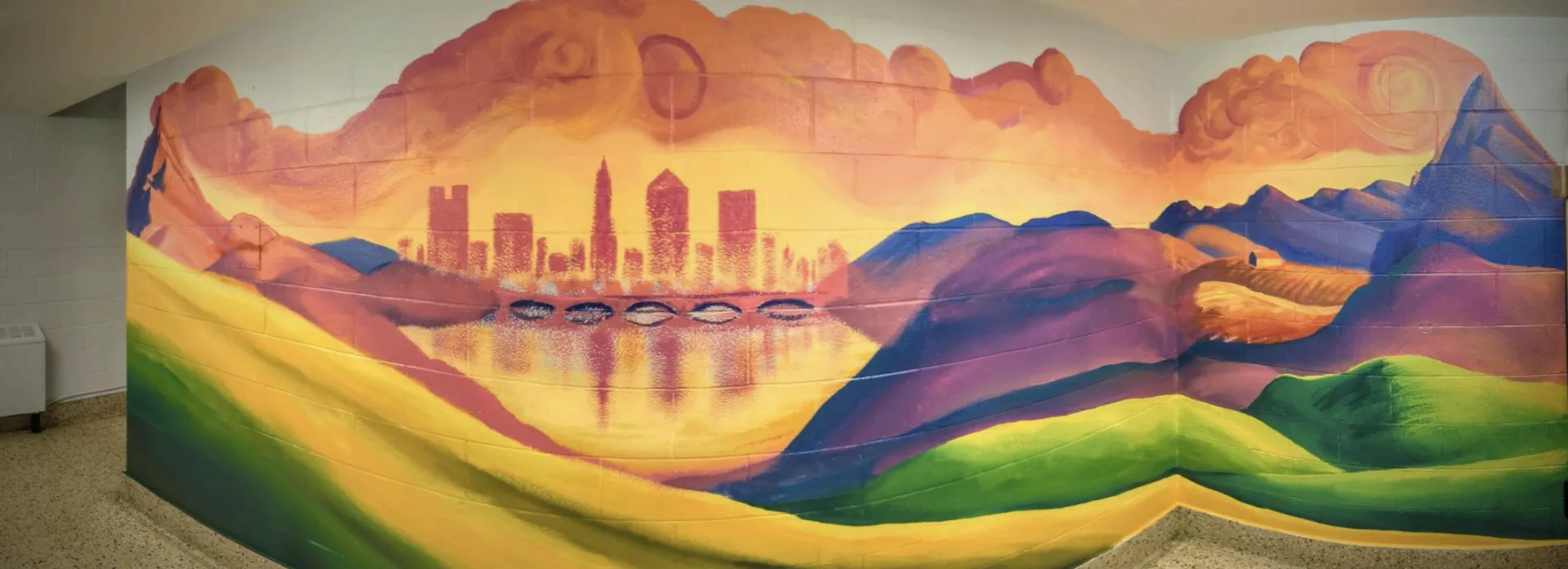
The calming, quiet voice I found teaching yoga is a part of myself I have to first quiet my mind in order to find, which is hard in a highly energetic learning environment.
In doing these art interventions on walls that have been the backdrops to so many fights, so much yelling, and even just the energetic nature of childhood, I have tried to bring focal points, alternative points of view, aesthetic perspectives of calm and quiet.
These murals, while only a tangential part of my work as an elementary school teacher, are a symbol of my commitment to empower the school community through creative leadership and lasting aesthetic improvements. They represent an ongoing journey of care, of honoring the culture of our students, and of striving for justice by integrating myself into the community as much as I can in the short amount of time I’ve been a teacher there. As I continue to create art in this space, I remain committed to transforming not only the walls but also the relationships and the possibilities for our students. Through these acts of creation, I hope to leave a visible legacy that teaches the next generation the power of art to shape a more just and caring world.
Asher Pollock is a contemporary artist and educator working in Columbus City Schools and attending The OSU Arts Administration, Education and Policy doctoral program. Pollock’s arts-based teacher action research has been informed by educational psychology, using creative exploration to design opportunities for greater student engagement as a way of empowering future artists.