Ayat Ibrahim
Forty Days of Remembrance: An Aesthetic Exploration of Muharram
Forty Days of Remembrance is a project that explores the cultural and spiritual significance of Muharram within Arab Muslim communities. Through large-scale paintings, ceramic works, and research, the project delves into the mourning rituals observed during this sacred period and examines their role in fostering cultural continuity and resilience. By investigating these communal practices, the work reveals how Muharram rituals serve as acts of care, cultural preservation, and social justice—especially within diaspora contexts.
As an Iraqi Muslim painter and ceramicist, my work bridges personal narrative and community storytelling, challenging stereotypes and fostering inclusivity in the art world. Born in Baghdad, Iraq, and now based in Columbus, Ohio, I draw on the rich traditions of Arab and Muslim cultures to amplify underrepresented voices and explore themes of displacement, memory, and hope.
This project honors Muharram as a time for collective remembrance and transformation. Muharram, the first month of the Islamic calendar, is one of the holiest months for Muslims. It is a period of reflection, mourning, and spiritual renewal. For Shia Muslims in particular, Muharram holds profound meaning as it commemorates the Battle of Karbala in 680 CE, when Imam Hussein—the grandson of the Prophet Muhammad—and his companions were martyred in their stand against tyranny and injustice.
The tenth day of Muharram, known as Ashura, marks the day of Imam Hussein’s martyrdom. Communities observe this day through rituals such as prayers, storytelling, and processions, gathering to honor his sacrifice and the values of justice, courage, and compassion that he represents. For many, Muharram is not just about grief but also about drawing lessons from history to inspire resilience, unity, and a commitment to justice in the present.
Through rituals like Ziyarat (pilgrimage) and the communal preparation of food, I reflect on how acts of care and remembrance empower communities facing historical erasure and displacement. These intersections of care, culture, and justice are central to creating spaces where Arab Muslim voices are heard, fostering cultural pride and resilience.
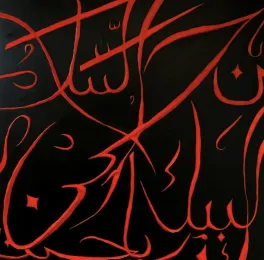
Forty Days of Remembrance consists of a body of work that investigates the impact of Muharram rituals on communal grieving, mourning, and healing. This includes two large-scale paintings—Labaik and Shrouds of Love—a collection of one hundred terracotta clay dates titled Tamur, and a series of slip-covered date stems titled Ashes to Mounds. Each piece draws from Muharram rituals such as candlelight vigils, food preparation, and communal gatherings to explore the collective emotions of grief, remembrance, and healing. These works are informed by archival research, oral histories, and my personal experiences as an artist engaging with Iraqi and diaspora communities.
Labaik is an oil calligraphy painting on a 3.5’ x 3.5’ wooden panel. Using a wax-oil medium, I sculpted phrases frequently used during Muharram rituals into three-dimensional forms. These phrases, often chanted in unison during gatherings, express collective grief and provide cathartic release.
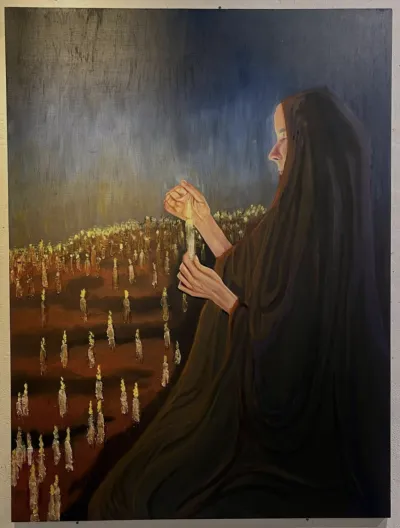
Shrouds of Love is a 4’ x 3’ oil painting depicting my sister seated in a traditional Iraqi abaya amidst a sea of candles. With her eyes closed, she holds a lit candle, embodying the community’s shared grief. Her act of lighting candles becomes a gesture of remembrance, love, and devotion, illuminating the space in honor of those who have passed.
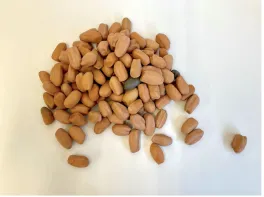
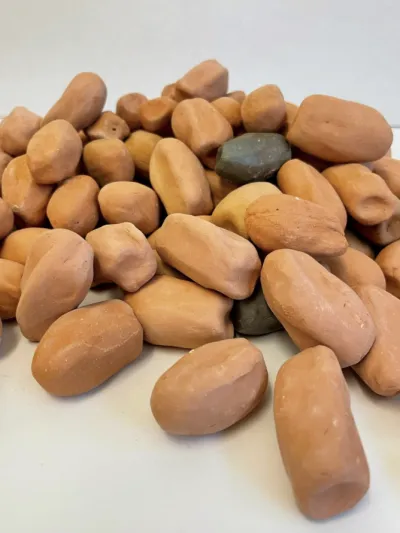
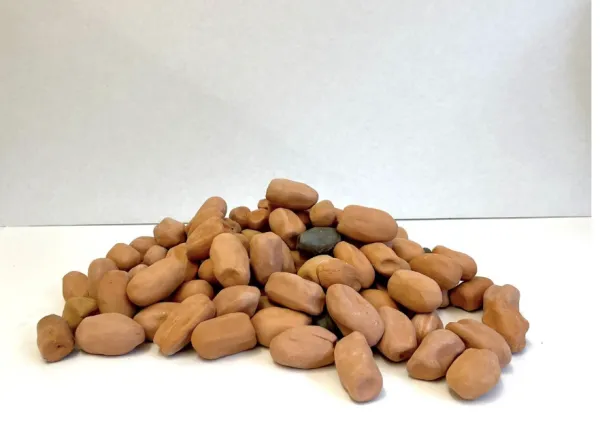
Tamur, a collection of one hundred terracotta clay dates, reflects on the cultural significance of dates as a food in Arab culture and the communal act of sharing them. Inspired by Michael Rakowitz’s A House with a Date Palm Will Never Starve, this piece mourns the loss of lives and traditions. As I molded each date, I reflected on those who will never have the chance to share one again, burying each piece in remembrance.
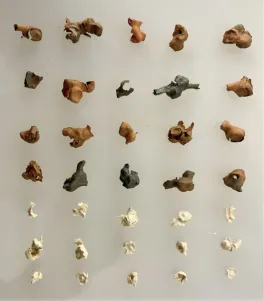
Ashes to Mounds explores the transformation of materials through fire. By covering date stems in clay slip and firing them, the stems burned away, leaving fragile, fossil-like remnants. These “archeological findings” symbolize the resilience and fragility of memory. I reflect on the devastation of Iraq’s date palms—reduced from forty million in the 1970s to only four million after the U.S. invasion in the early 2000s—and draw parallels to the loss of lives and cultural heritage.
Muharram rituals emphasize communal care through acts such as food distribution, remembrance gatherings, and creating safe spaces for mourning. This project highlights how these acts foster collective healing and solidarity. By representing rituals that have endured for centuries, Forty Days of Remembrance showcases the resilience of Arab Muslim cultural practices, particularly in the diaspora, where they serve as anchors for identity and belonging.
The project is enriched by personal reflections and stories gathered from local Arab Muslim communities, emphasizing how Muharram rituals provide comfort and a sense of home for those far from their homelands. One anonymous participant from the Iraqi diaspora shared:
“I was born and raised in Baghdad, Iraq, and lived there until 2008. After the U.S. invasion in 2003, things became really dangerous for me and my kids. We fled to Lebanon under a visitor’s visa, staying there for about a year and a half while we applied to the UN for asylum.”
This narrative underscores the sense of loss and displacement that many Iraqis face, illustrating how Muharram traditions serve as anchors for cultural and spiritual grounding. Another participant shared how observing Muharram in the diaspora preserves their connection to heritage: “Muharram plays a pivotal role every year, grounding me in principles that guide my life. It reminds me of the values of bravery, justice, and the importance of standing up for what’s right.”
However, they also described the challenges of observing these rituals outside their homeland:“It’s tough here; it’s lonely, and the atmosphere doesn’t carry the same spirit. In Iraq, visiting the shrine feels like a cleansing experience, almost like purging negativity from your life. Here, it’s different. But when we do gather to pray or share a meal, those moments feel precious.”
These interviews informed my artistic exploration of care, culture, and justice. They also revealed a deep desire to preserve and pass down Iraqi traditions to younger generations: “It’s about living as a symbol of your culture. I try to pass down the tradition to my kids by sharing Muharram stories, having them help distribute food, watching documentaries, and being open to their questions. It’s important for them to feel connected to their heritage, even if we're far from Iraq.”
By connecting personal and communal storytelling, Forty Days of Remembrance fosters a broader understanding of how Muharram rituals transcend borders, embodying resilience, justice, and love in the face of adversity. In today’s political climate, where Arab and Muslim experiences are often oversimplified, this work challenges harmful stereotypes and offers nuanced perspectives.
Ultimately, this project seeks to create a space where Arab Muslim traditions are celebrated, understood, and preserved. It addresses the critical need for representation in the art world, empowering others from marginalized backgrounds to embrace their narratives. By fostering inclusivity and dialogue, Forty Days of Remembrance demonstrates how art can be a powerful tool for community care and cultural continuity.
Ayat Ibrahim is an Iraqi Muslim painter and ceramicist based in Columbus, Ohio. Ibrahim is currently pursuing a Bachelor of Fine Arts in Painting and Drawing with a minor in Business at The Ohio State University. Her work challenges and dissects dominant narratives within the art world, creating space for Arab Muslims to be represented and celebrated.