I Know Why the Blackbird Sings

In her titular autobiographical work, Maya Angelou asserts that “the caged bird sings of freedom.” But what song does the bird on free soil sing? I Know Why the Blackbird Sings revisits Ohio’s complicity in the practice of dispossession, kidnapping, and denial of due process through the locational efforts of Ohio’s free people.
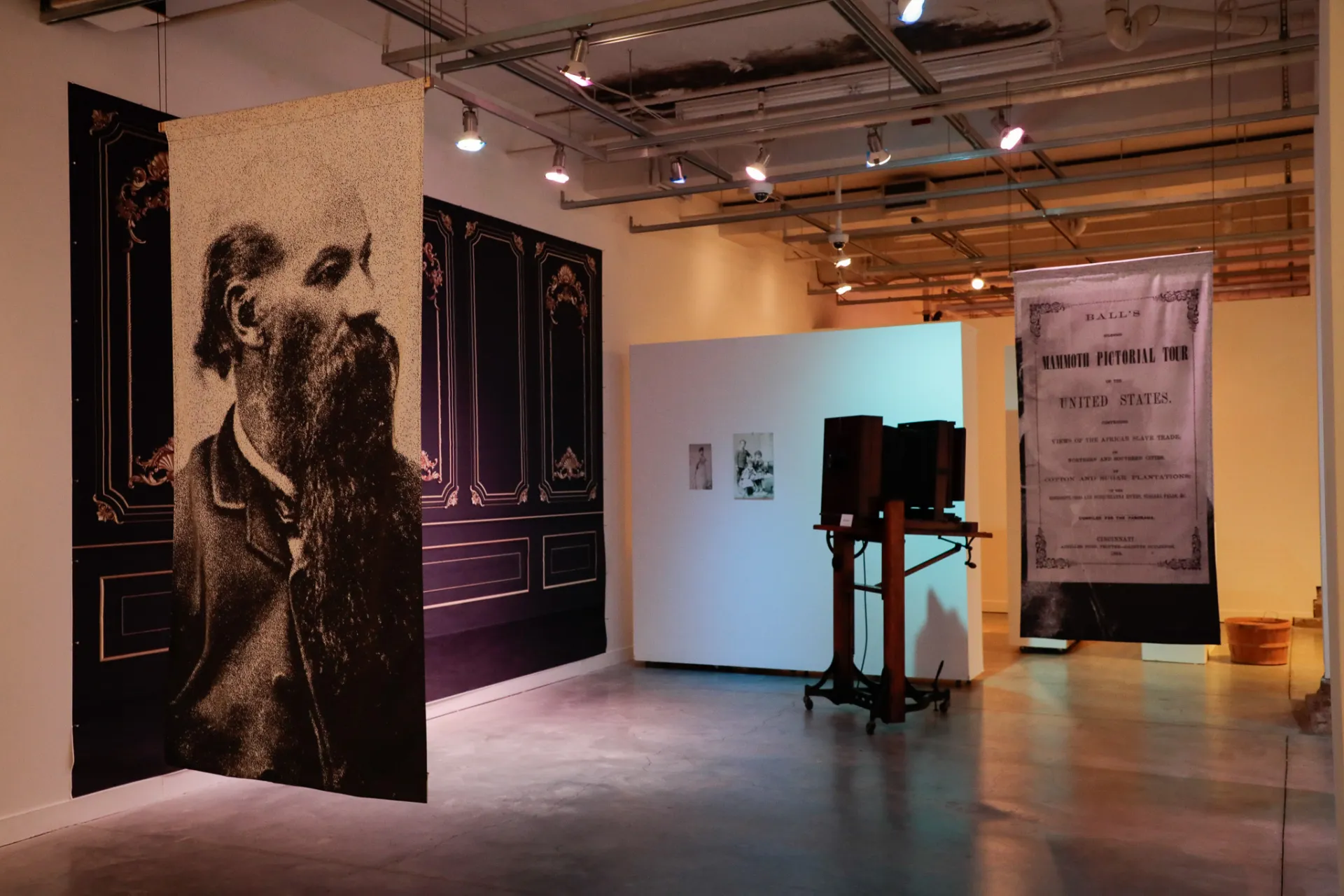
James Presley Ball, Photographer
2025
James Presley Ball, born a free man in Virginia (1825), owned and operated a photography studio in Cincinnati, Ohio. Ball is one of the preeminent photographers of the 19th century, and his Great Daguerrian Gallery of the West was known to intentionally photography Black life and death during a time when images of Black people were predominantly demeaning and stereotypical.
Ball is known to have photographed Frederick Douglas, the most photographed man of the 19th century, along with Ulysses S. Grant's family and other Union officers and abolitionists.
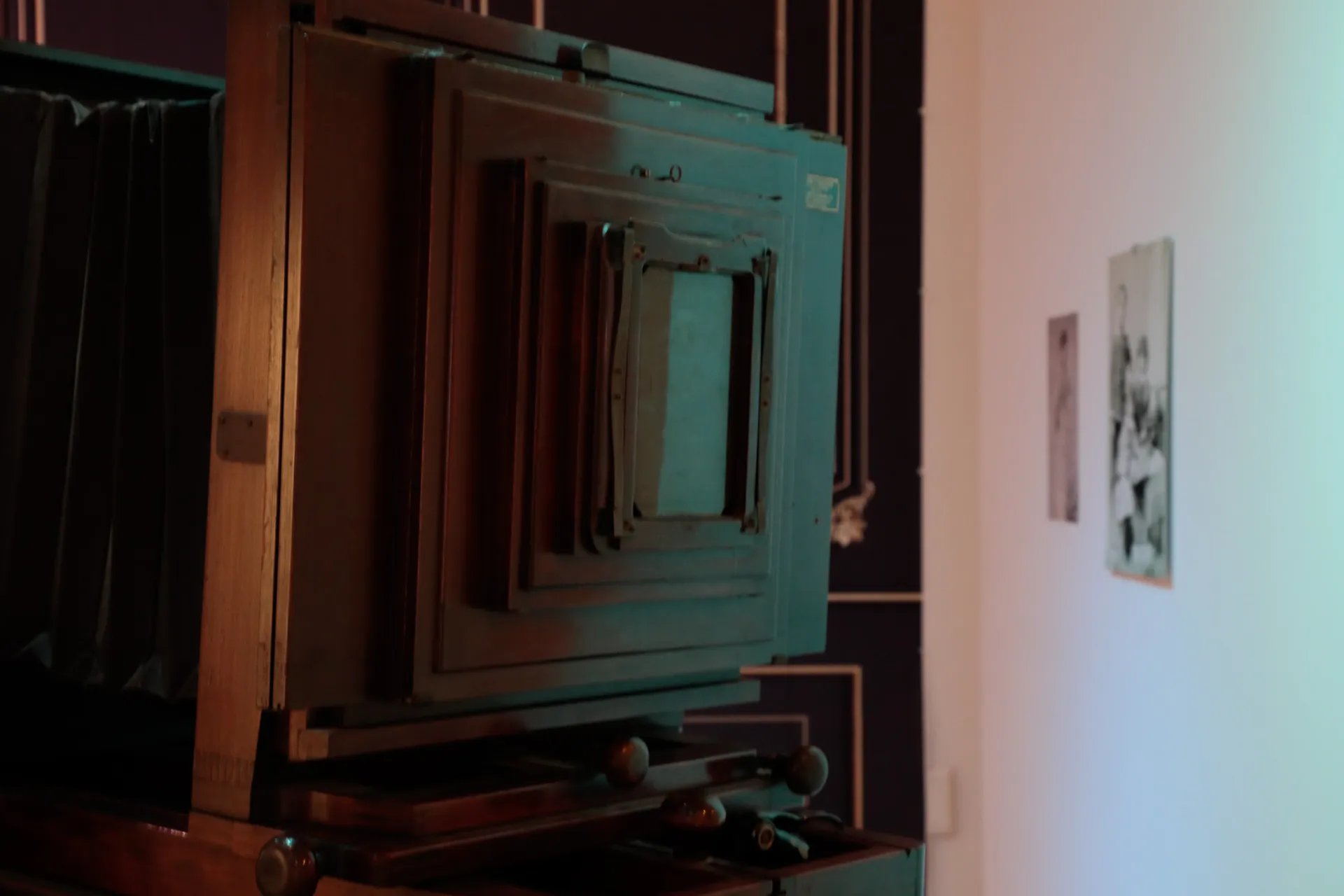
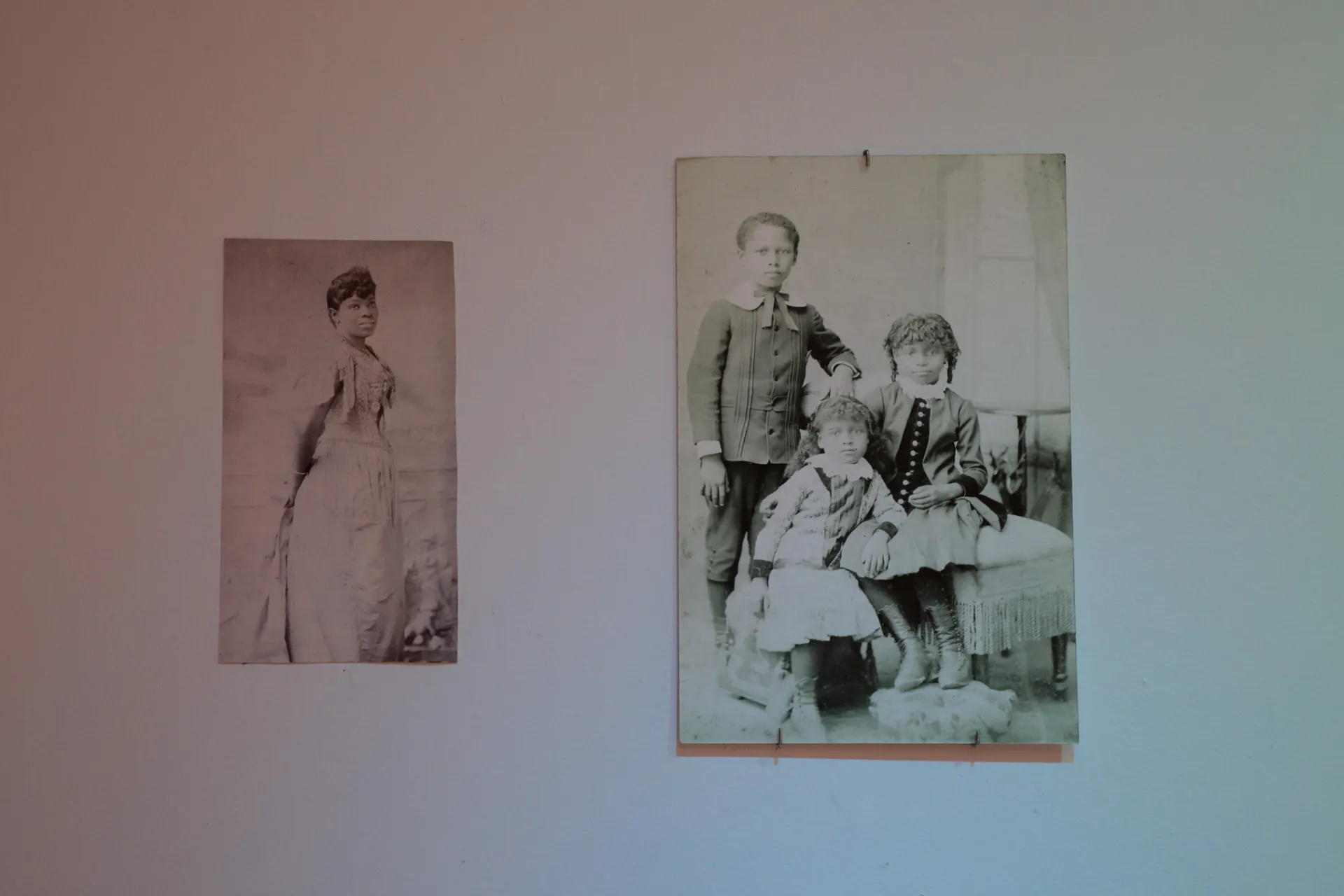
Ball's Splendid Mammoth Pictorial Tour of the United States was a series of docu-photos of slavery throughout the United States.
While those images have not been traced, a written summary of the exhibition is available via digital archives.

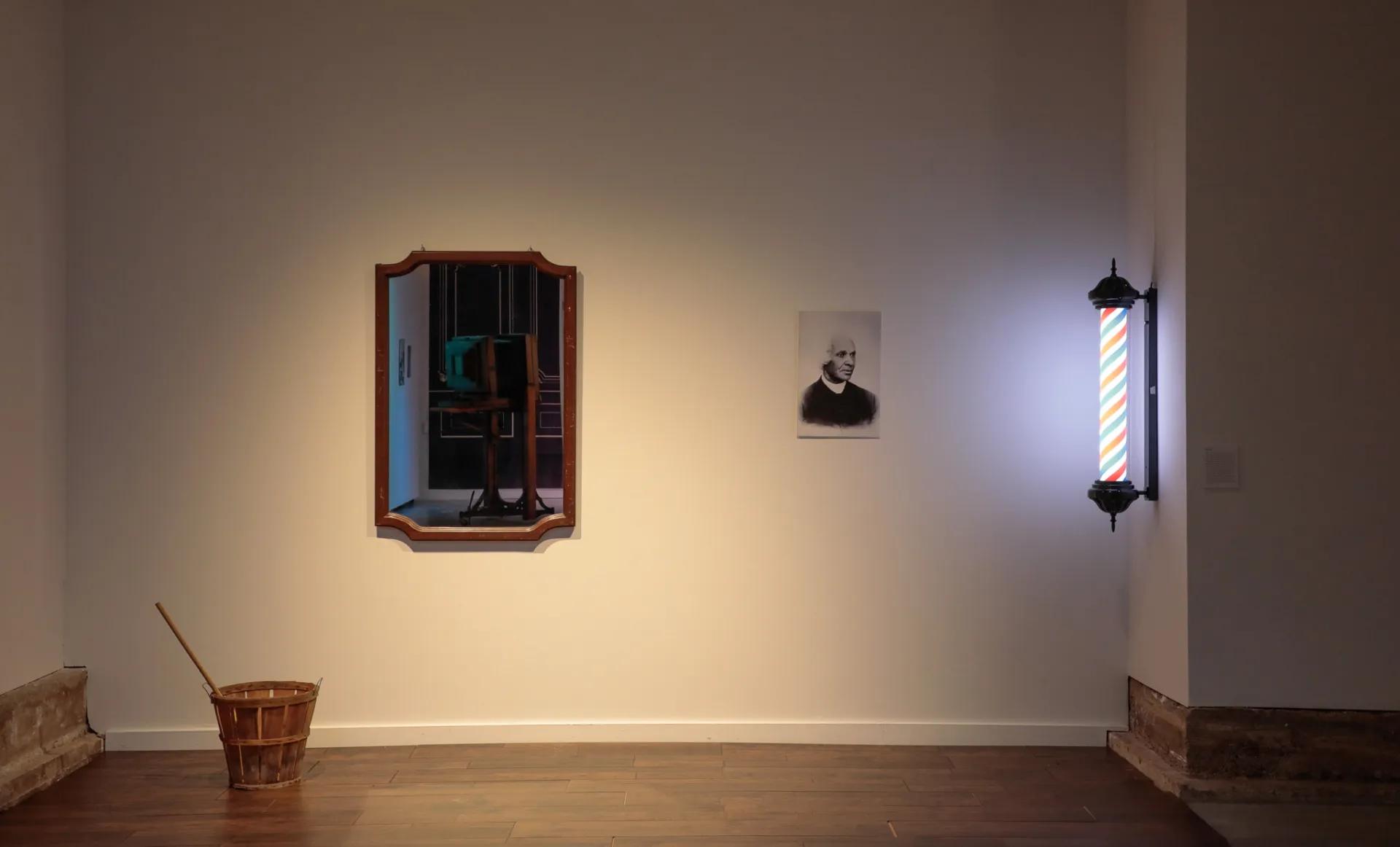
Shop Talk
2025
James Preston Poindexter (born in Richmond, Virginia in 1819) world as an apprentice to a barber before moving to Columbus, Ohio in 1838. While in Ohio, Poindexter owned and operated a barber shop across from the Ohio Statehouse. He would go on to serve as pastor at the Anti-Slavery Baptist Church (later Second Baptist Church) and would become the first Black member to sit on Columbus City Council.
Meetings to establish one of Ohio's first Black newspapers, the Palladium of Liberty, were held at Second Baptist Church in 1843. Several of the paper's agents were also barbers and worked to form a network of tradesmen who lobbied for fair conditions while engaging in abolitionist efforts. Who all came through Poindexter's barber shop for grooming services? What are some things that they discussed?


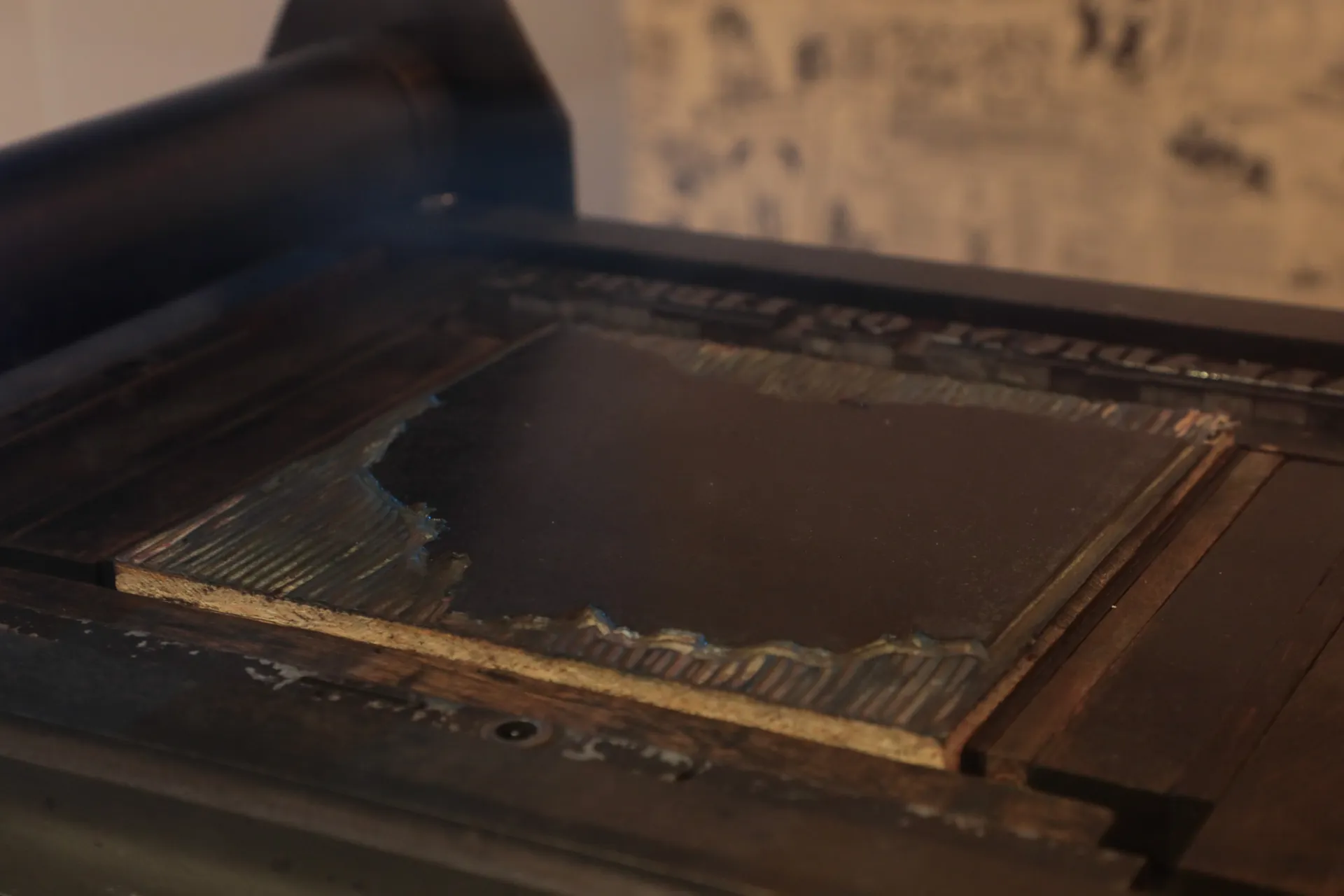
Palladium of Liberty Press
2025
Columbus, Ohio was home to one of Ohio's first Black newspapers. The short-lived paper ran from December 1843 through November 1844 and was connected to the Black Convention Movement, an abolitionist effort that spanned the country.
David Jenkins, the paper's editor, was born and raised in Lynchburg, Virginia before moving with his family to Columbus, Ohio. Jenkins was a commercial painter who advertised apprenticeship opportunities in the Palladium of Liberty.
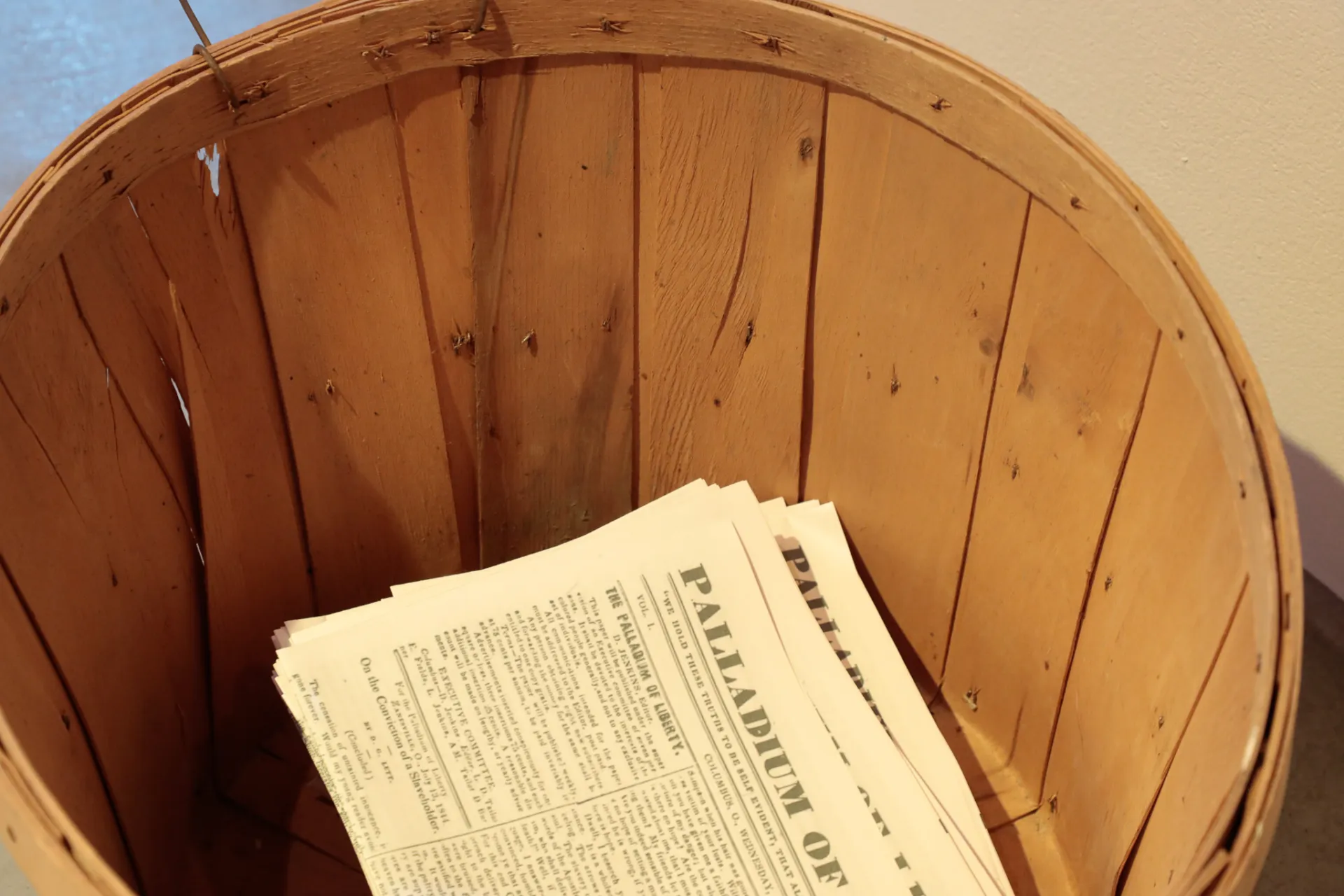
The listed ads also served as a signal that his boarding accommodations were also a safe stop for those seeking freedom along the Underground Railroad network for liberation.
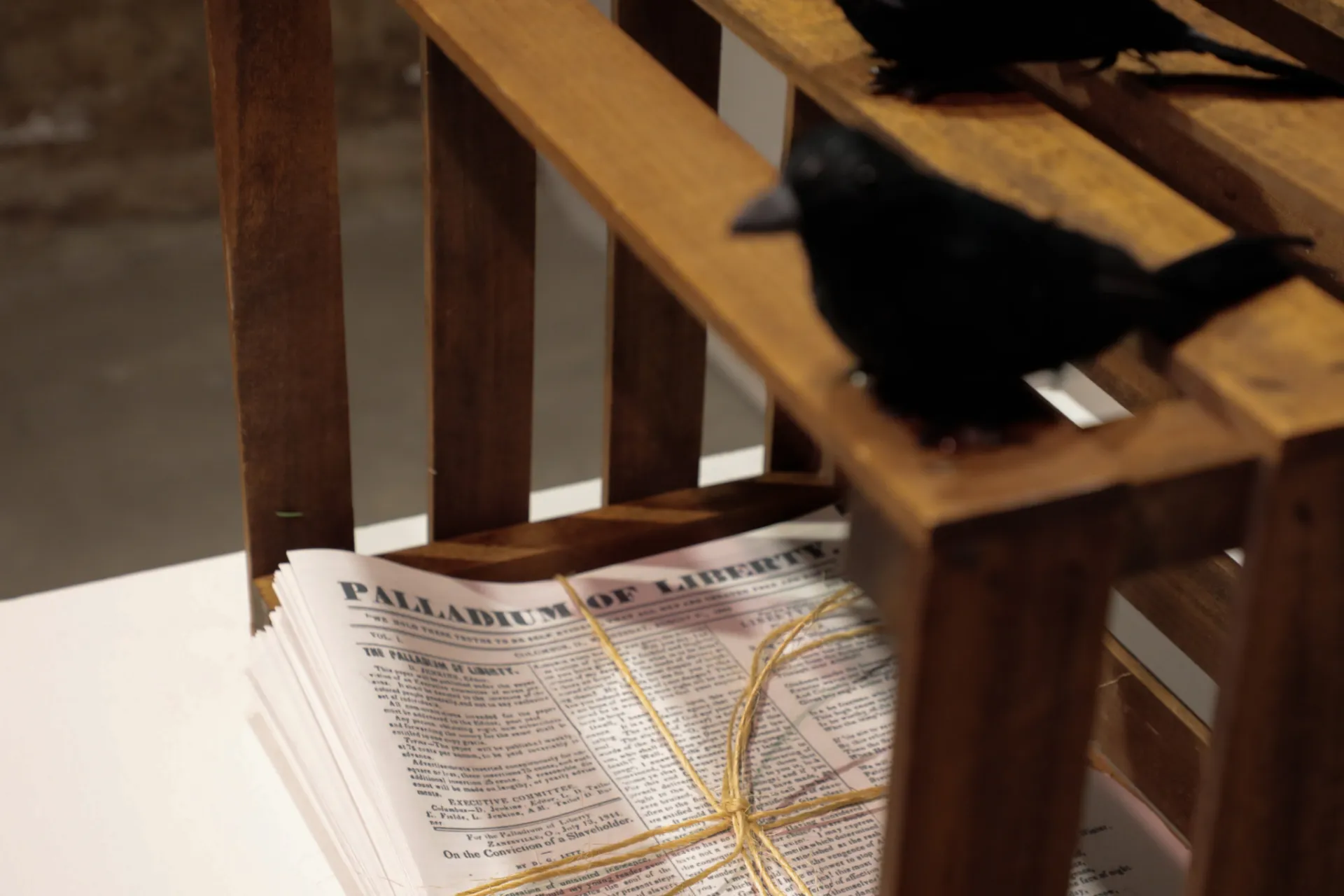
Several copies of the Palladium of Liberty are available throughout the exhibition. What were some of the concerns published in this issue?
Wilbur Henry Siebert's Map
2025
Before publishing the history of the Underground Railroad network throughout Ohio (1898), Ohio State University professor Wilbur Henry Siebert collected stories from agents and their descendants all across the state. In 1894, Siebert traveled to Portsmouth, Ohio in search of Milton Kennedy to interview about abolitionist efforts.
Siebert happened to connect with John J. Minor, a barber and Black Appalachian abolitionist, who informed Siebert of the Black Underground Railroad network to Portsmouth and helped confirm several routes in the southeastern part of the state. Which stops would be missing from Siebert's map if not for the first-hand accounts of men like John J. Minor?
Underground Railroad
2025
Before being named the Underground Railroad, the freedom networks leading enslaved out of pro-slavery territories was known as the Underground Road. The term railroad became popularized as railroad systems of commerce and travel swelled throughout the country.
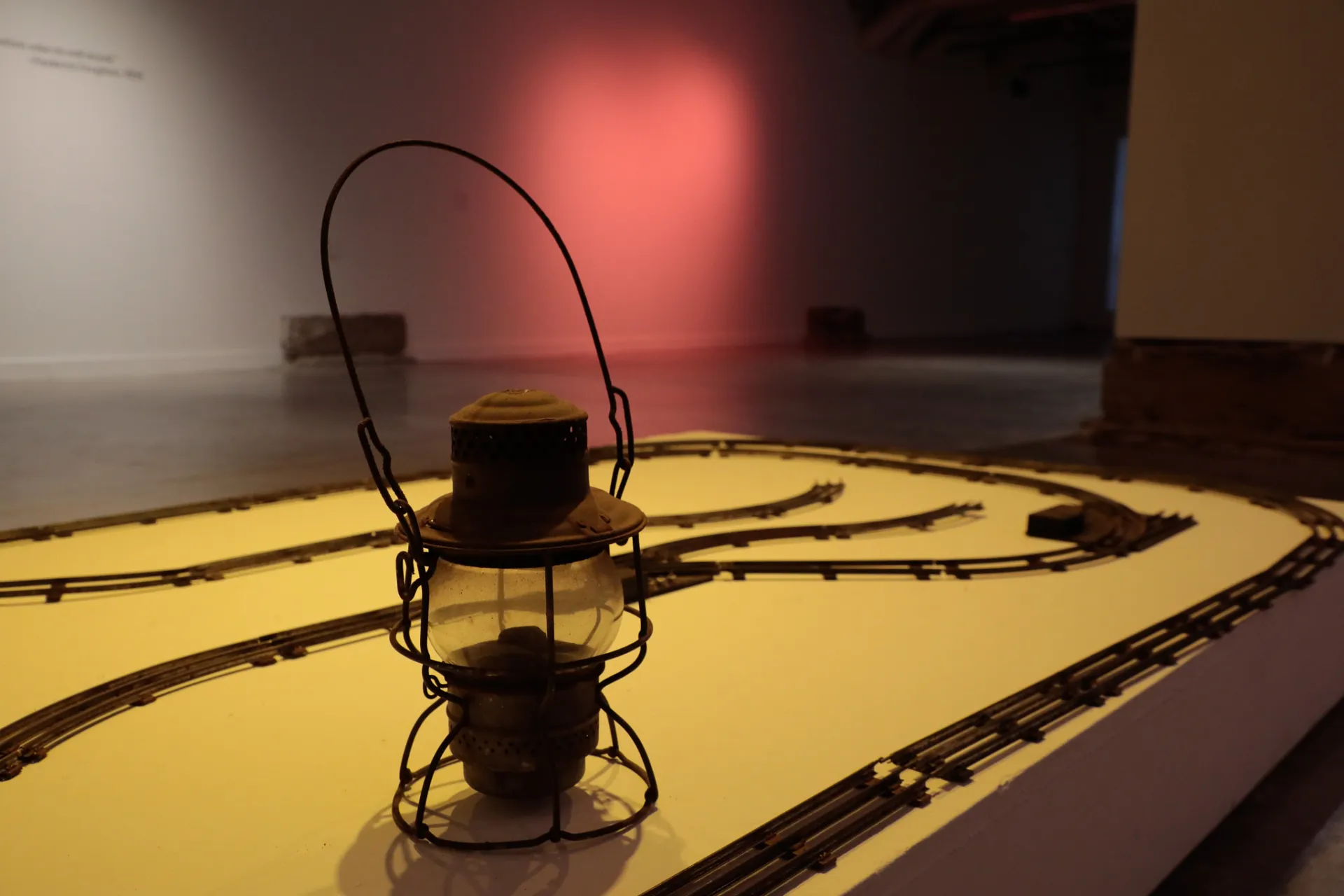
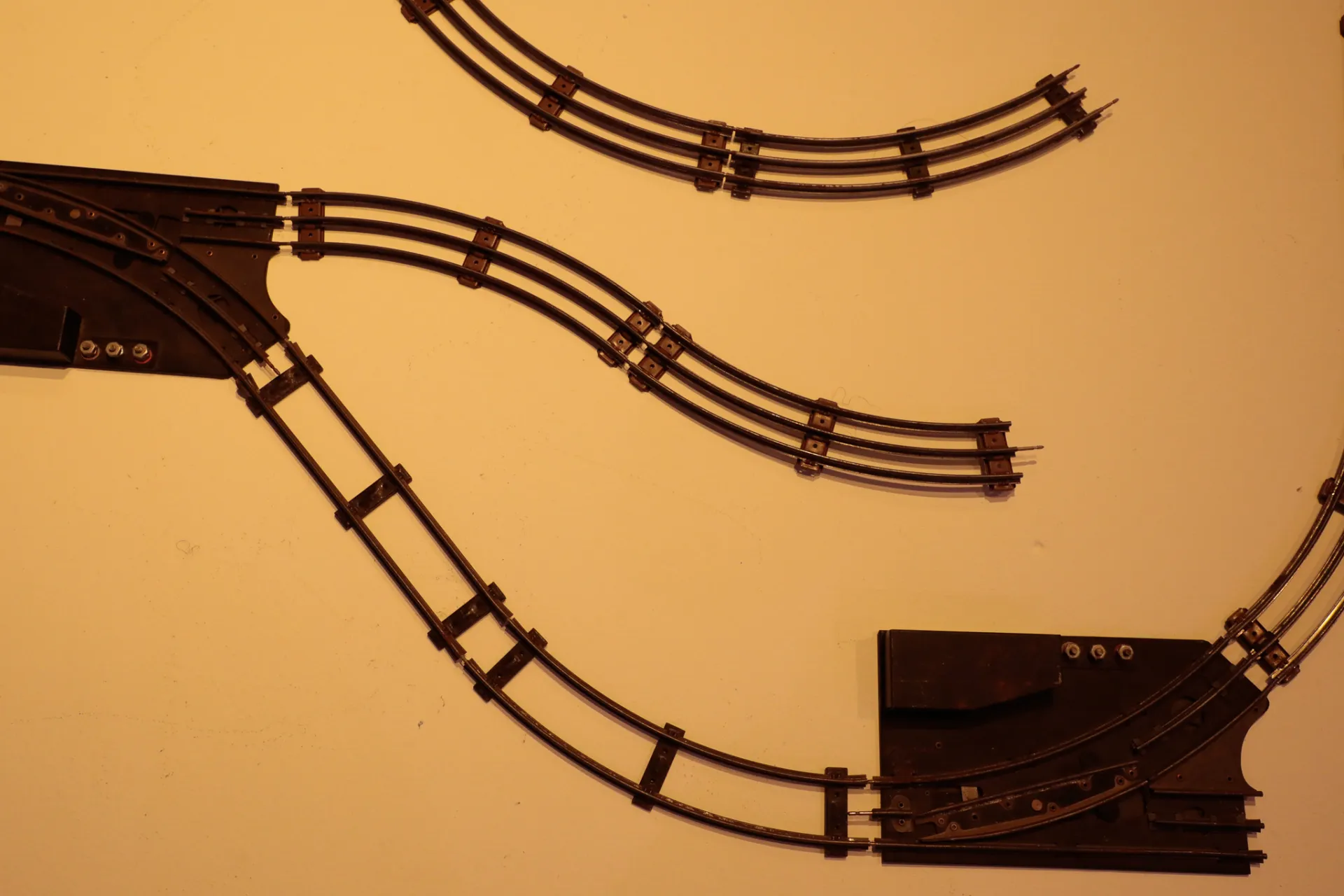
While there is no actual railway system underground, some liberation networks did use trains as a means of achieving freedom. However, major roads, rivers and banks, caves, barns, homes, and even municipal buildings remained frequent means of securing liberation for former bondmen and bondwomen. What railroads remain in your community? What connection do those lines have to abolitionist histories?
Charles Langston's Testimony
2025
An infamous rescue in defiance of the Fugitive Slave Act of 1850 became known as the Oberlin-Wellington Rescue. When an Oberlin man named John Price was lured from town with promises of work and kidnapped to be sent back to Kentucky, the people of Oberlin and Wellington, Ohio jumped to action. John Watson, a Black grocer in Oberlin along with hundreds of other people would crowd the streets outside the Wadsworth Hotel where John Price was being held.
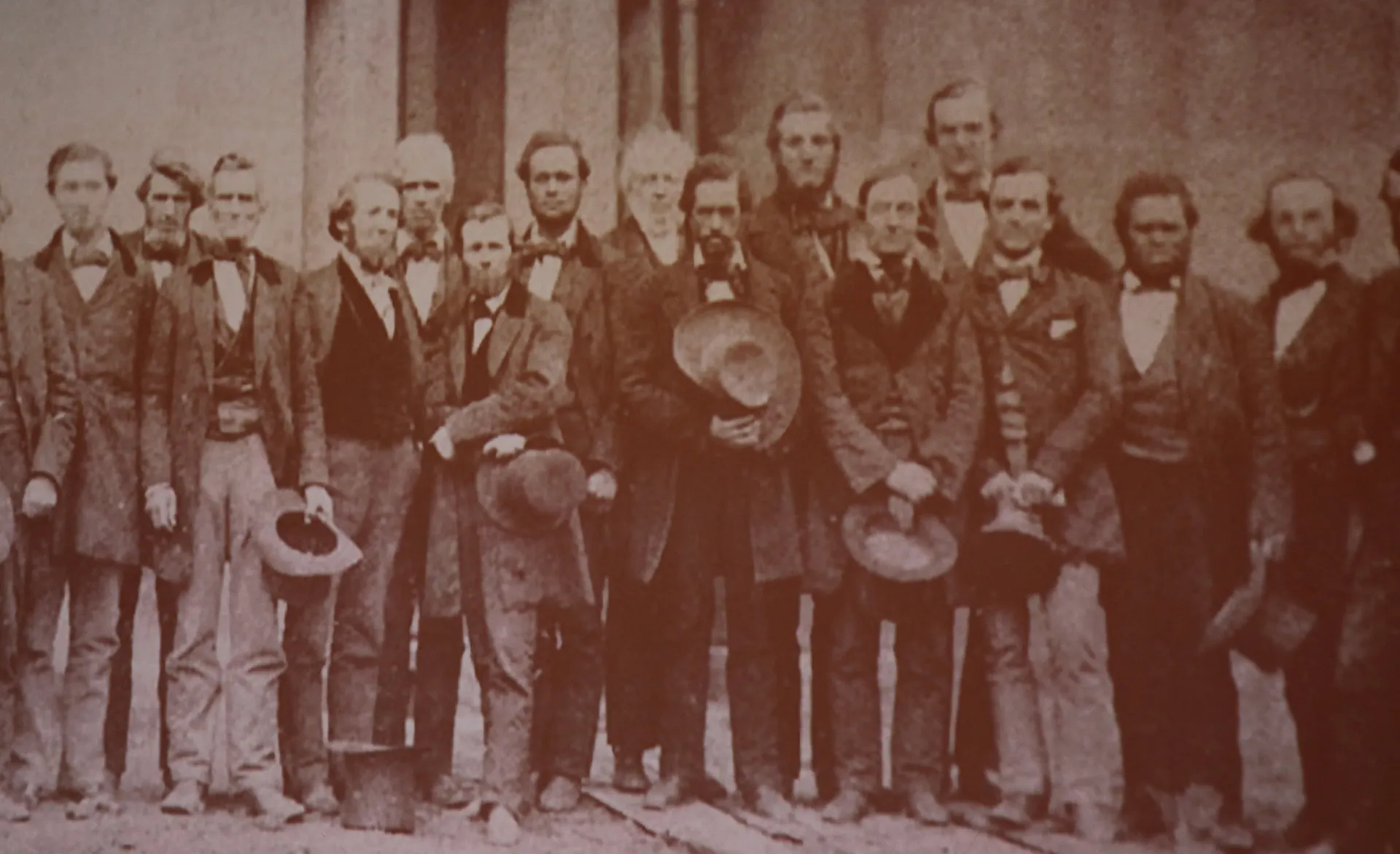
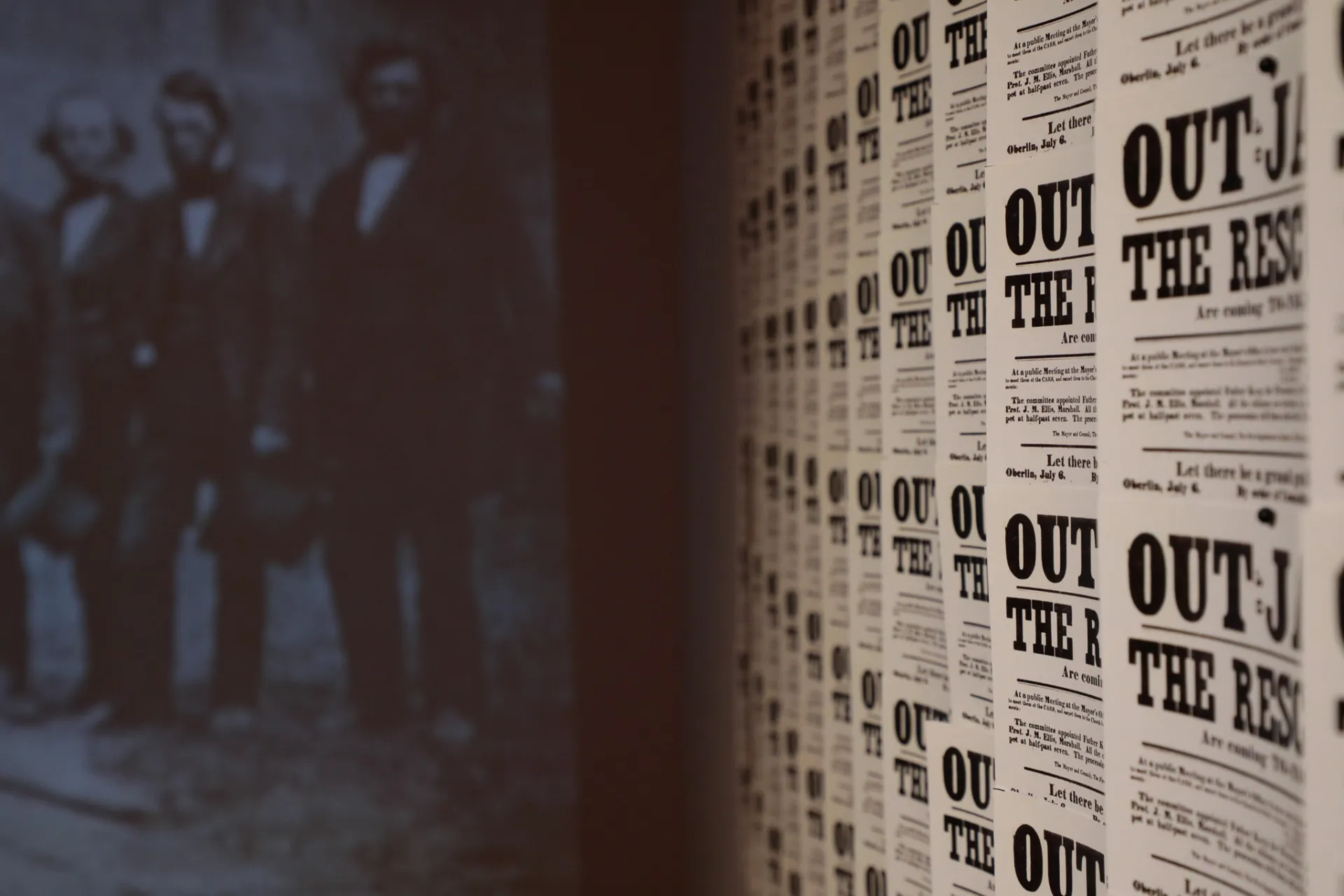
Price was eventually rescued from the hotel and secreted out of town. Of the people involved, 37 men were jailed and sent to stand trial. Two men, including Charles Langston (the maternal grandfather of Langston Hughes) were convicted. Langston was able to give testimony despite Ohio's testimony laws where he justified his efforts and condemned the Fugitive Slave Act. Why would Ohio prohibit Black residents from testifying in court? How much of the history of the Oberlin-Wellington Rescue would be lost if we did not have Charles Langston's testimony?
A Women's Work
2025
In May 1851, Sojourner Truth (formerly Isabella Baumfree) was invited to speak at the Women's Rights Convention in the Old Stone Church in Akron, Ohio. Shortly after delivering her speech, Truth worked with Marius Robinson of The Anti-Slavery Bugle to dictate her speech. Robinson's version went to print in June 1851 (printed on the lectern).
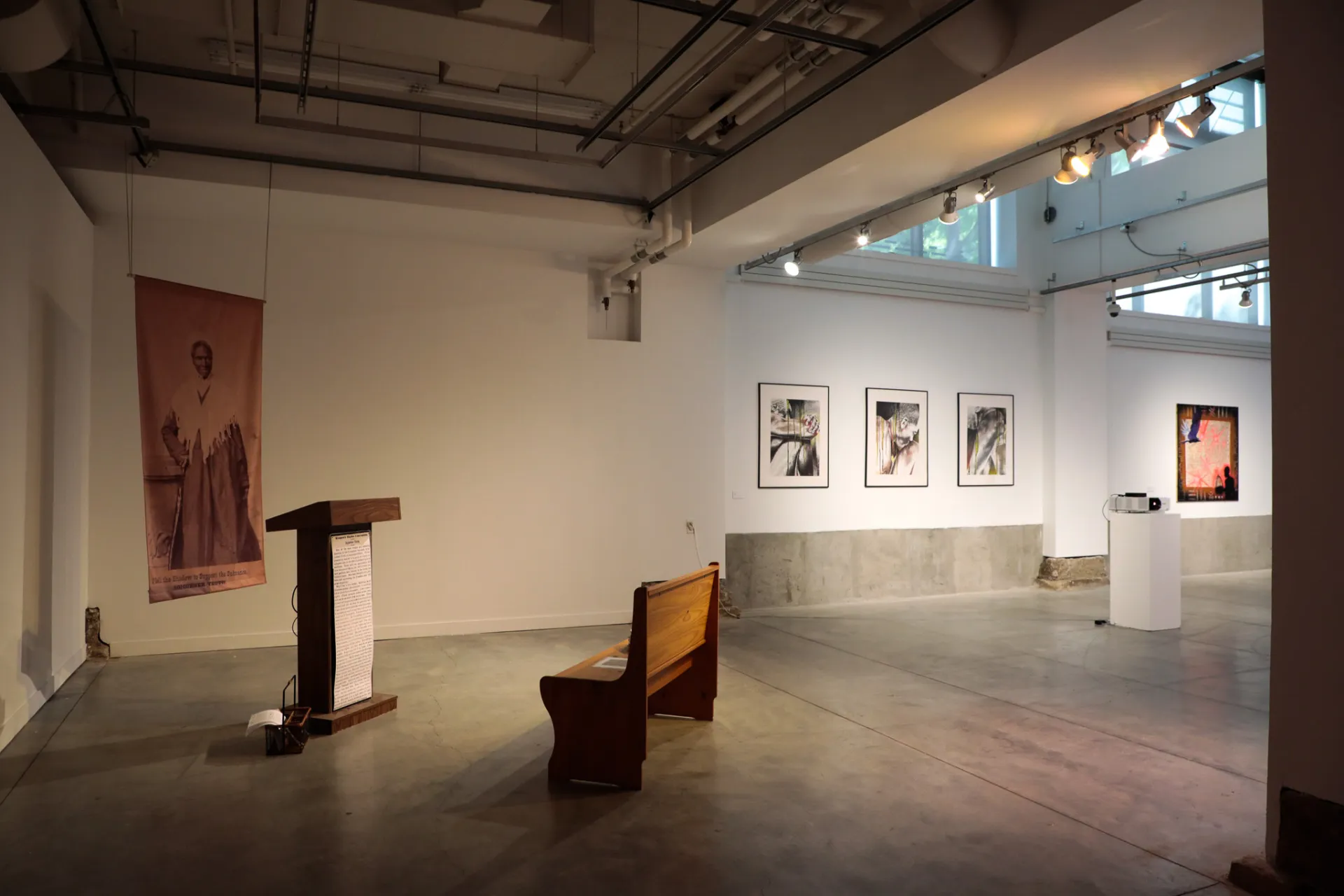
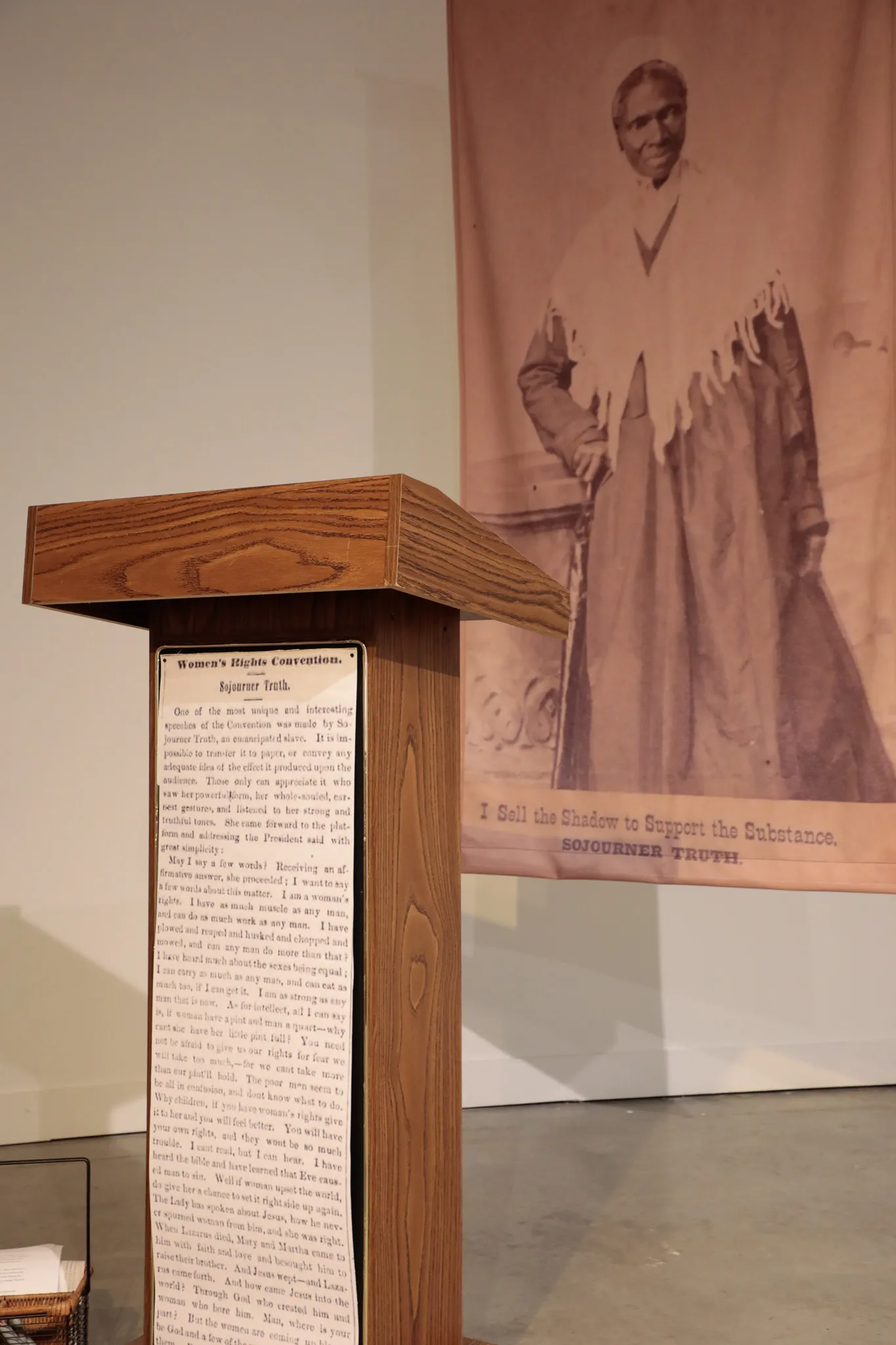
In 1863, suffragist Frances Gage published the version of Truth's "Ain't I A Woman" speech that is widely known today. What are the differences that you notice? What motivation did Gage have to publish the later version of the speech? Use a red pen to cross off the parts that are dissimilar in Gage's version of the speech and compare the two versions.
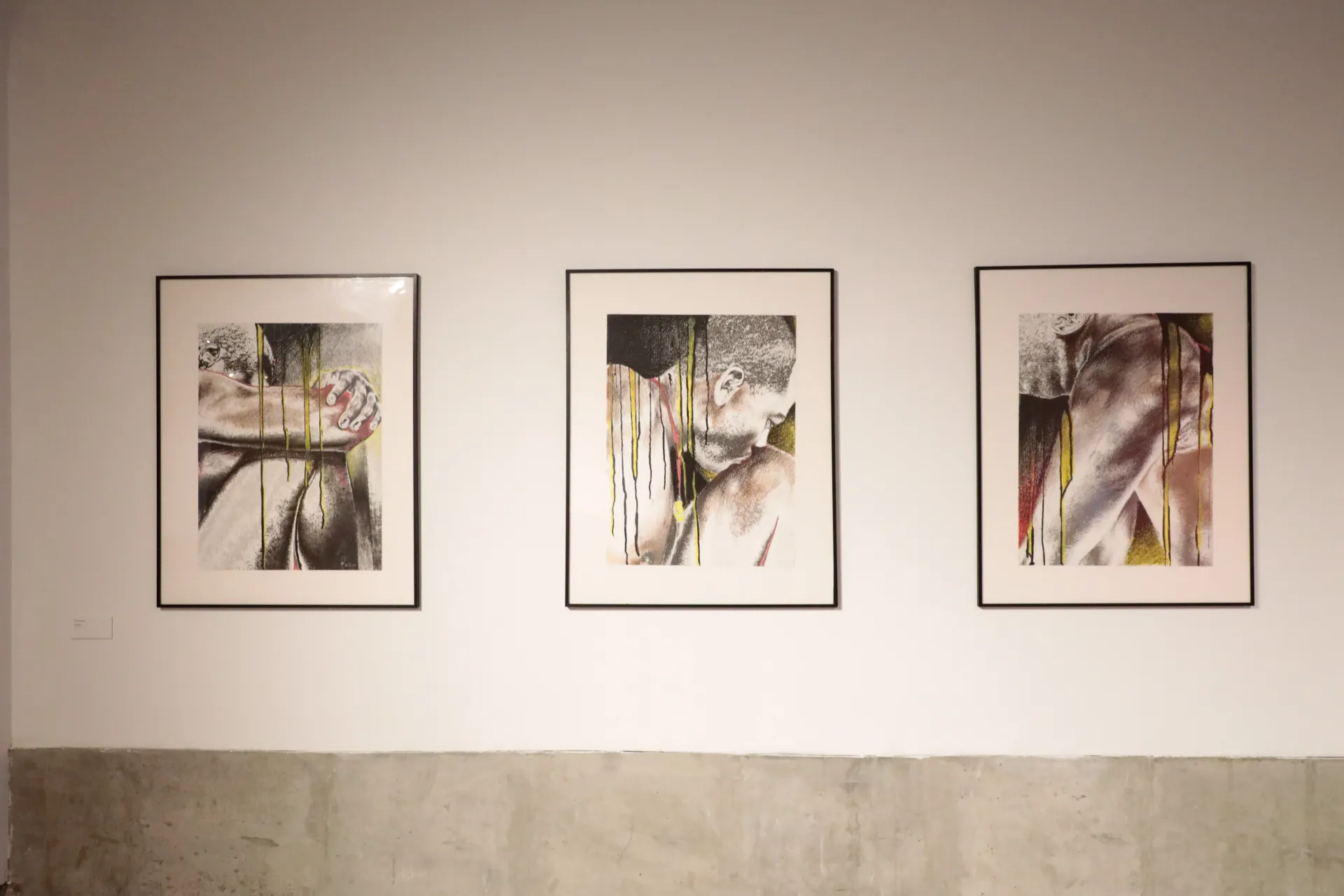
Terron Banner
Solitude
mixed media
2012
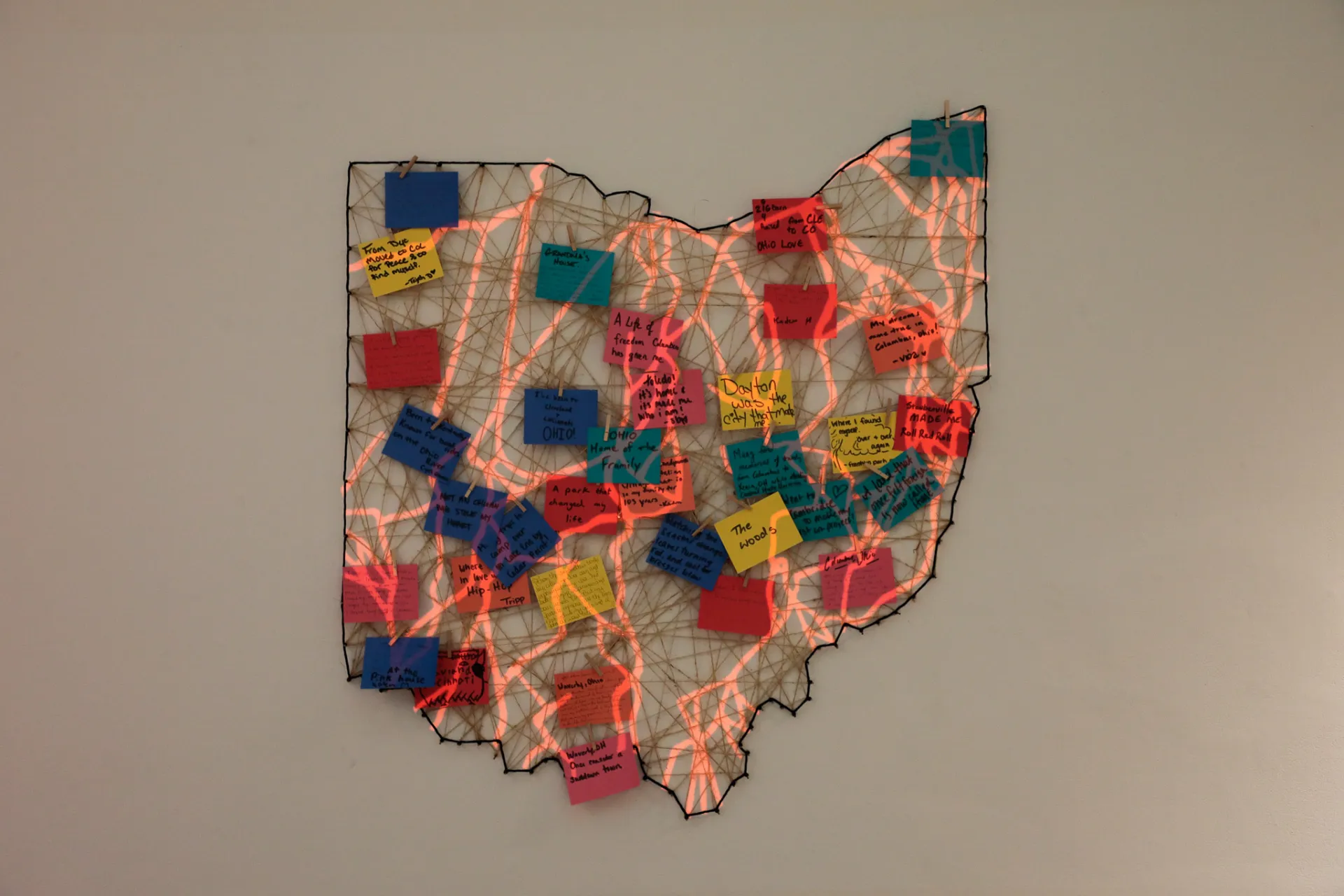
Ohio Journeys
2025
The state of Ohio has a long and storied history that extends well before statehood in 1803. And although established as a "free" state, several people labored to ensure that the freedom as outlined became reality for all Ohioans.
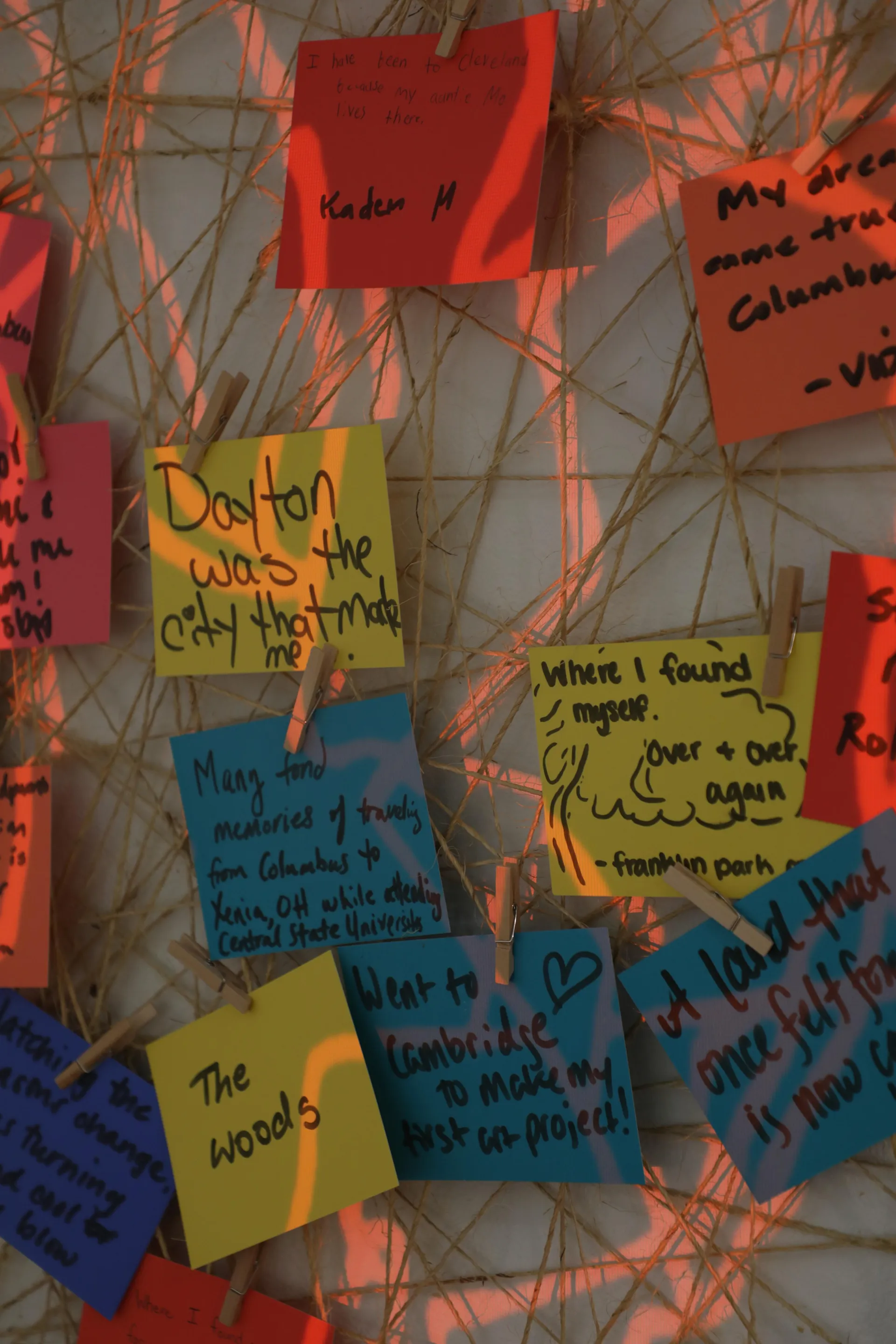
Now that you have learned more about some liberation experiences throughout the state, we are curious about your personal connections to the land. Where have you traveled to within the state and for what purpose? What memories can you share about those experiences?
On the paper provided, please share your story then afffix your statement with a clothes pin to the twine across Ohio near the city, township, settlement, or neighborhood that you identified.
Consider how your ties to Ohio connect with that of other participants and where it might overlap with paths along the Underground Railroad. Are there monuments or markers highlighting those paths? How do you plan to share what you learned here today with your community?
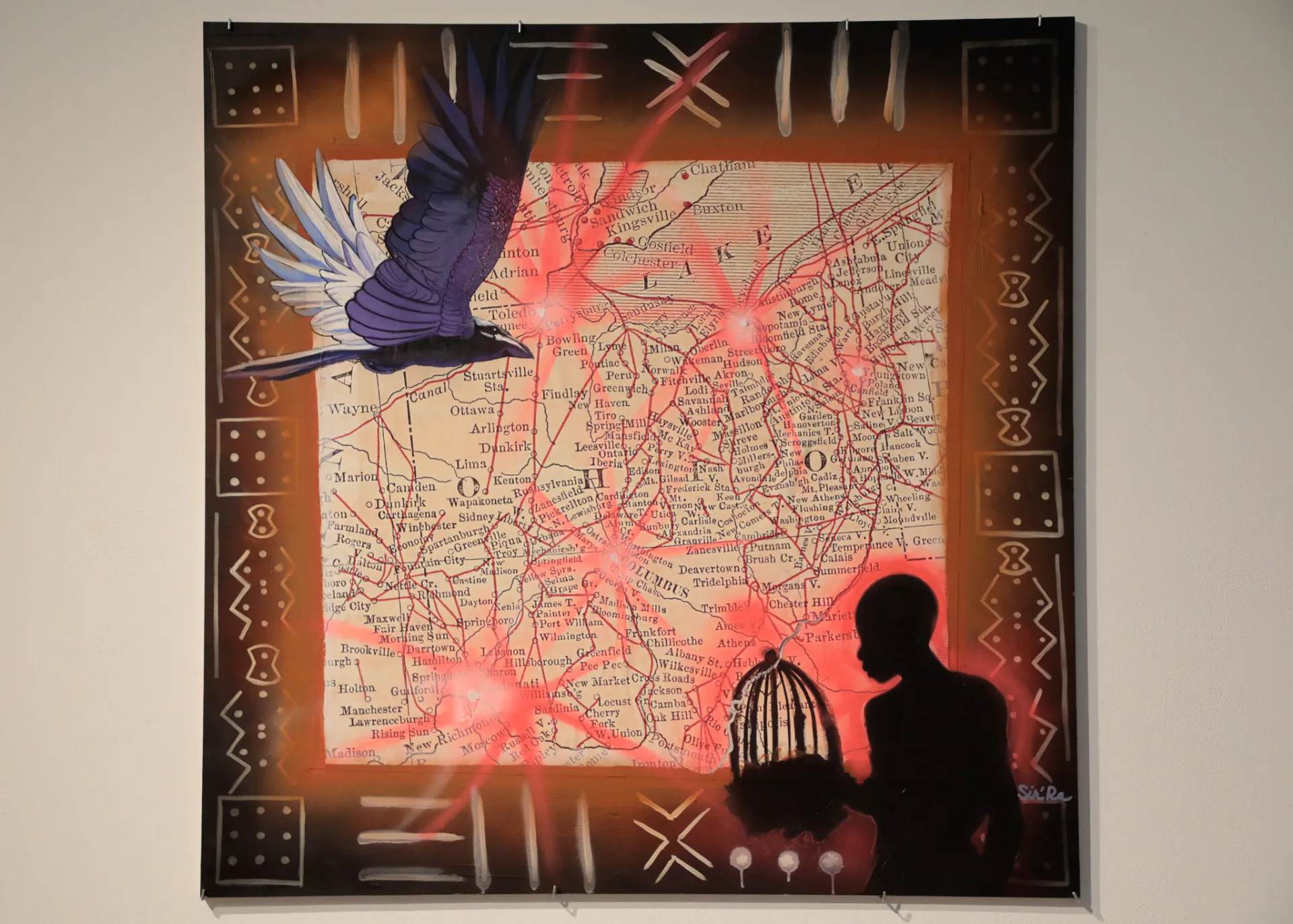
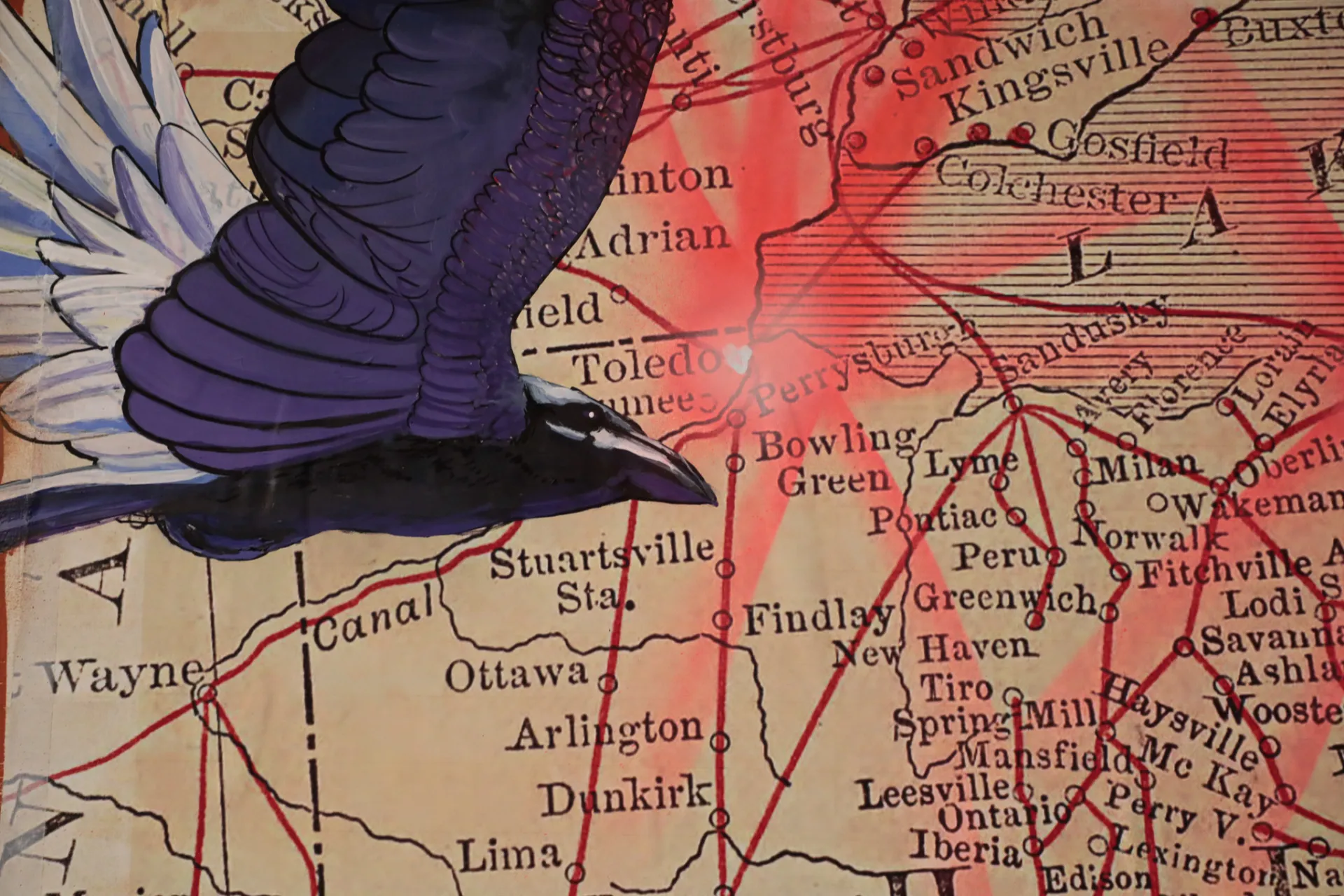
Arris' Cohen
Crossed Roads
acrylic and collage on wood panel
2025
Arris' Cohen
Crossed Roads
2025
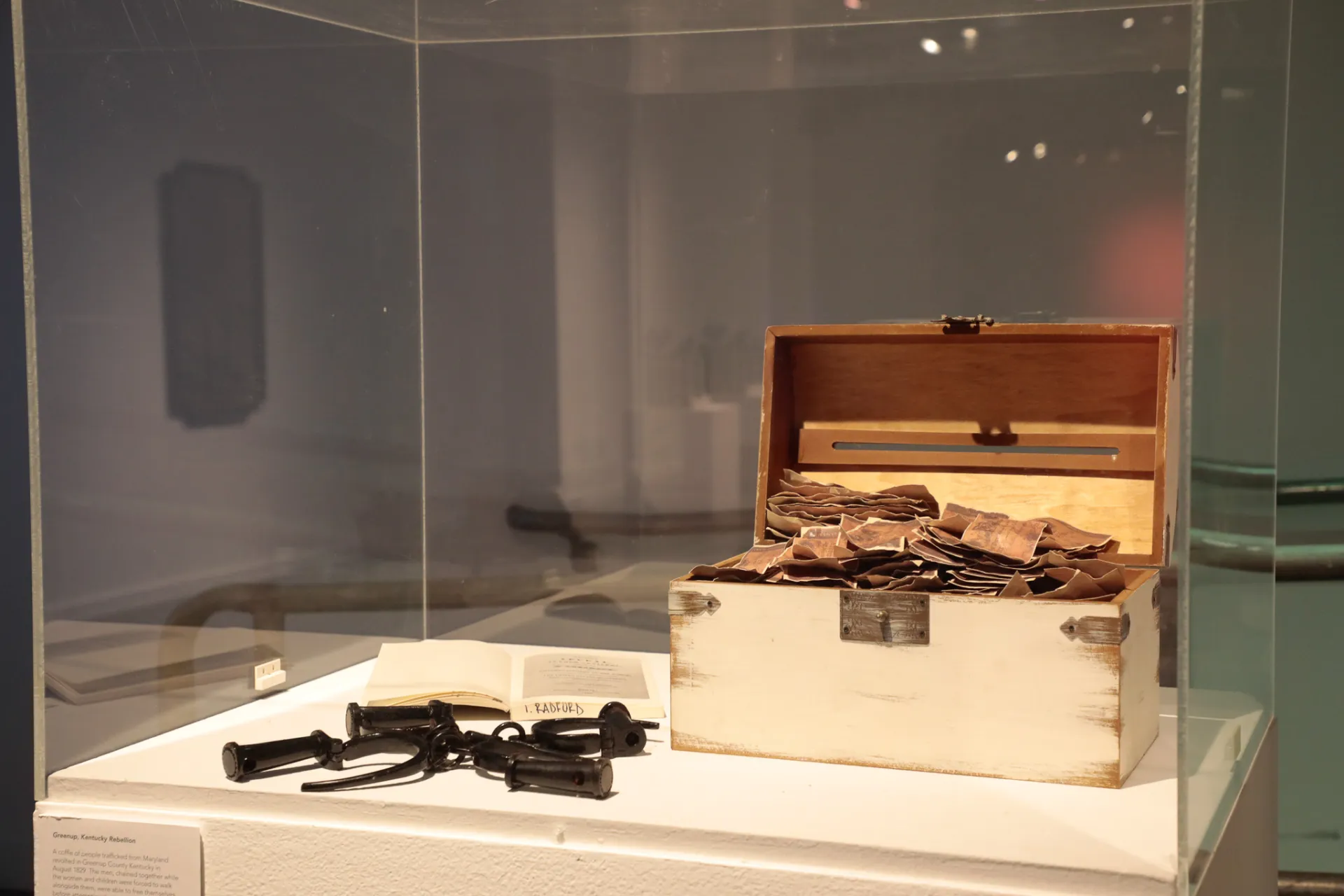
Greenup, Kentucky Rebellion
2025
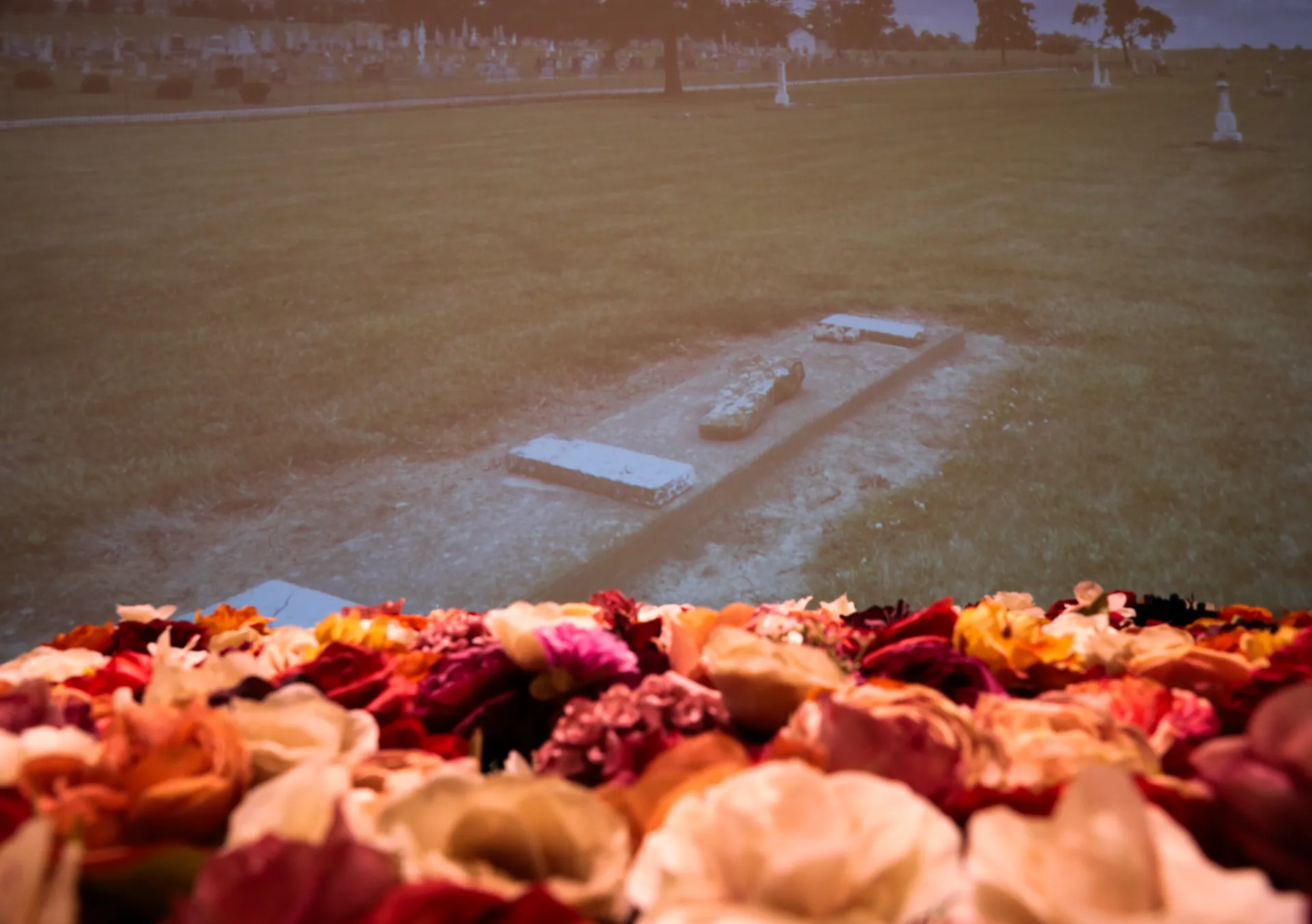
A coffle of people trafficked from Maryland revolted in Greenup County Kentucky in August 1829. The men, chained together while the women and children were forced to walk alongside them, were able to free themselves before attempting their escape. Some of the men killed and badly wounded the drivers before allegedly taking money from the truck and marooning nearby. One of the drivers survived, making his way to a nearby plantation before the local militia were summoned to put down the rebellion. Of the nearly 60 people trafficked, five men and one women, Dinah, were sentenced to death by hanging for their efforts. Dinah, who was pregnant during her sentencing, was able to delay her execution until after giving birth. Early reports of the incident in the Western Times of Portsmouth, Ohio made their way to David Walker who wrote about the rebellion in his publication Appeal to the Coloured Citizens of the World. Some time after the revolt, the Black Appalachian residents in Portsmouth were expelled from their homes by their neighbors for fear that they were participating in the Underground Railroad liberation efforts. Why would Black communities in southern Ohio be held responsible for rebellions on the Ohio River?
Black Friday
2025
In 1831, between 100-200 Portsmouth County Ohio residents signed a petition to forcibly remove the town's entire Black population. Citing an 1807 Black Code that required Black, mulatto, and Indigenous people to file with the Clerk of Court, the residents of Portsmouth agreed to enforce the disparate law and expel nearly 80 of their Black neighbors from their homes - without evidence that they had broken any laws. A similar incidence happened in Cincinnati, Ohio in June 1829 when hundreds of Black people were forced to leave and seek asylum in Canada. Residents in Cincinnati cited the same Black code from 1807 as their justification. Where did these displaced communities resettle? How can those families be made whole from their loss of property?
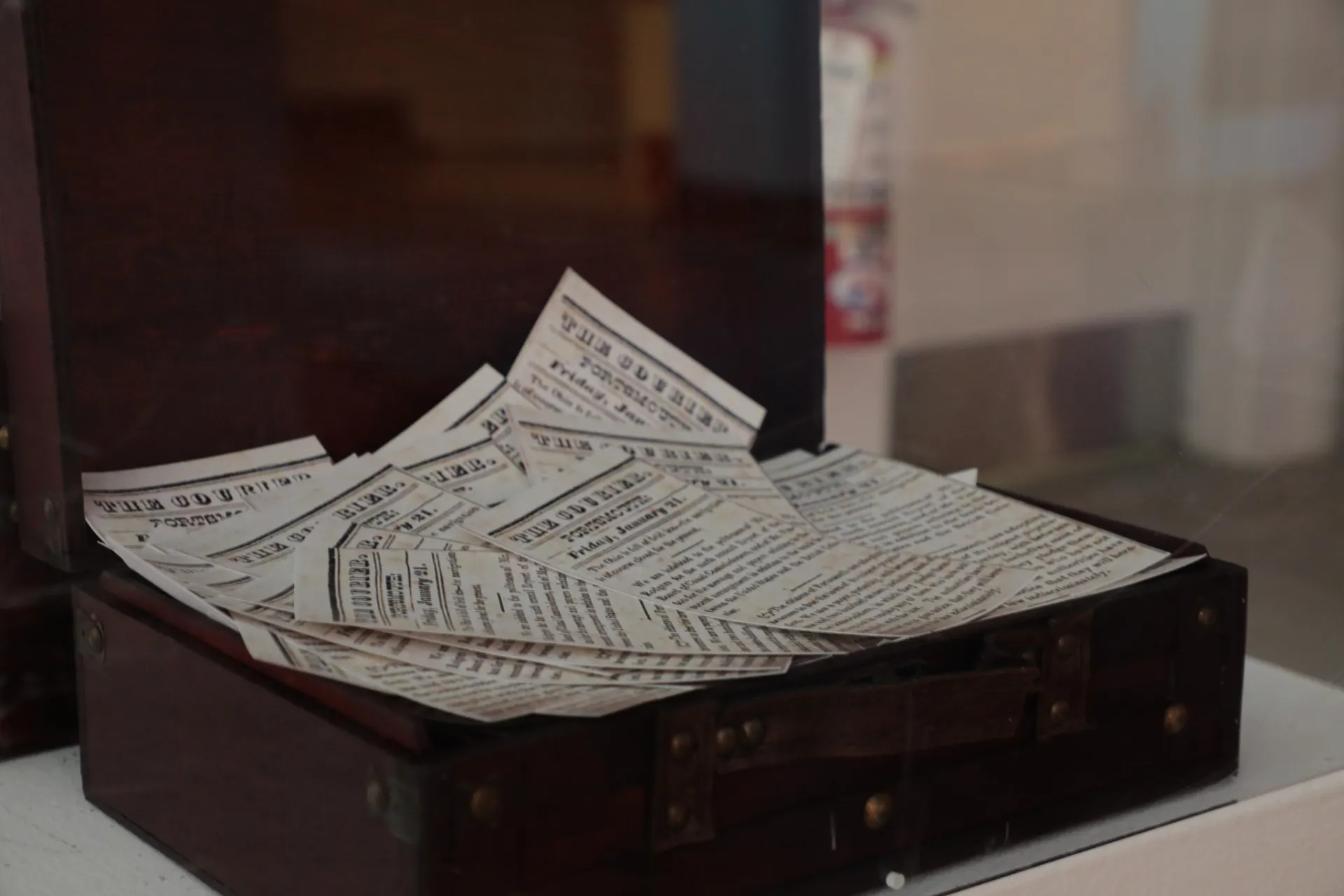
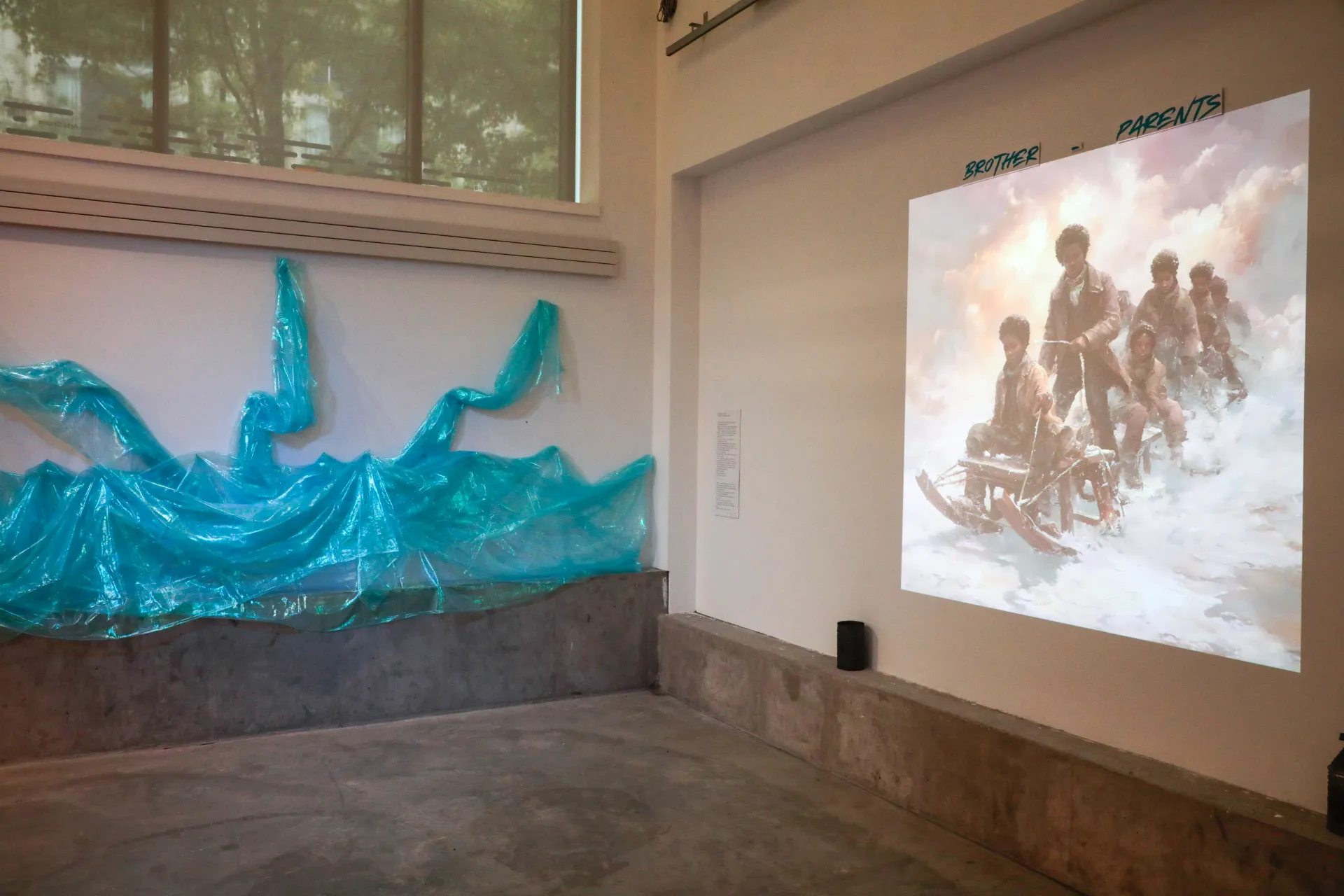
Valerie Boyer
Portal to Ohio
fabric, prints
2025
2 stories highlighting entry to Ohio via the Ohio River.
Artistic contribution by Arris' Cohen
Tunnels of Destiny
Valerie Boyer
No one plans for destiny
To mess up our timing, or
Call us to it. Crazy to think
That anyone would believe
We don't dance with water, like
Baptism and water ritual hasn't been
Our portion. Like Exodus ain't our story,
And still,
We'll take still over troubled
Any day, but here we find ourselves.
2 months ahead of schedule with
Brown all around thinking
We might drown. No one could see
Should see, in this mess, murk, dirt
Meant to kill us. We tried
To give the river and time a chance to
Do their job. Filter out what don't belong,
But we were spotted.
There stood dog, and slave catcher
On one side, while dirty water stood on
The other side.
Death
Burial
Transition by water seemed better option.
Heaven will always prove better option
Than hell that is slavery.
We jumped
To what we believed was death,
Not knowing
That God, water, and destiny
Had already whispered our names.
Caught us in its mysticism/
We swam through
Clear tunnels
Tunnels of Destiny
The place we planned death
Delivered us to life,
Or at least we hope
We watched slave catcher,
And dog, jump in.
That same rivered that drowned them
And delivered us,
Is something you'll have to ask Moses about.
We should not be here,
Lest God, water, and destiny
Hadn't whispered our names.
Caught us in its mysticism.
We swam through
Clear tunnels
Tunnels of water
Tunnels of destiny.
To the Brother Parents
Valerie Boyer
Did you know the cost of becoming brothers
would be losing parents?
Being the oldest with parents who got together,
and deciding that you're brothers - is this one
of the first historical accounts of play cousins?
Was your deciding to be family to each other,
after having family ripped apart, another
Africanism?
How many times did y'all fall on that ice,
practicing to get across?
What type of ingenuity, and brilliance, must you
have to build a sled before we call it a sled?
How did you figure out the dimensions to carry
all of those younger siblings?
Did you trust that ice?
Was the winter, and the weather, the only things
that were cold?
Was it the science of gravity, or the faith of
praying mothers that held up that wood on ice?
Being teenagers, and the oldest, do you think it
was the imagination of your boyhood, or the
survival forced adultifying of manhood, that
sparked the engineering?
Were you scared?
How scared were you?
Scared enough to stop?
When you heard the dogs, and their owners,
and the very danger you tried to avoid coming
after your sibling-children, was speeding across
that ice y'alls hymn?
Did the ropes, as guide, become your help?
Was this your sweet chariot?
Those folx waiting, a band of angels comin'
after y'all?
This river Jordan, what did you see?
How does it feel to be a scientist, architect,
brother-parents, and prophet, all in the same
body?
Will Ohio receive you as you come?