Lydia Gokey
Nature vs. Nurture: Implementing Afrofuturism in Contemporary Art Education
Abstract
The current legislature in Ohio outlines four levels of curricula of visual arts, specifying eight progress points for students to achieve within the “appropriate departmental level.” Although the Department of Education and Workforce has developed and updated a thorough curriculum to help students achieve participation and meaning within visual arts, many students lack motivation required to keep pace in standard art classrooms. Loose project criteria and limited resources in both monetary and physical art supplies can both help and hinder the creative process. Students in low-income, historically Black, Indigenous people of color (BIPOC) neighborhoods are disproportionately affected by lack of resources, hindering their ability to learn about the art, culture, and history of their race and community. This paper critiques the current curriculum and proposes alternative practices, drawing on experiences of Columbus Afrofuturistic artist and teacher Arris’ Cohen, poet and writer Ajanaé Dawkins, as well as movies from popular culture.
Keywords: Afrofuturism, Ajanaé Dawkins, Arris’ Cohen, Audre Lorde, BIPOC, Black Panther, Columbus, creativity, critical thinking, curriculum, Department of Education and Workforce, Ohio, visual arts
“For the master’s tool will never dismantle the master’s house. They may allow us temporarily to beat him at his own game, but they will never enable us to bring about genuine change. And this fact is only threatening to those women who still define the master’s house as their only source of support.” – Audre Lorde
All high school students in the state of Ohio are required to take fine arts classes before graduation. The current curriculum includes learning about other cultures, but many students entering higher education lack knowledge about other cultures or their art practices. In this paper, I evaluate the effectiveness of the Ohio curriculum and its specific progress points. I propose alternative practices to educate high school students about different cultures, with a focus on BIPOC low-income students and introducing the complex topic of Afrofuturism at a young age.
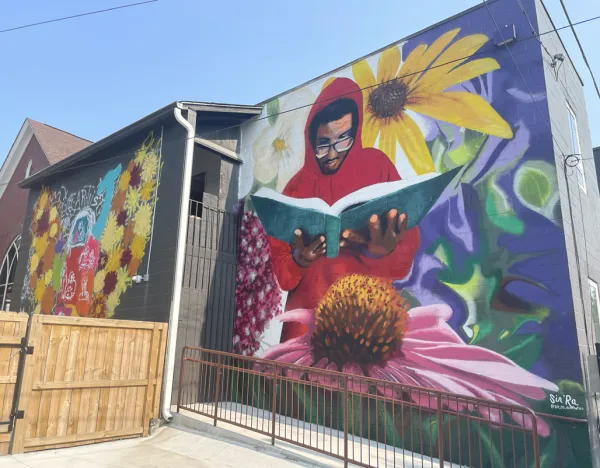
Current Ohio Curriculum Evaluation and Critique in Practice
The current Ohio high school visual arts curriculum was last updated in November of 2023, with the previous update being in 2012. This indicates that updates to the curriculum, particularly within the arts categories, are infrequent and may not be reviewed annually. The most recent updates to the curriculum underwent a timeline spanning from spring of 2022 until November of 2023, when new and reviewed drafts were published and implemented into daily use in classrooms. During the review process, there were several advisory groups at the state and federal levels that reviewed the curriculum, implemented it into lesson plans, and then gave feedback to the curriculum developers at the Department of Education. In December of 2022, the fine arts learning standards did not pass, and were subsequently updated, sent back to the advisory boards, and then approved in summer of 2023.
Currently, the curriculum identifies eight different progress points, specifically detailing the following:
- Understand and articulate the intrinsic worth and public value of arts and cultural participation.
- Draw on a variety of sources to generate, select and evaluate ideas to create personally meaningful products.
- Address and communicate complex visual and conceptual ideas using a range of technical skill and art media including new technologies.
- Access and evaluate information from a variety of sources for visual reference with attention to ethical and legal issues.
- Apply reasoning skills to communicate key ideas expressed in their artworks and the works of others and use appropriate criteria and language to critique the works.
- Analyze and use digital tools to understand how and why images are created and interpreted and how media influences culture, beliefs, and behaviors.
- Demonstrate flexibility and reflective habits when creating visual art forms in a variety of artistic contexts and environments.
- Demonstrate respect for, and effectively work with, socially and culturally diverse teams or content to increase innovation and quality (Buck-Pavlick, 2023, pg. 1).
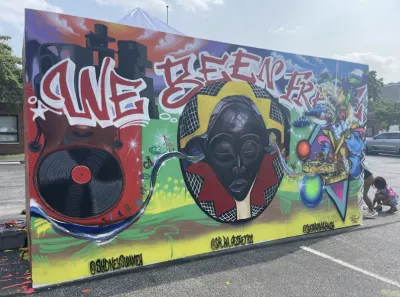
Many of the main standards within the curriculum are connected to other subjects, such as English Language Arts (ELA), social studies, science, technology, and mathematics. Additionally, all learning standards have career connections that can apply to these standards. Some of the careers they link to are in the arts, but some are outside or on the peripherals of the arts careers, such as toy designer, makeup artist, or architect. The curriculum is also divided into four sections, including beginning, intermediate, accelerated, and advanced, with each category having increasingly difficult and complex concepts for students to understand and complete.
Even though there are four levels for learning, students are only required to take two semesters of fine arts classes between seventh and twelfth grade unless they are in a career-tech program, in which it is not required (Ohio Department of Education and Workforce, 2023). If there are four levels for students in high school to achieve, how can we only require students to complete two semesters? Within the curriculum, fine arts is in the “electives” category, for which students need to earn five credits before graduation. In the high school cycle, each semester is considered a half point’s worth of credits, meaning a student is only required to complete one year’s worth of fine arts classes. Other electives are world languages, business, career-technical education, family and consumer sciences, technology, agricultural education, or other core curriculum classes that are not considered within the main curriculum. Other curriculums have set courses for when students need to take them, but electives do not have a timeline or required type of courses, other than the five credits required before graduation.
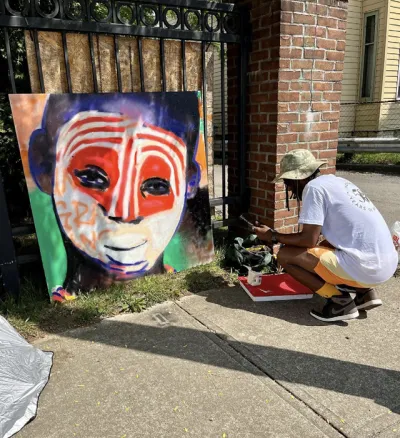
Although one of the progress points in the Ohio curriculum deals with culture and different environments, many art teachers do not make it a priority to discuss different cultural art practices. Reflecting on my high school arts education, I had the opportunity to attend a charter school with a focus on arts practices, allowing me to choose more arts-based electives than other students in traditional public schools. However, I still feel that my education in historical art practices was not thorough. I did not learn about Afrofuturism until I reached higher education, despite its importance as a topic within the arts realm for learning about different cultures and amplifying voices that have been previously silenced. Introducing the ideals and practices of Afrofuturism at a younger age can allow students, especially those who are BIPOC, to connect more with their culture and allow non-BIPOC students to learn more about Black art and how it will look in our near future. Afrofuturism was first discussed in 1984 but was not coined until 1993 by Mark Dery to connect Black literature to the 1980s sci-fi craze. Afrofuturism intersects “imagination, liberation, mysticism, and technology” in fashion, music, and art but is also seen in various forms of writings and film (Yaszek, 2010, pgs. 43–44). Most think of Afrofuturism purely from an artistic standpoint, but the wider scope of the topic includes many different subjects in the academic field. The main point of Afrofuturism is to dream and think of a better future within Black culture, and the concept exists to inspire Black creatives and intellectuals, as well as amplify voices within the respective fields.
Black Panther, Afrofuturism, and Its Impact on Black Students
The Marvel movie Black Panther (2018) has been one of the most influential f ilms in the twenty-first century for Black people, especially children, who have not seen a protagonist who is Black from such a large production company. The fictitious world of Wakanda could only be possible without the true history of British and Dutch colonization of Africa, and the high technological advancements of Wakanda show that of an Afrofuturistic nation. Black Panther is one of the easiest ways to introduce Afrofuturism to children without having to explain the difficult theoretical concepts held within the topic. We can even see how closely Afrofuturism is held to the producers and creatives within the movie, where costume designer Ruth E. Carter used inspiration from traditional African clothing from different tribes across Africa, modifying the color palette to be more futuristic, and even using more futuristic techniques to craft the costumes; many different fabrics and costume pieces were 3D printed to allow for complete customization of the color palettes and designs in fabrics (Ryzik, 2018). A study conducted in 2018 and 2019 observed X users and noticed an increase in Black X users, which the researchers noted directly connects the release of the movie to an increase of Black user presence. It is also relevant to note that Black Panther was the most tweeted movie in the year of 2018, showing its societal impact on all races, especially those who are Black (Firmansyah & Jones, 2018, pg. 71).
The impact of Black Panther and other similar films on social media users shows that this film meant something deep to Black viewers, especially those who have noticed the lack of representation of Black culture in current film standards. By using content analysis, we can see just how clearly impactful Afrofuturism is to consumers. There is absolutely no doubt that Black Panther was important to the movie industry, but it has also been important for Afrofuturism within popular culture, since it is not widely discussed outside of academia.
Not only has the Black Panther movie increased access in popular culture to Afrofuturistic art, but it also showed a great increase in Black artists in the movie and film industry. Almost the entire onscreen cast and those who are behindthe-scenes are Black. Although this is not unseen, many other mostly Black-acted and directed films do not do well in box offices. Black Panther was the highest grossing movie featuring Black actors and is in the top twenty highest grossing movies of all time, having a lifetime gross of over $1.3 billion (D’Alessandro, 2023). Having marginalized groups represented within popular culture is vital to everyone who belongs to those communities; smaller Black creators within the arts are taken more seriously when Black A-list celebrities are in huge blockbuster movies, leading to an increase in voices amplified within the arts (D’Agostino, 2019, pg. 4). With the huge success of Black Panther, Hollywood also saw an increase in other popular movies featuring Black protagonists from large film corporations, such as Aladdin, Black Is King, and Soul from Walt Disney Picture films, which produces some of the highest grossing films in the United States. Because Black Panther is one of the most recognizable movies within the last ten years produced by Disney, it has allowed educators to introduce the topic in the classroom, along with other Afrofuturistic artworks and writings in tandem with the movie.
Within the classroom, there are multiple ways to include the teachings of Afrofuturism to students, as created by Carrie Mattern, an English educator in Flint, Michigan. Within her curriculum presentation and review, she discusses her checklist she used to make sure Afrofuturism was discussed to the fullest extent in the classroom:
- Contains elements of a variety of genres: science fiction, fantasy, and magical realism. [Afrofuturism] blurs line between reality and fantasy: an element of magic is included & not defined—similar to the Indigenous curtain (Reese, 2017), historical fiction, Afrocentricity where Africans are viewed as subjects rather than objects or items owned by colonizers, and non-Western cosmologies which helps explain the universe creation through a different lens than typically taught in religion.
- Reclaiming: claiming something back or reasserting a right that was taken away by colonization, enslavement, and/or oppression.
- Black liberation (the act of freedom): is the character free or fighting for liberation?
- Revisioning the past (often through allusions and symbolism): how is the past reflected upon?
- Predictions of the future through a Black cultural lens: How does the future look with Black folx leading, organizing, and creating without any threat from colonizers? What does the future look like if entire nations and tribal peoples were not colonized?
Mattern provided a wide range of resources for the unit, including poems, graphic novels, books, blackout poetry, music videos, and films depicting early and contemporary examples of Afrofuturism. Her lesson plans included teaching about the annotation process and found poetry, teaching students how to critically analyze segments of texts, critical thinking, discussion among peers, and recognizing where articles of text can be liberated using the checklist she had provided to students. Reaching out to other subjects while staying within the ELA classroom, she formed a creative assignment for the students in which she used historical documents and allowed students to remove texts that voice oppression and to highlight those that include liberation and reclamation (Mattern, 2023). Using Afrofuturism as the platform, educators can make creative projects in other subjects beyond art to not only teach the subject but show how it is important throughout a student’s academic studies.
Interviews and In-Classroom Work
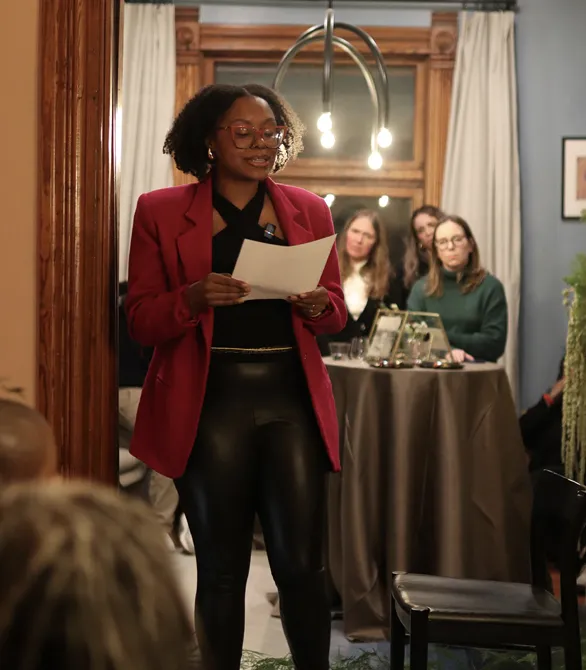
For this project, I worked with local Columbus artists and educators Arris’ Cohen and Ajanaé Dawkins. In my interviews, I based many of my questions on “The Master’s Tools Will Never Dismantle the Master’s House” by Audre Lorde, as this essay was particularly inspiring to me within my research. Many Afrofuturism scholars speak on how working with a Eurocentric-based curriculum will not amplify Black voices, since the system was built to intentionally silence them. During my interviews with Cohen and Dawkins, I presented a quote from Lorde’s essay, which reads, “without community there is no liberation, only the most vulnerable and temporary armistice between an individual and her oppression.
But community must not mean a shedding of our differences, nor the pathetic pretense that these differences do not exist” (Lorde, 2018). Both interviewees agreed with the quote’s meaning. Dawkins brought up the 2023 film Origin, which discusses interpersonal relationships while working on art and justice work. The film connects the slavery system in America to the Holocaust in Europe and the caste system in India (Burns, 2024). Dawkins talked about how full liberation can only be achieved by working on interpersonal relationships, and that racism is taught based on people’s own interpersonal relationships and cultural phenomenon. From an educational standpoint, Cohen and I discussed how many BIPOC students are failing to learn about other cultures in a Eurocentric curriculum because there are no advocates to teach them about different cultures. Cohen and I also discussed how racism and discrimination stem from discomfort and a lack of knowledge of other cultures, which can stem from an unfulfilling curriculum in public schools.
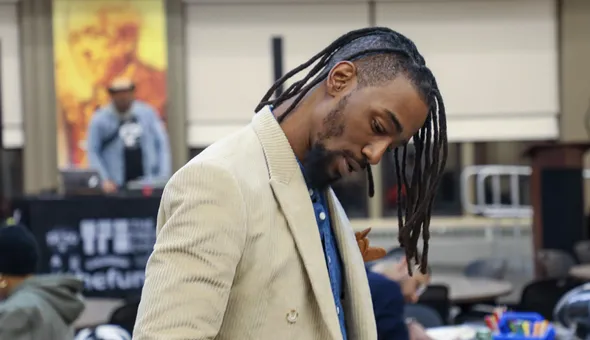
The best way to create a fulfilling curriculum in the classroom is to allow students to embrace their own culture while also embracing and learning about cultures other than their own. One way Cohen does this in his classroom is by giving students more freedom than a traditional classroom. Although he curates projects for the students to work on to give them direction while also honing their artistic techniques, he lets students work on personal and athome projects and will assist if students are unable to complete a step on their own. He is very hands-on in the classroom and uses his personal learned experiences as an artist to better help the students. I assisted in Cohen’s classroom twice this semester, allowing me to see his teaching methods and curricula. The last time I was in his classroom, we were painting lemons from a reference picture. Although a lemon is not necessarily “Afrofuturistic,” he taught the students to use bold colors in the background and think about reference points of shadows and light.
Not only does Cohen work with students to enhance their artistic skills based on his curations and their personal projects and wants, but he also works with them on a personal level, building individual relationships with the students. He teaches at Franklinton High School, a charter high school that is not part of the Columbus City Schools district. The students come from a blended background, where some come from poverty and others are “trust fund babies,” as I overheard from one of their conversations. Being able to build personal relationships with students allows for more respect from them, which creates a positive dynamic. Cohen said that it is essential to build these relationships with students because they end up trusting you more in the long run, which builds better teaching results for the students.
Implementing Afrofuturism within school systems is not a slow change we can make; it is something that needs to be radical and come directly from experienced and knowledgeable educators who know how to best introduce the topic to students of any age. As we can see, Afrofuturism is becoming more popular and recognizable within media and culture. It is not necessarily a new topic and is easy to introduce, especially to younger audiences with the popularity and success of Black Panther. What we need to implement Afrofuturism within classrooms is the understanding of the topic and looking at past research to see how important and effective it is in the classroom. More exposure to Afrofuturism would help students garner a more meaningful and enriching education, allowing for even more exposure to different cultures that they would not be exposed to otherwise.
Acknowledgments
I would like to personally thank Dr. Terron Banner for supporting me in this independent study and providing endless support, Ajanaé Dawkins for assisting in my research in Afrofuturism and how to implement it within school curriculums, and Arris’ Cohen for allowing me to be present in his classroom with his students to observe how he implements his artistic practices in his teachings.
Bibliography
Buck-Pavlick, Heather. “Model Curriculum: Visual Art High School.” Ohio Department of Education and Workforce, 2023. https://education.ohio.gov/getattachment/Topics/Ohio-s-New-Learning-Standards/Fine-Arts/Fine-Arts-Model-Curriculum/MC_visual-art-HS.pdf.aspx.
Burns, Shirley. “Ava DuVernay Takes on an Unconventional Adaptation in New Film ‘Origin.’” WBUR, January 25, 2024. https://www.wbur.org/news/2024/01/25 /ava-duvernay-origin-isabel-wilkerson-caste-film-review.
“Complete Courses and Requirements.” Ohio Department of Education and Workforce, 2023. https://education.ohio.gov/Topics/Ohio-s-Graduation-Requirements/Ohio%E2%80%99s-Graduation-Requirements/Complete-Courses-Classes.
D’Agostino, Ann Marie. “‘Who Are You?’: Representation, Identification, and Self- Definition in Black Panther.” Safundi: The Journal of South African and American Studies 20, no. 1 (2019): 1–4. doi: 10.1080/17533171.2019.1552346.
D’Alessandro, Anthony. “‘Black Panther: Wakanda Forever’ Claws Way to No. 5 in Deadline’s 2022 Most Valuable Blockbuster Tournament.” Deadline, April 2023. https://deadline.com/2023/04/black-panther-wakanda-forever-box-office-profits-1235320190/.
Firmansyah, Fajar, and Jason Jones. “Did the Black Panther Movie Make Blacks Blacker? Examining Black Racial Identity on Twitter Before and After the Black Panther Movie Release.” Stony Brook University, 2018, 66–78. doi: 10.1007/978-3-030 -34971-45.
Lorde, Audre. The Master’s Tools Will Never Dismantle the Master’s House. London: Penguin Modern, 2018.
Mattern, Christine. “Wakanda: Opening the High School Classroom to Afrofuturism.” Language Arts Journal of Michigan 38, no. 2 (2023): 70–80. https://scholarworks.gvsu.edu/cgi/viewcontent.cgi?article=2389&context=lajm.
Reese, Debbie [@debreese]. “THREAD First: I’m Glad That Dr. Rudine Sims Bishop’s Metaphor of Bks Being Windows, Mirrors, and Sliding Glass Doors Is…” Twitter, November 9, 2017. https://twitter.com/debreese/status/928584222561972224.
Ryzik, Melena. “The Afrofuturistic Designs of Black Panther.” The New York Times, 2018. http://www.bravesbullpen.com/uploads/editor/7s/0mlowcelq6ds.pdf.
Yaszek, Lisa. “Afrofuturism, Science Fiction, and the History of the Future.” Socialism and Democracy 20, no. 3 (2010): 41–60. doi: 10.1080/08854300600950236.
Lydia Gokey is an undergraduate alum and current graduate student at The Ohio State University. She has a bachelor’s in art management and is currently studying for her master’s in art education. Her research focus is advocacy-based curriculum. As an artist, her focus lies in printmaking and ceramics.