Molly Davis
Simple, Not Easy
I come from a long line of alcoholics who would consider themselves “drinkers.” My great grandfather lost his leg to alcohol use; my grandfather suffered multiple strokes caused by alcohol use that ultimately left him with dementia. My dad has an Old Milwaukee’s Best in his hand in nearly every photo and memory from my childhood. I began drinking when I was fourteen. My best friend and I got into her dad’s liquor cabinet. The only thing we knew about alcohol was that the people around us seemed to like it an awful lot. Not knowing better, we drank a mixture of different types of alcohol. It tasted awful, but I liked how I felt. My tension lifted. I distinctly remember thinking, “I understand why everyone around me does this.” It would take me more than twenty years to begin to untangle my relationship with it.
Alcohol had done me damage long before I ever took that first drink. The way growing up in an alcoholic home affects a child is profound. It is a time in life when you need structure and predictability, and growing up without that predictability inherently makes you anxious. I would get off the bus after a day at school, a day filled with structure and routine, and not know what the situation would be when I opened the door. Would dad be asleep? That would be preferable. Would he be awake and drunk and want to ramble to me? Would there be a mess to clean up, remnants of what occurred while I was at school during the day? These questions flooded my young brain as I walked the tenth of a mile home from where the bus dropped me. Once I opened the door, I would intuitively know what had happened while I was gone. It was as though the air in the house was a distinct color. My vigilant little brain noticed a hundred subtle and not-sosubtle clues. Coming home from school should not be stressful, but when it is the only experience you’ve had, you don’t know that it can be any different. You don’t understand how unusual your experience is.
I existed in a state of chronic stress that everyone around me attempted to hide. I lived with this looming sense that something was wrong, but I could never pin down what. I walked through my life with an inexplicable stomachache. No one talked about my dad’s drinking, and no one was going to attempt to explain addiction to a child. As I got older, people around me talked about my dad’s alcoholism more, but usually in moments of anger or accusation. “You’re drunk!” my mom would yell; my dad would shrug and shut down. If not angry, then they were often vague and didn’t get to the heart of the issue: “Your dad has mental health issues,” my mom would try loosely to explain. “I know your life can’t be easy,” my grandmother would prod. I too would shut down in response—I loved my dad and didn’t want him to be the target of blame. The confusion, anxiety, and shame are carried silently from generation to generation.
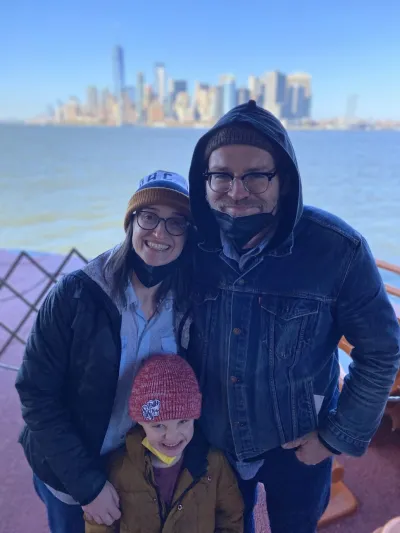
I thought about sobriety for a long time before I made the decision to quit. When my son turned five, the voice saying it was time to quit got louder. When I was five and went to school, I started to notice that our family was different in some mysterious way from other children’s families. We didn’t do many things outside of the house together. I didn’t have organized activities. We didn’t have many people over to our house. I knew we were somehow different, but I couldn’t really grasp why. As my son came into more awareness, I didn’t want him to grow up in the same confusion that I did. I didn’t want him to think that alcohol was an unnegotiable part of life. I wanted to break this generations-long family cycle. This don’t-talk-about-the-problem, perpetuate-the-problem cycle. I wanted to show him that there was a different way. But I had no idea what that way was. I had never had a different way modeled for me. I would have to learn it as I went along.
I didn’t hit rock bottom; quite on the contrary, I thrived despite my complicated relationship with alcohol. I excelled in school. I began working a white-collar job at twenty. I started a 401K at twenty-one. I never had a DUI. I never lost a job. I could control my intake, but only with a supreme amount of invisible effort and mental gymnastics—how many drinks can I have and still be able to drive home? How many hours of sleep can I get and still function tomorrow? I put a great deal of pressure on myself to function at a high level, in part to justify my drinking and to assure myself I was different than my father. This habit can’t be problematic if I am checking off all these boxes, if I am contributing to society, if I’m not getting myself into trouble. I imagine there are many people who drink and function in this way. This thriving made my decision to quit puzzling to those around me. “For good?” people would often ask. “I think so,” I would reply.
The night I decided to quit, I came downstairs and told my partner. It wasn’t a surprise to him; I had talked about thinking about quitting for a long time. But this time I was direct. There was a conviction. I had specific things I needed from him. “I’m going to quit drinking, and I need you not to bring anything that I enjoy drinking into the house. I need you not to offer me a drink. I need you to take this seriously and to help me take it seriously.” He agreed.
Even then, I knew I was committing to more than just not drinking again. To be successful, I needed to create a life in which I didn’t need to drink. I needed to commit to reparenting myself, filling in the gaps that my well-intentioned but woefully ill-equipped parents missed, learning the coping skills that I had never developed, learning stunningly basic self-care that I had never allowed myself, breaking the cycle of alcoholism in my family. It was and is the most radical choice I have ever made.
I committed to learning what caring for myself looked like. At first, the care felt like a monotonous and boring undertaking. I hadn’t practiced much discipline in my life; I mostly accomplished things through fear of failure and bribery. This approach of discipline out of love for myself was foreign. I threw a lot at it. I tried things I’d heard other people talk about, things I thought “responsible grownups” did. Much of it didn’t support me in the long term. Rigid and drastic changes—a strict gym schedule, a supplement regiment, a twelve-step program—the inflexible extremes did not stick. The pieces that did support me became powerful, yet shockingly simple, sacred practices. Cleaning the sink each night. Washing my face. Putting lotion on my itchy skin. Packing my lunch. A weekly yoga class. Many of them were things I’d done countless times before, but with an intention of gentle care and support, they became wholly different. They became acts of love. Through them, I began to love myself.
The care is not profound. It is not complicated. But it means so much. Clichés are clichés because they are true, and recovery is full of them. It is simple, but it is not easy. Much like abstaining from drugs and alcohol, it is a simple thought that is very difficult to put into practice. It is hard to slow down in this grinding world. It is hard to feel your feelings and not reach for something, anything, to numb them when that is the only way of dealing with pain that adults demonstrated for you. When society holds drinking up as an acceptable coping behavior. When alcohol is portrayed as integral to every celebration. It is hard to rest when the world calls our attention everywhere else. It is hard to care for ourselves, which is why “self-care” has become an entire movement, filling our social media with advertisements but never allowing us the space and grace to genuinely care for ourselves. It is hard to allow that care to be simple, without a subscription or a coach or a cost.
The first week, we had a social gathering with some friends. We were getting ready to leave, and my partner got a cooler and put a six-pack in it. A knot formed in my stomach. I began second-guessing if we should go. I began wondering what a sober life would look like in reality. Seeing that six-pack gave me palpable anxiety. I questioned whether to say anything. In the past, I would have pushed through my anxiety as I so often did when experiencing discomfort. But this time I chose to say something. “This is my first social activity sober and bringing the six-pack is making me nervous.” He quickly agreed not to bring it. I told him I hoped it wouldn’t always be this way, but for today, I appreciated it. “It’s no big deal,” he said. My eyes welled with tears. “It might not be a big deal for you, but it means a whole lot to me.” The authenticity and care I offered myself by simply expressing my discomfort was overwhelming. The support I felt from my partner through this simple act was immense.
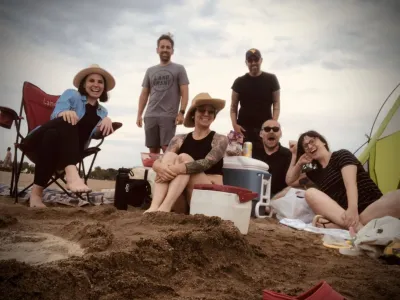
We met our friends at the beach that night and watched our kids roughhouse in the water. We yelled at them to come back in when they went too far out, to stop chasing the birds. We ate salty meats and drank cold seltzer waters and laughed. It was not profound. It was not complicated. But it was lovely.
I felt a new feeling of pride in creating sober memories with my family and friends that night. In replacing my own childhood memories that almost all included the presence of alcohol with these new alcohol-free memories with my own child, knowing that his memories will be different than mine. Knowing my son would have memories where the fun was not because of alcohol, but because of companionship. Sobriety started to feel possible. And powerful.
For the first few months, I took a picture of myself every day. I would zoom in and carefully examine my face, looking for some kind of noticeable change. Looking for some outward evidence of transformation. I couldn’t see it yet, but I could feel it. Something was changing inside me, and something was beginning to shift in our family. Cycle breaking is slow work. These generational chains do not snap through in an instant with bolt cutters; the links slowly rust through from a steady drip of intentional choices. This generations-long family cycle was beginning to oxidize.
In those first ninety days, long-numbed feelings began flooding in. The turmoil of my childhood came rushing forward. With clarity of mind and an adult understanding, that confusion became sadness, anger, and resentment. I had not known those feelings were ever there. That sweet, confused child could never make sense of that pit in her stomach. If you had asked me if I drank to numb my feelings, I would have said no. I was drinking because it was fun and social, and I enjoyed it. But alcohol numbs feelings. It’s what alcohol physiologically does, whether that’s what you intended to do when you picked up the drink or not.
Without my numbing agent, I felt those feelings for the first time. I had to sit with that lonely little girl. I told her I knew she was scared. I knew she wanted to protect her parents. I had to explain that this responsibility was all too much for a child. That these were adult problems for adults to deal with, not for a child to grapple with on her own. The beer cans were not hers to clean up. I held her while she cried years of tears. I reassured her that we would change things going forward. I thought I had quit for my son, but it turned out that I was quitting for her.
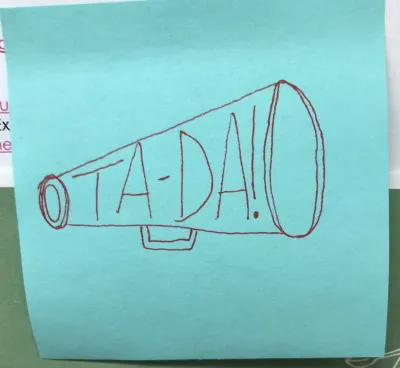
I desperately wanted something to show for the work I was doing to stay sober. This desire must be why they give you a chip in Alcoholics Anonymous meetings. I wanted something I could hold up and say, “See, I quit drinking, and I lost thirty pounds; I quit drinking, and I got this great new job; I quit drinking, and I won the lottery; I quit drinking, and my entire life changed.” My life did change, but not in ways I could hold up to my old drinking buddies to justify my choice, not in ways you could tell by looking at me. I wanted a “ta-da.” Something that would prove that giving up this thing I had once loved and needed was all worth it.
One day, I was standing at my sink making myself a snack. I was standing there with all these feelings, this angst at not having anything to show for my hard work, this feeling that I’d given up a lot and had little to show for it, this frustration at how slow the time felt, this questioning if anything would ever feel that fun again, this knowing that I was healing but the work was so hard. I didn’t particularly feel like eating, but I knew I needed something in my stomach. I stood there, shaking the protein shake. “Ta-da,” I whispered to myself.
Molly Davis is a writer and editor living in Columbus, Ohio. When she isn’t sitting in front of a computer, Molly enjoys exploring the outdoors with her adventurous family, cooking, and practicing meditation (or trying to).