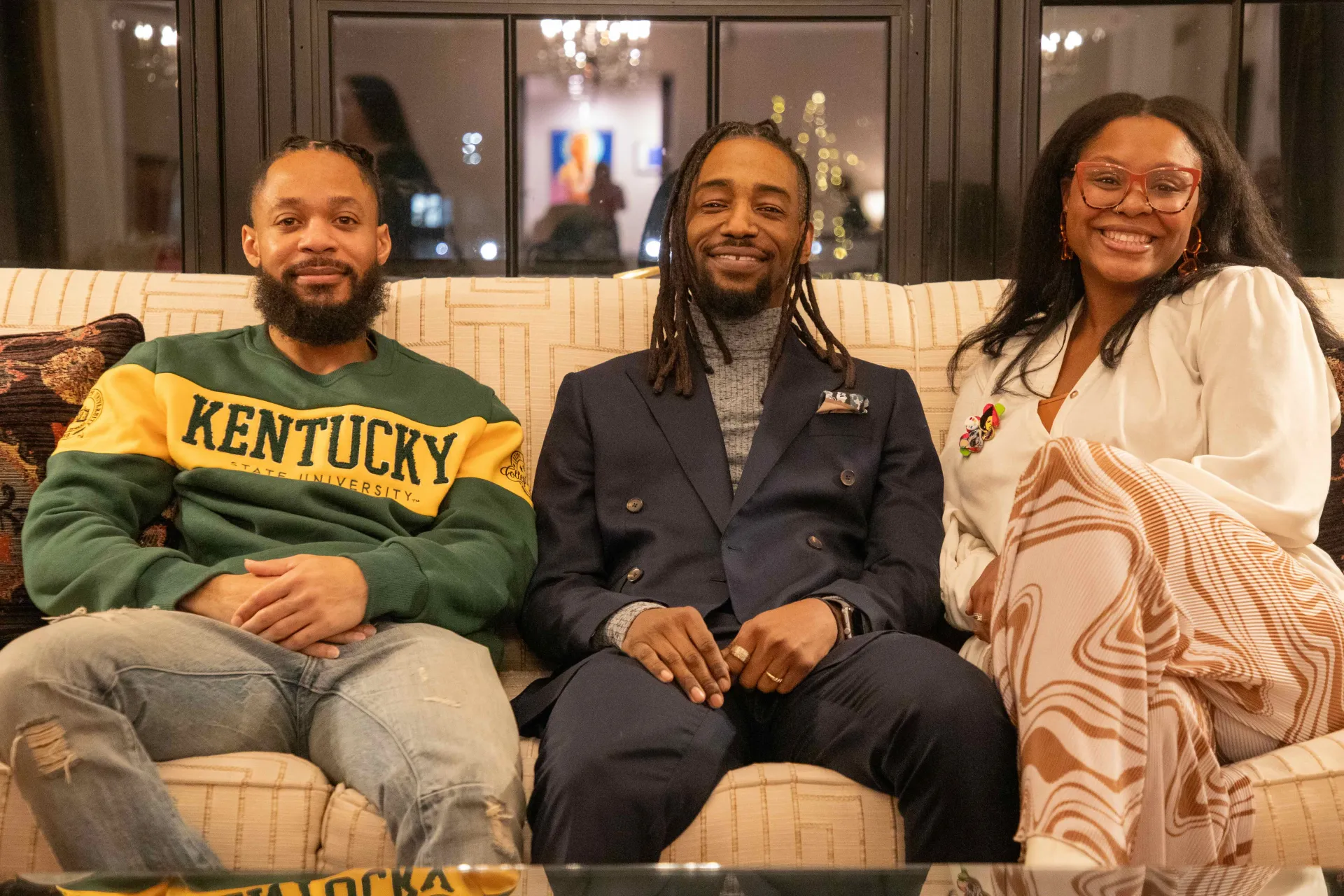
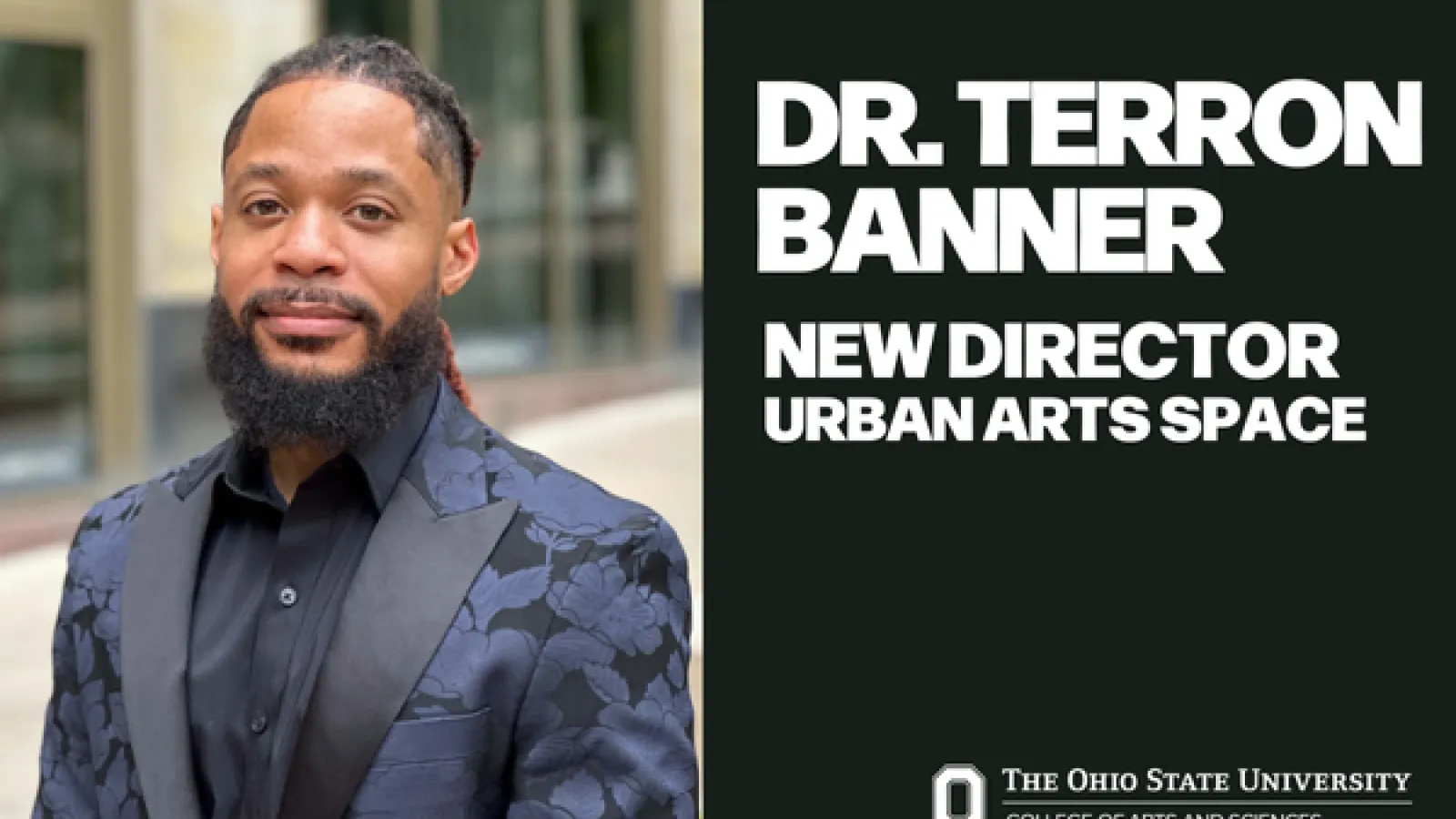
Dr. Terron Banner Appointed New Director of Urban Arts Space

Urban Arts Space is thrilled to announce that Dr. Terron Banner has been appointed as the organization’s new Director, bringing his commitment to community and his expertise in arts administration. Dr. Banner steps into this role after serving as Urban Arts Space’s Interim Director since July 2025 and as the Manager of Community Learning and Experience since 2021.
Dr. Terron Banner received his PhD in Arts Administration, Education, and Policy from The Ohio State University. Prior to that, he completed his Bachelor’s degree in Studio Art and Master’s degree in Business Administration from Kentucky State University. As an artist, he advocates for open access, just resource allocation, and community-centered decisions made in the arts administration and arts management process. As an educator, he supports responsive teaching that accounts for the lived experiences of students, and as a researcher, he seeks to encourage education reform. Most recently, Terron has led multiple grant-funded projects at Ohio State that explore ways of combining AI and Afrofuturism to increase arts and tech access.
Dr. Banner sat down with Diane Kollman, our Manager of Arts Marketing and Online Strategy, to discuss the transition from his previous role to his new position as Director.
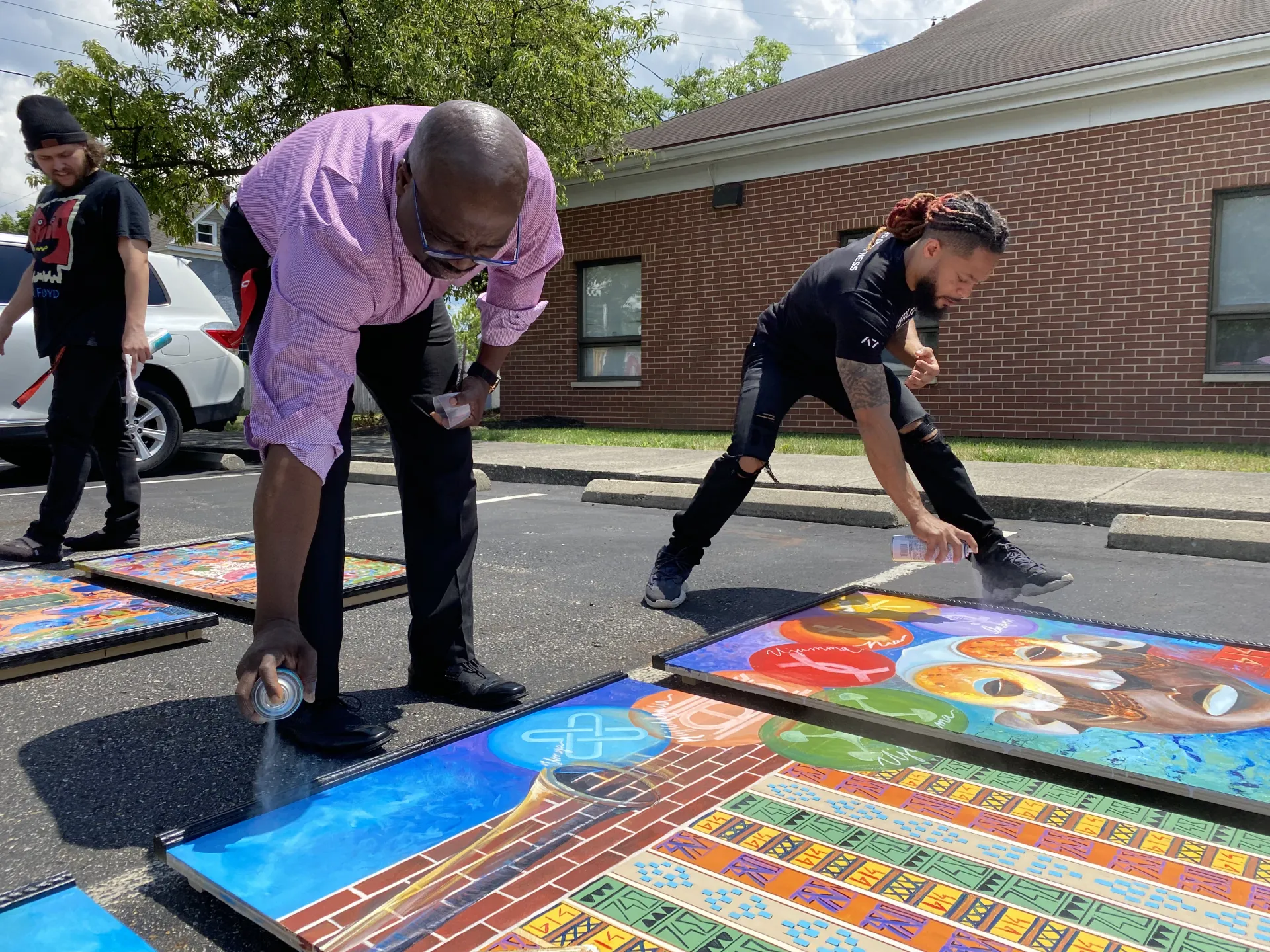
How do you envision the future of Urban Arts Space?
I think the future of Urban Arts Space is rooted in our foundation. So, continuing some of the successes and learning that we've experienced since I started here and before, but also addressing some of the shortcomings that come with any institution. As long as you take those lessons as a learning opportunity, they're not losses. I want to incorporate that learning and experiences into our ways forward, including more transparency around our inner workings, our funding mechanisms, and our real impact to the community, in time, treasure, and talent. We will continue pushing the envelope of what art can be and how it can be understood, especially in today's sociopolitical, educational climate. The community is facing numerous challenges, and I think we can be creative in how we address those challenges and serve as a model for how to ensure artistic freedom.
What excites you most about this new role?
That's a great question. Community programming will always be embedded in my inner workings. That’s not new, but I do think there is a fresh opportunity to push forward and utilize resources in different ways and ensure that the “community-engaged” component is a central component of all our inner workings and not just a department. I think that's what a true community organization looks like, where community organizing and community collaboration is an intrinsic part of every aspect of the organization, and it's not viewed as a separate department.
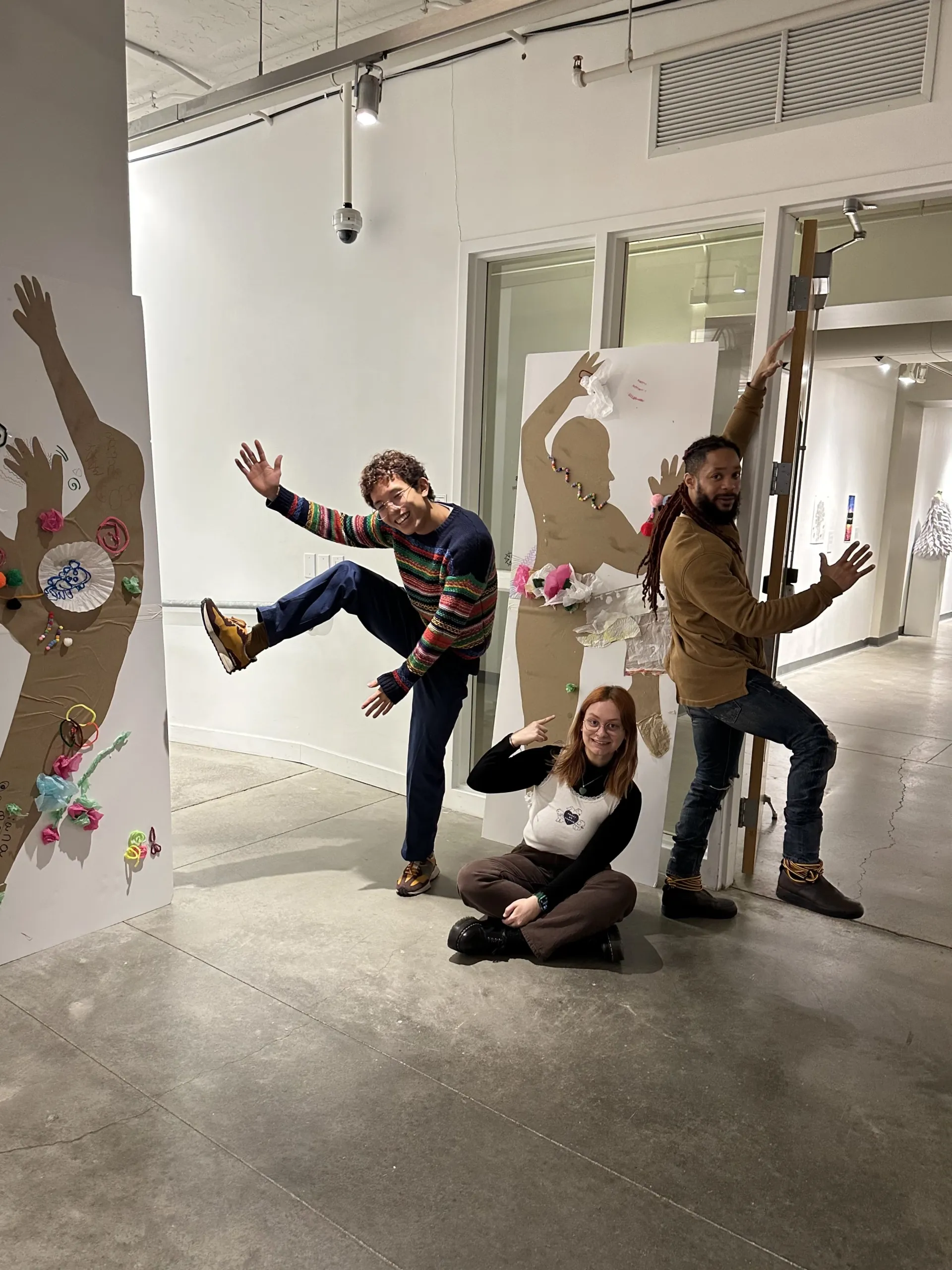
What drives, motivates, and inspires you to be an arts administrator?
I've always been an artist, and that has taken different forms, whether it be visual art, photography, writing, essays, or grant writing—I consider all of that a form of creativity. More recently, I'm seeing organizing and collaborating as an equally artistic art form. To paraphrase Octavia Butler, all organizing is science fiction, because it's about envisioning possibilities that are not currently present. When we're organizing and collaborating, I see that as a creative way to envision new possibilities, new futures, and new conversations. I'm excited about making the art happen in a multitude of ways, which is the essence of arts administration. And really, I enjoy seeing artists flourish. To me, that's as rewarding as creating my own work.
What can visitors, artists, and community partners expect from your leadership?
They can expect transparency. We're all human, so we won't always get everything right, but we can ensure that when we get something wrong, we will course correct. They can rely on the fact that myself and the organization will serve as a community asset that improves community life. With any large organization, there can be extractive institutional processes, so we will serve as a buffer to ensure that our actions become rooted in community-engaged practices before they reach the community. We will serve as that bridge between campus and community that we’re meant to be.
Outside of work, what fills your cup?
I have very, very full days and full cups—they’re overflowing. I'm part of a Wallace Foundation research project, and it's based out of Cincinnati, where I'm working with Black arts organizations to think about collective endowment-building. I'm doing that project with a great friend of mine, who also graduated from the Department of Arts Administration, Education, and Policy, Dr. Jason White, who teaches at Xavier University; he has his own consulting firm, WRD Consulting. That’s been fun. My sense of fun might be different from other people’s. [laughs] But again, I love community, so that project has been interesting.
I also have two children. My daughter is nineteen, and she is a cybersecurity major at the University of Hawaii. My son is twelve and into sports and all that good stuff that goes along with that fun age. If I'm not researching or at work or working with kids or the community, I might be in the gym. I always try to find time to go, because health is wealth. I compete in powerlifting, and I'm the advisor of the OSU Powerlifting Club, which is a hidden fact nobody knows. I love OSU football as well, so when it's football season, if I can fit in some games, I'm for sure there.
In addition, I teach in the Department of Arts Administration, Education, and Policy. I've taught a lot of different classes at different universities, but at Ohio State I've taught Art Criticism in Television, Developing Arts Careers, and Art and Music Since 1945. I developed a course called Black Art in America: Art and Cultural Policies from Reconstruction to Afrofuturism, and that was really enjoyable. I look forward to continuing teaching and collaborating with practitioners and scholars—and thinking about the research component of community engagement.