How Artist Michael Hambouz Uses Music to Form Dimension and Color

Based in Brooklyn, New York, Michael Hambouz is a multidisciplinary artist and musician who creates a variety of intricate and abstracted works ranging from prints and sculptures to animations. Hambouz uses music and sound to form dimension and color into works that process loss and reflect rural Midwest, metropolitan, and cybersphere life as a first-generation Palestinian American.
Hambouz’s work is on view at Urban Arts Space in Cartography through August 16, 2025.
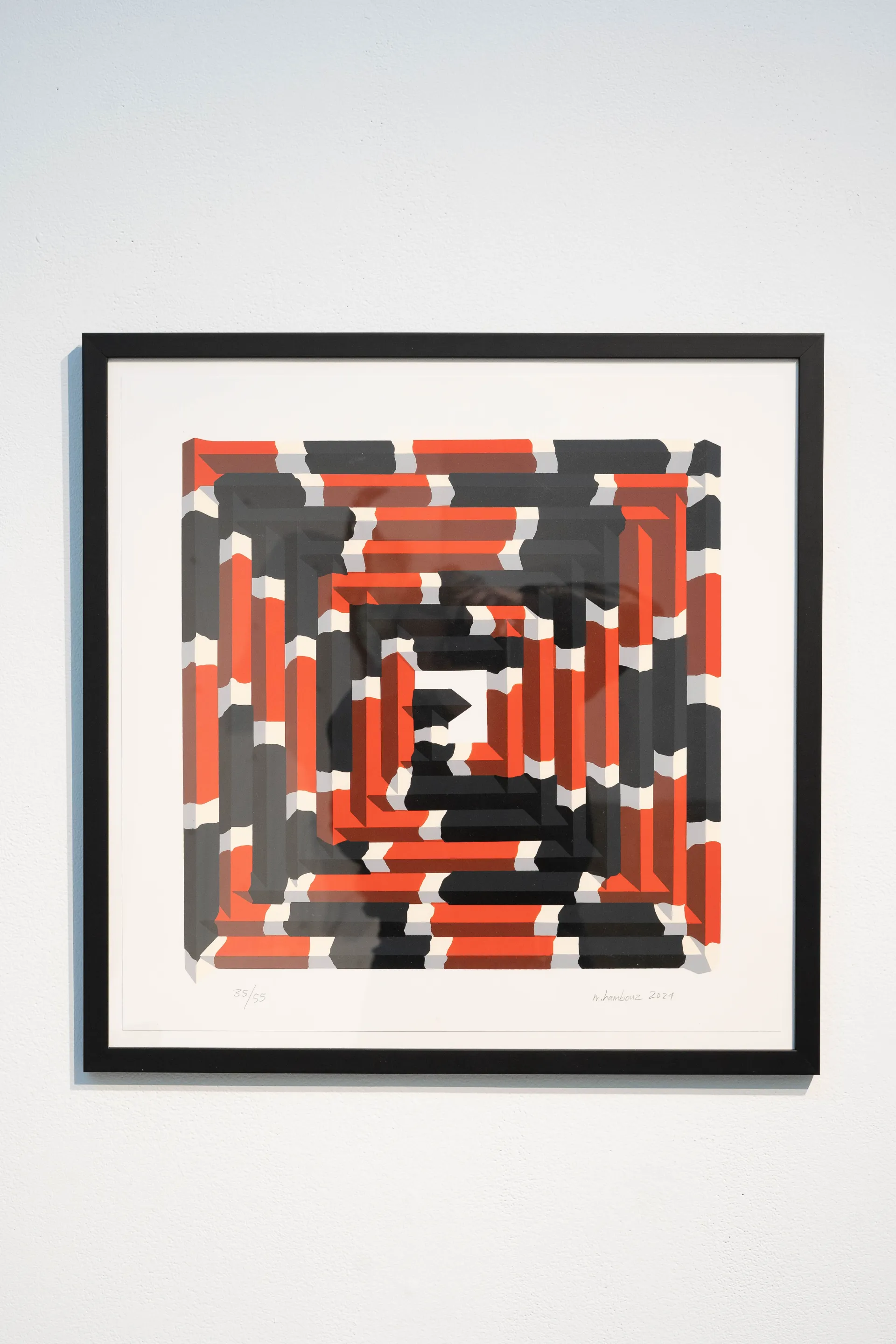
What types of music influenced the works Not Complicated, B / W / R / G //, and Daylight?
I began working on these pieces in the summer of 2023 while on residency at Wassaic Project in upstate New York. In January of that year, the newly installed harder-line Is. security minister Itamar Ben-Gvir had ordered the Palestinian flag to—once again—be banned in public spaces and universities. During my time at the residency, the great Sinéad O'Connor passed away—an artist that played a huge inspiration to me musically and politically while growing up in the rural Midwest in the 80s and 90s...and an artist that just so happened to have had death threats placed against her many years earlier by—none other than—Ben-Gvir, forcing her to cancel a concert for peace in Jerusalem.
There was an unexpected but direct connection made with the timing—Sinéad served as audio inspiration and muse for many of the works in this series. The brutal honesty in her words and voice and heartbreaking beauty in her timbre carried me in conjuring forms and hues.

What is your process for creating these chromesthesia-influenced works? Are you creating music to go with your pieces?
Before starting each new piece, I create a playlist that reflects how I am feeling at that exact moment—mentally, emotionally, physically. More often than not, the sets are strategically constructed to not only lift me up, but to also block out digital interference/communications (phone, computers), which often paralyze and stunt my creativity and productivity. I still use iTunes (or whatever it's called now), digging through my own personal collection to assemble—a process that is its own mindful art project of collage and assemblage.
For this particular series, I would start each morning first by listening to daily audio broadcasts of Democracy Now!—a free press organization that I have volunteered for over the years, and have followed regularly since first meeting founder Amy Goodman at my alma mater Antioch College (Yellow Springs, OH) in the 90s. The particular setlists listened to afterwards were made to help me process the weight of the current events revealed. And as mentioned above, Sinéad was featured heavily at the time.
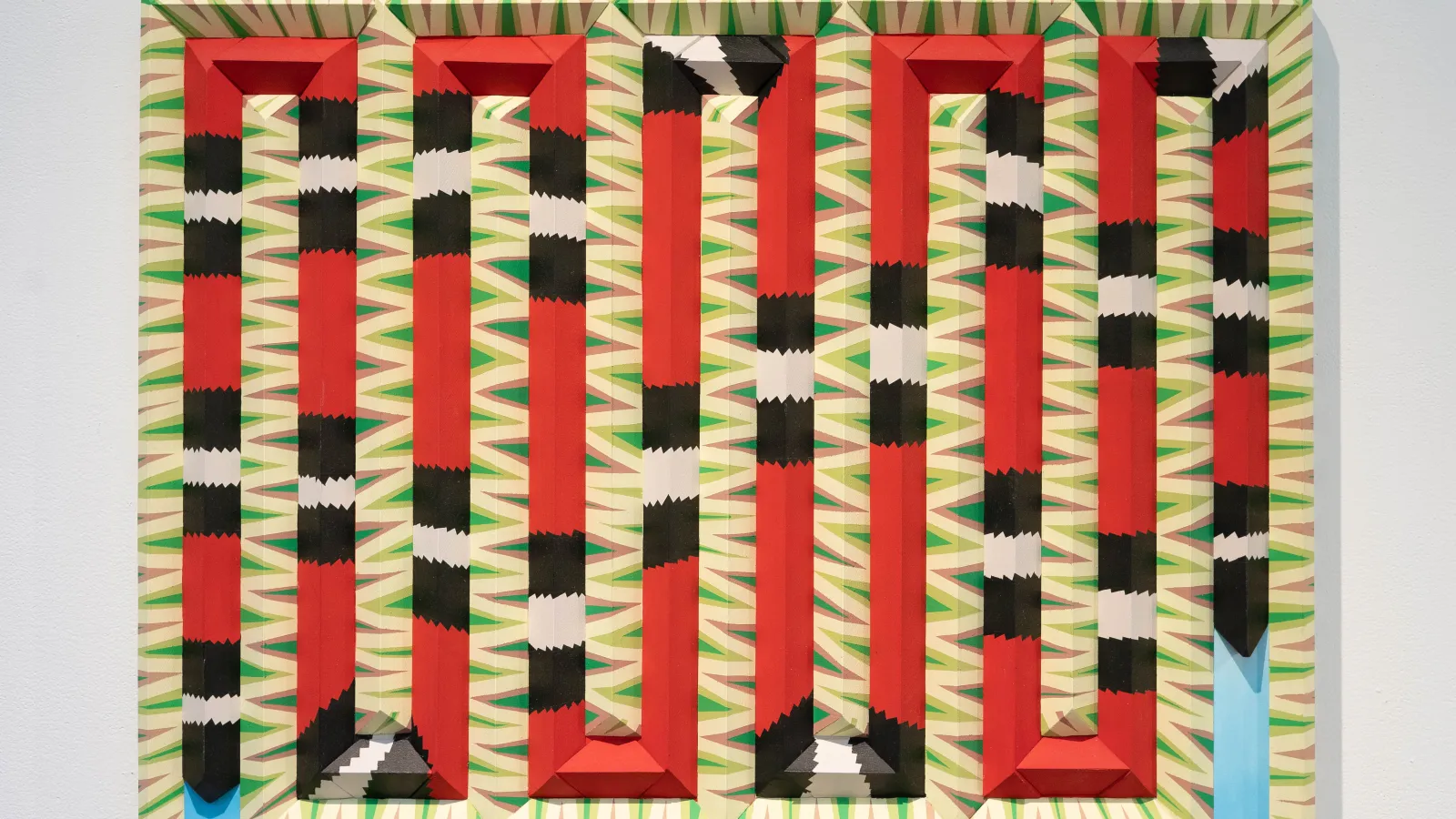
A snake is a central part of Not Complicated and Daylight. What is its significance in these works?
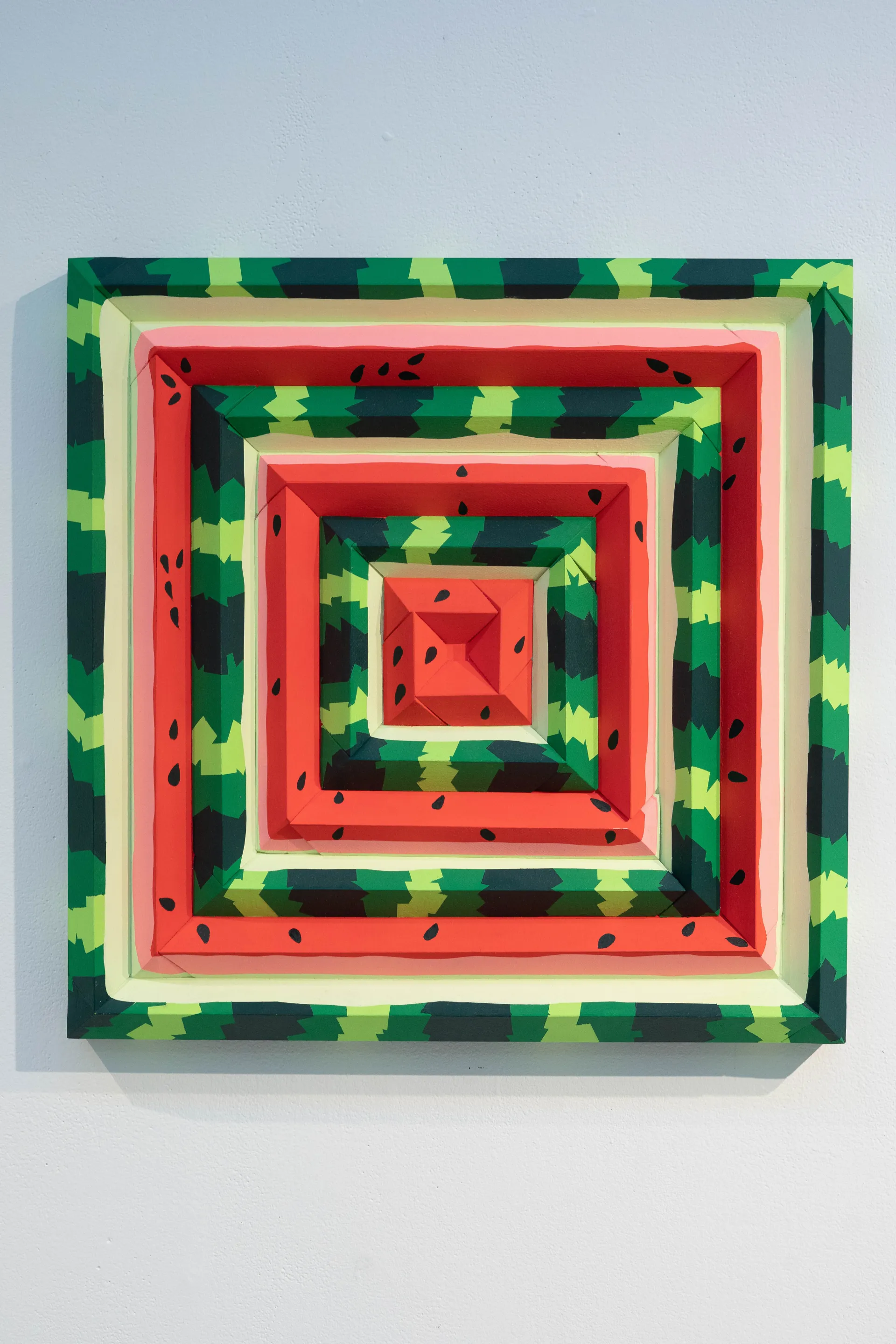
I painted multiple watermelon-variant pieces for this series in early 2023 (as mentioned earlier in reference to B/W/R/G II)—an homage to the fruit’s symbolic use/response to prior outlawing of the flag and its colors in '67, and to the artists that came before me in the 80s that were arrested for displaying the colors in gallery works.
The process made me really think about my personal relationship with flags as a first-generation Palestinian American—which was essentially, quite negative and distant. Growing up in rural Michigan, the houses with the most American flags in the yards were the houses that you stayed away from—the houses you most likely would get a shotgun drawn on you and a racist or homophobic (or both) slur spat out for being too close...a towering flagpole in a yard, the most phallic of colonial markers...and frankly, quite redundant: "yep, I know where I am already. I was born here. I live here too." And I was thousands of sheltered miles away from understanding the personal damage of having every sense of pride deliberately stripped from me, down to the basic use of colors.
I realized that it was color itself that I personally found to be powerful, more so than a flag. I began looking—beyond the watermelon—for like-color motifs in nature. I became really attracted to milk snakes in particular for various reasons: hypnotic patterns, beauty, their colors alone or when paired with green—allusions to not only Palestinian pride,but also to a "snake in grass," which felt relevant to me as a U.S. citizen...but more significantly, knowing that the non-venomous milk snake is often killed by those that misidentify them for their equally beautiful yet highly-venomous reptilian relatives, the coral snake. The truth is, they are both completely harmless when simply left alone at peace. I think about this notion a lot. And both snakes make frequent appearances in my latest works.