An Interview with the Artists of “Homing: Site Reflections”

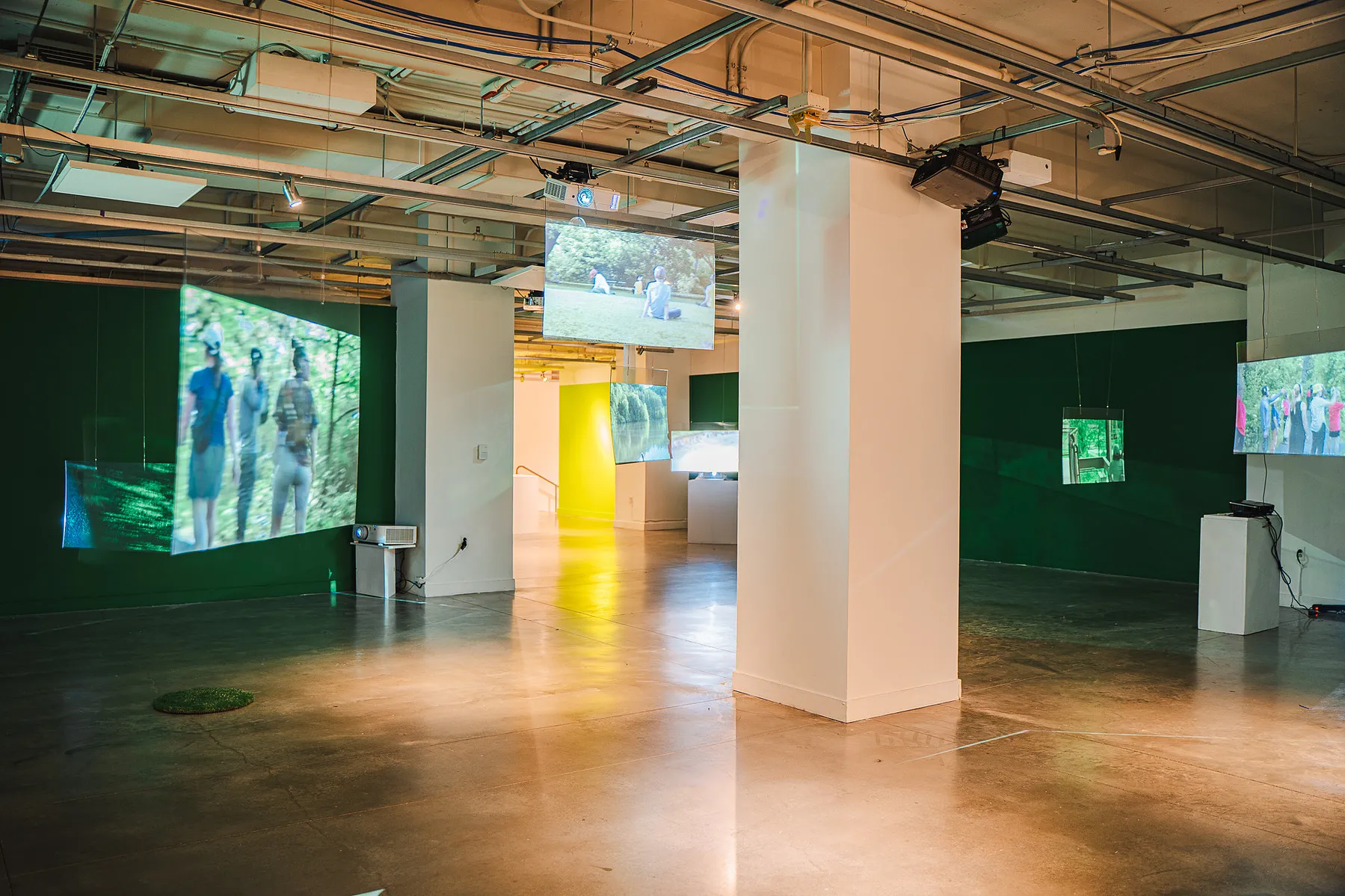
Homing: Site Reflections is a collaborative project by Katherine G. Moore and Kathryn Nusa Logan that examines how people connect with landscapes through sound, movement, and participatory performance. The exhibition at Urban Arts Space brings together film, audio, and installation to document site-specific audio projects created across Ohio. Visitors are encouraged to slow down, pay attention to their bodies, and think about how they move through space.
This year, the project grew through a new partnership with Dr. Mary Gardiner, Ohio State Distinguished Professor of Entomology. The show includes insect specimens collected from the Lazarus Building's green roof and features a participatory audio performance on the rooftop garden recorded in July 2026.
We spoke with Katherine and Kathryn about their process, the project's surprising turn toward entomology, and what "site" means to them after years of returning to this work.
All photos are courtesy of Lindsey Schleich.
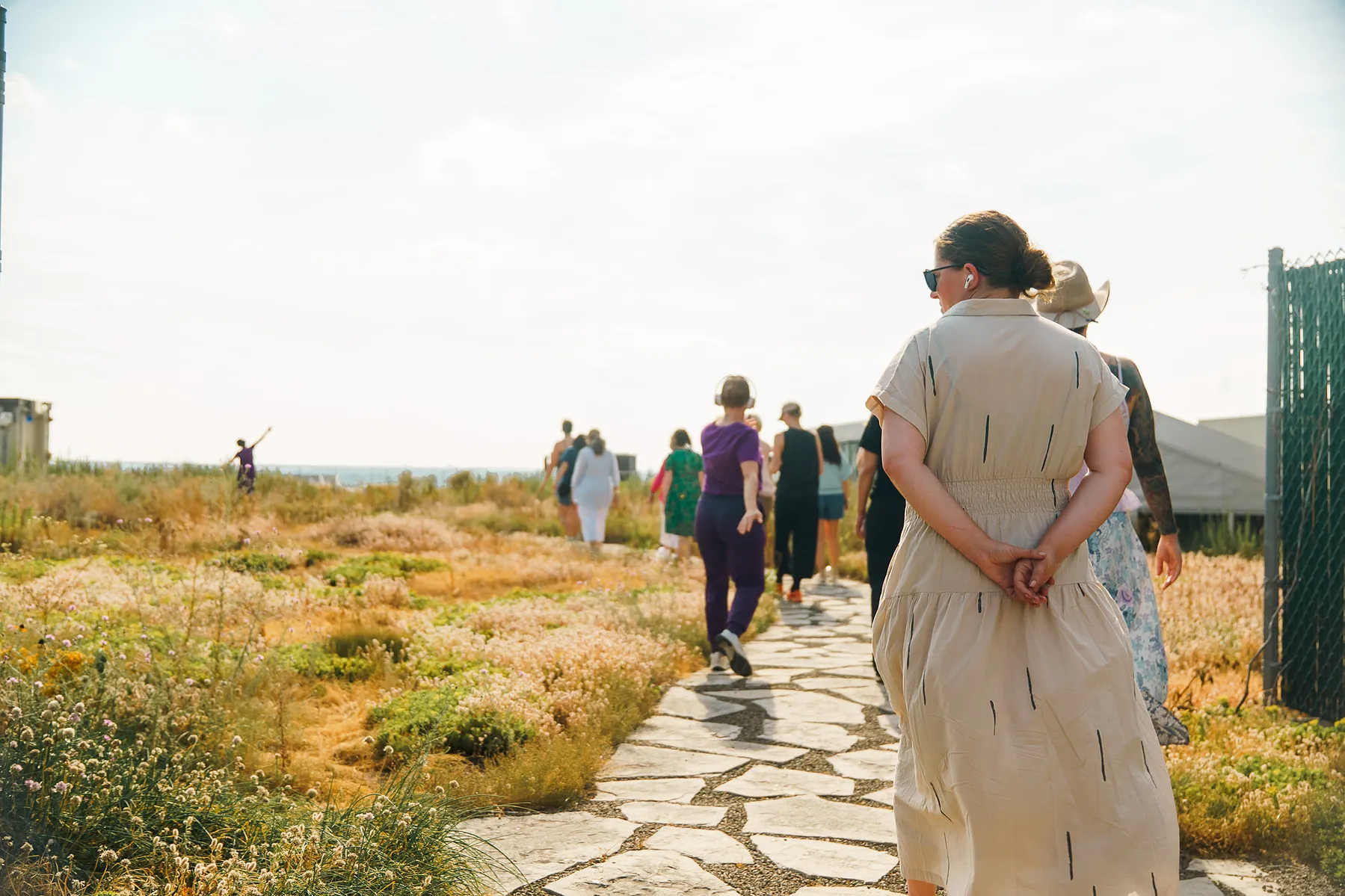
How did the process shift moving a piece from an outdoor performance into the gallery space?
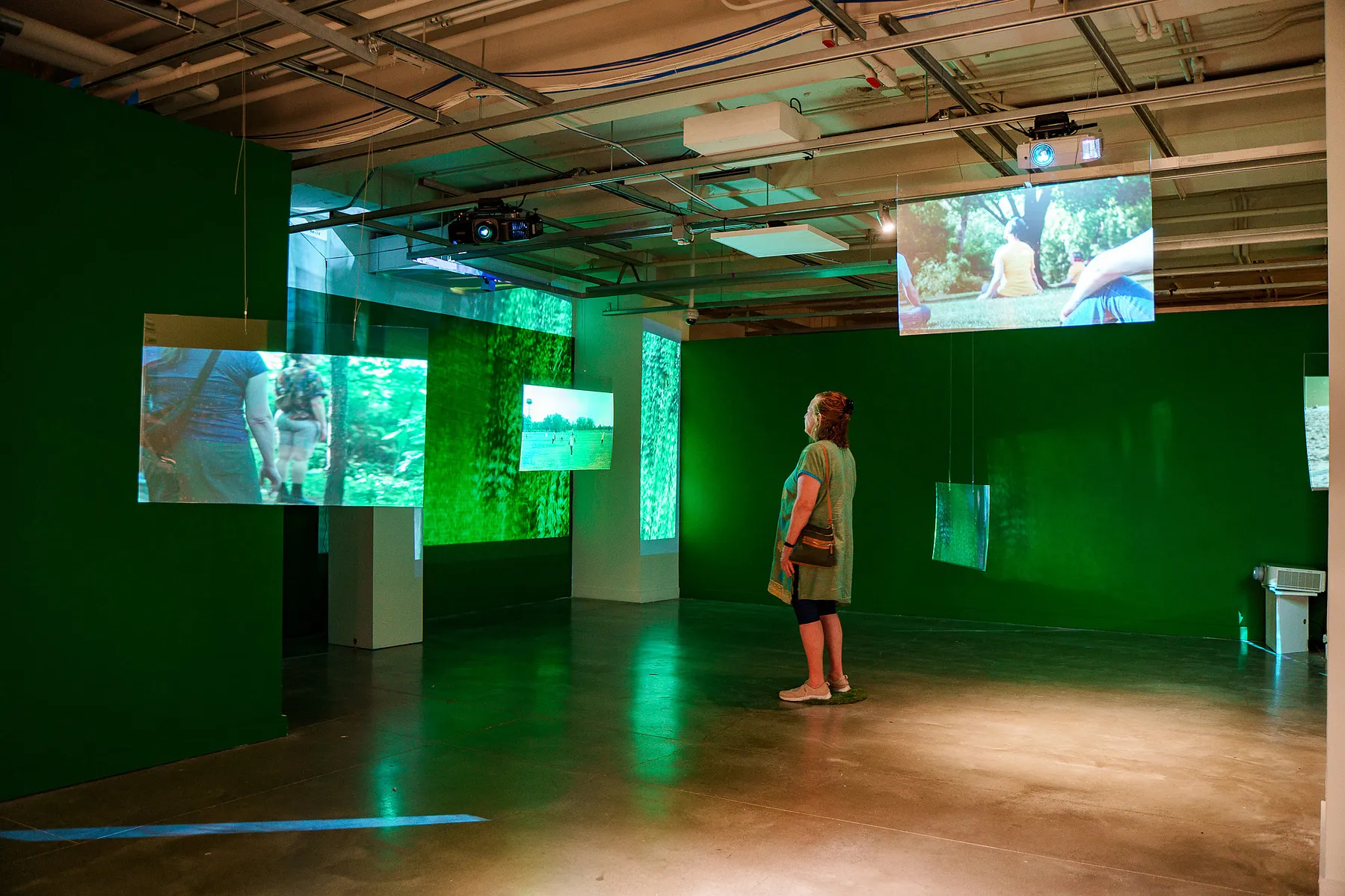
Katherine: In some ways, it was easy because we had so much material from past iterations of Homing to build from in terms of video and audio. In other ways, it was exciting and challenging to consider how to encourage gallery viewers to attend to their own bodies and attention in the same way participants of our audio experiences had done in the past. We obviously had to consider a lot of details in regard to material and technology that is quite different from working outside. We had to think about creating an environment for people to move through, instead of just responding to something that was already there.
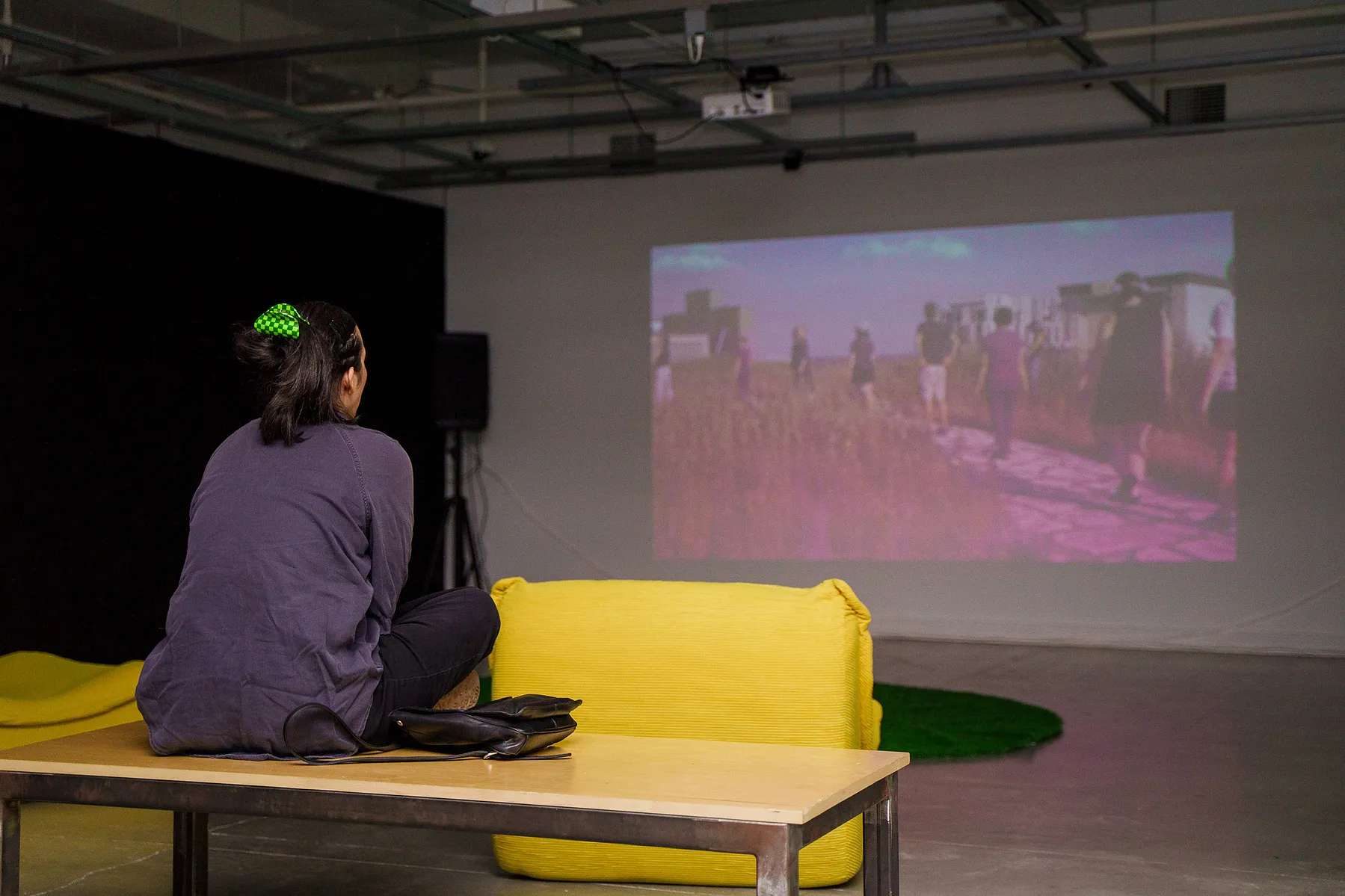
Kathryn: This is the kind of work that interests me most—considering the central ideas of a work and imagining how they can be fulfilled in different media, in different formats, in different spaces. How does this work of poetic audio become a performance, and how does that performance become video, and how does that video become a choreography of people moving through a gallery? We were interested in grabbing pieces from each of these outdoor participatory performances that spoke to the ethos of what we were doing and creating a kind of video forest for viewers to sit in. Because we're interested in viewers listening with close attention, we built the exhibition in such a way to encourage slowing down and leaning in.
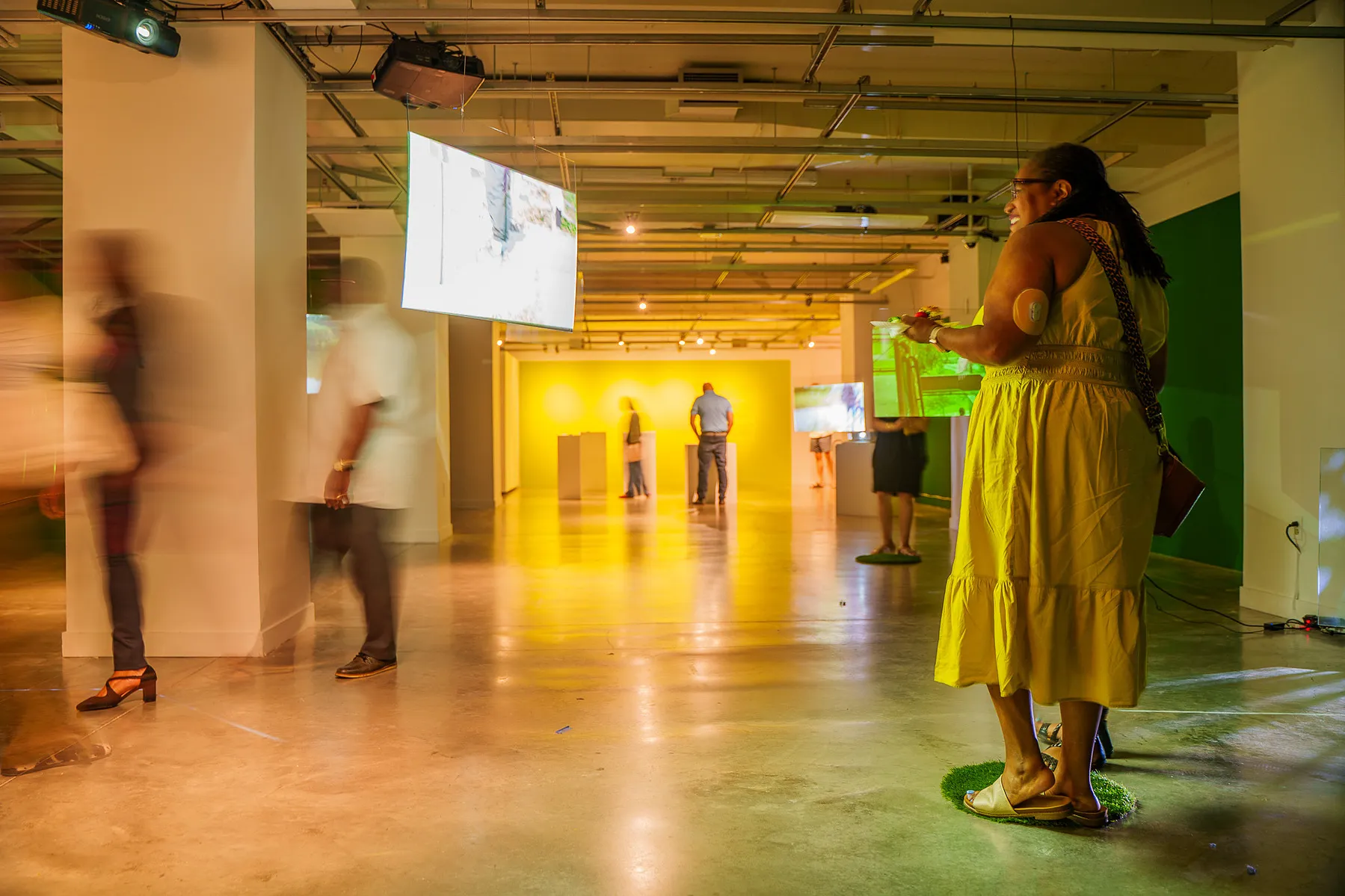
What were you hoping the green-circle listening stations would do for viewers?
Katherine: The green circles indicate places where people can listen to audio that matches what they are seeing on the screen in front of them. Our hope was that the circles would encourage people to stay and listen for a longer span of time, as opposed to just breezing by the screen.
Kathryn: With our dance backgrounds and our interest in building collective choreographies, we hoped the green circles could encourage this slowing down. The pieces of audio that we chose to play on each of these green circles speak clearly to the central themes of this project—instructing the people on screen as well as the viewers in the gallery to listen in to their own bodies, to connect with what is around them, to consider their relationships to the site where they are.
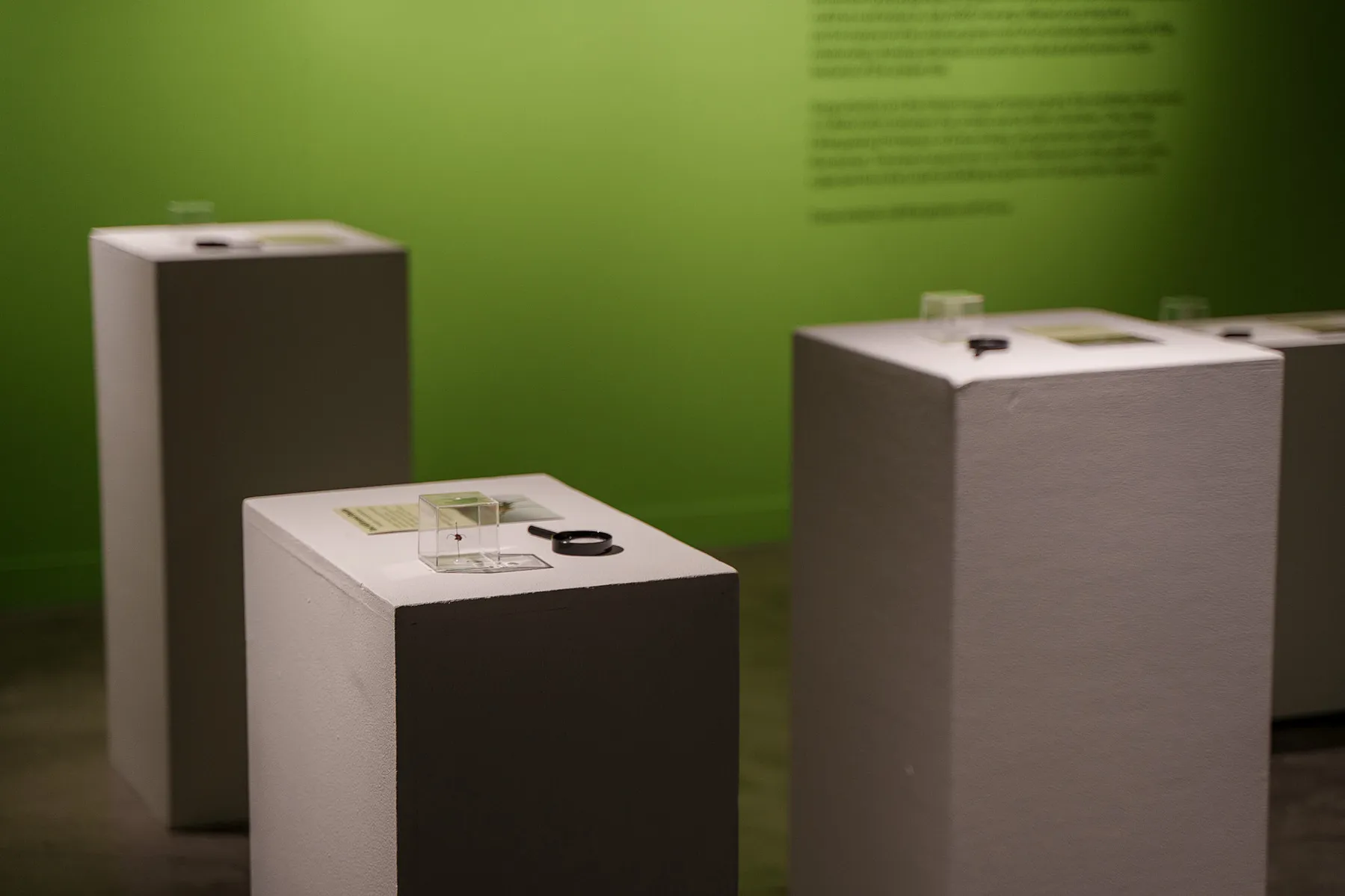
What made you want to bring insects and entomology research into this project?
Katherine: With Diane Kollman's help, we were able to secure a grant from Ohio State Energy Partners that funded this project and allowed Dr. Mary Gardiner to conduct some research on the rooftop. We were interested in bringing Dr. Gardiner's work into the gallery in a visual way, so we landed on insect specimens. We were excited by connecting art and science through the site-specific location of the green roof of the Lazarus Building.
Kathryn: Collaborating with Dr. Gardiner and her lab was an exciting part of this process. In previous iterations of Homing, we made connections with different experts on the site to inform our building of the audio guides, which feels like an important element of this project, offering real and concrete information about the site that is in conversation with our poetic and embodied instructions. For example, when we worked with the Ohio Department of Natural Resources on our guides for Strouds Run State Park, we met with a geologist and a historian. Working with Dr. Gardiner and her graduate student, David Narayanan, we were able to learn about some of the actual insects that live on this exact site, and what their existence there means about this rooftop garden and the surrounding area—and in turn what that means about each of us and our connection to ourselves, each other, and this place. These are all different kinds of orientation toward site, which is the goal of this project.

How did working with scientists change the way you think about "site" or "home"?
Katherine: Learning about the insects gives me a sense of the ecological complexity taking place underneath my own feet. There is more going on than is perceptible through typical human attention. This gives me more respect for my environment and surroundings.
Kathryn: Working with Dr. Gardiner and David affirmed the way this project thinks about site—homes are everywhere to different kinds of organisms. When you really think of the grass or the air or the roof as a home to someone or something, it might change how you move through space.
What was it like bringing a group through that site together, versus earlier solo audio walks?
Katherine: All of the iterations of Homing have included a group event where people can move through the audio experience together. It is always really exciting to see how individuals interpret the prompt and how a cohesive and choreographic sense of ensemble emerges.
Kathryn: We usually build the prompts in the audio guides from our own embodied research at the site and have often experienced an interesting scaling effect—when you do the guides on your own, it is quiet and intimate. When you do them in a group, it can feel quite expansive; I get a sense of being a part of something much bigger than myself.
What was your biggest inspiration for Homing: Site Reflections?
Katherine: This project is many years in the making and is built off of our shared embodied movement practice in relationship to site. We're interested in slowing down and interrupting typical ways that people move through natural locations.
Kathryn: Cultivating a deep and embodied sense of attention in relationship with the natural world has been a part of our practice both together and individually for many years. This project is just one of many ways that we practice and create artistic output from this kind of research.
What's next for Homing? Do you plan to explore different sites in Ohio?
Katherine: We're not sure yet! We may extend this project to other locations in Ohio or elsewhere. We will certainly continue working with site. We're also creating an archival website for all Homing projects to live.
Kathryn: Yes, we are hoping to expand the project to other sites!
Homing: Site Reflections is on view at Urban Arts Space through August 15, 2026. On Saturday, August 15, from 1–3 PM, join Dr. Mary Gardiner and artists Katherine G. Moore and Kathryn Nusa Logan for the Attention Lab, a free interactive art/science workshop exploring the hidden life of urban green spaces.
