Narratives Rearranged: Collage as an Act of Resistance
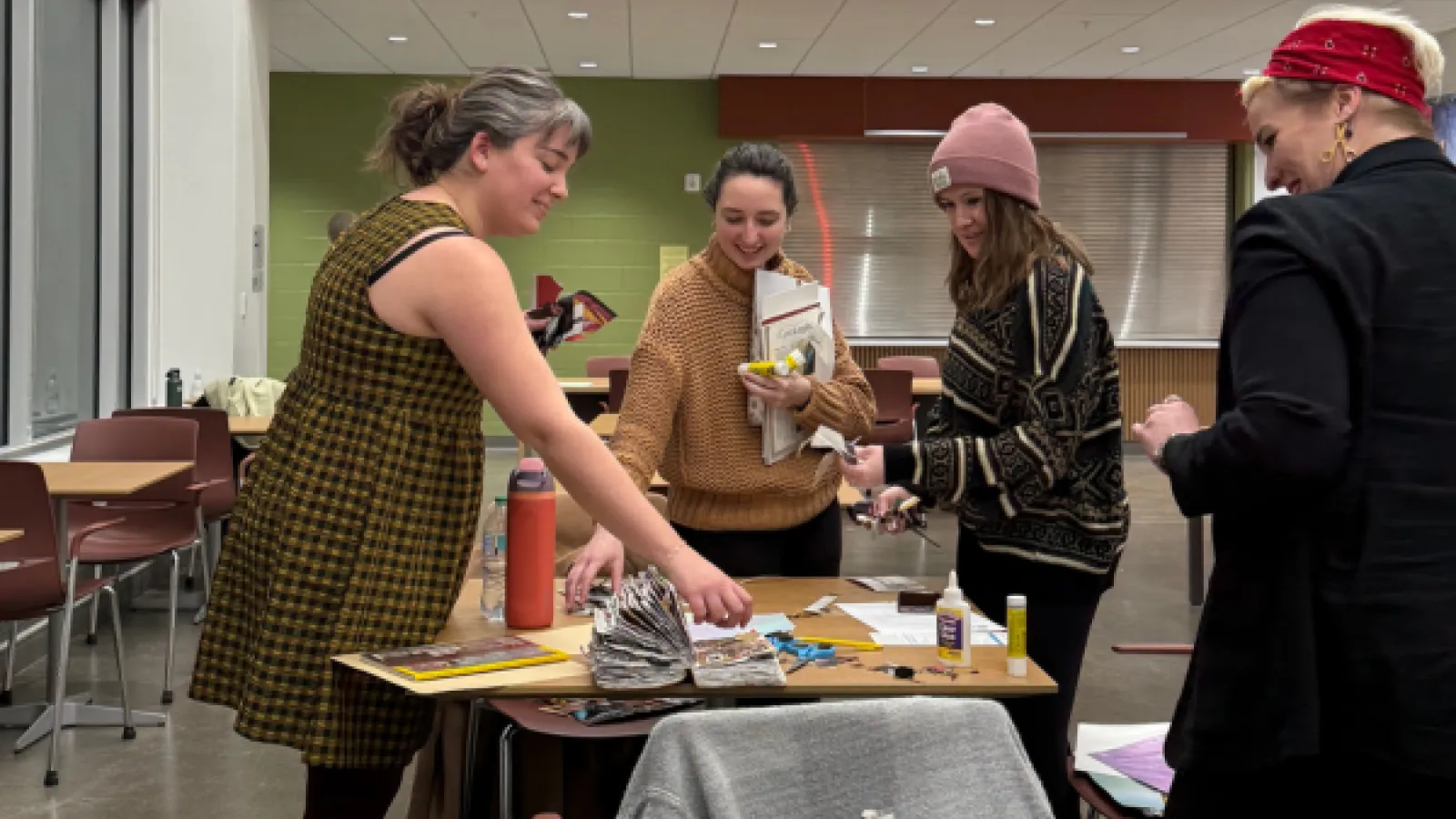
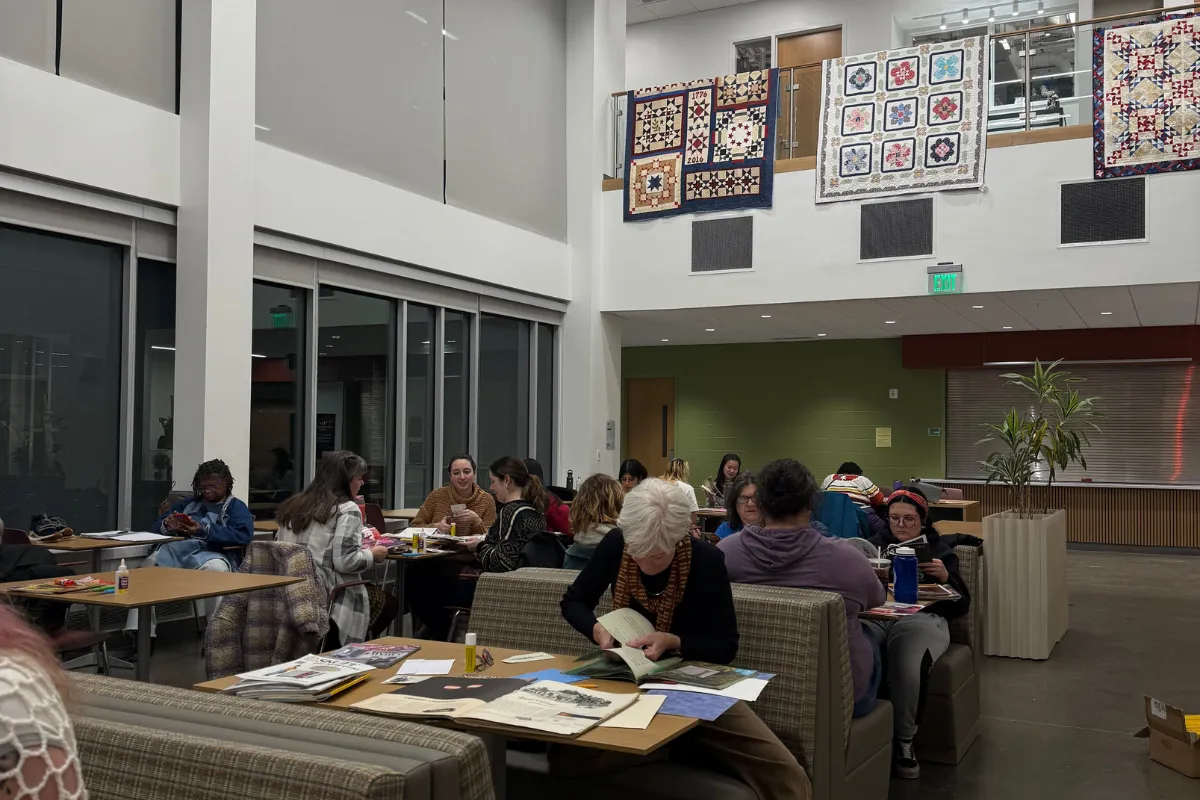
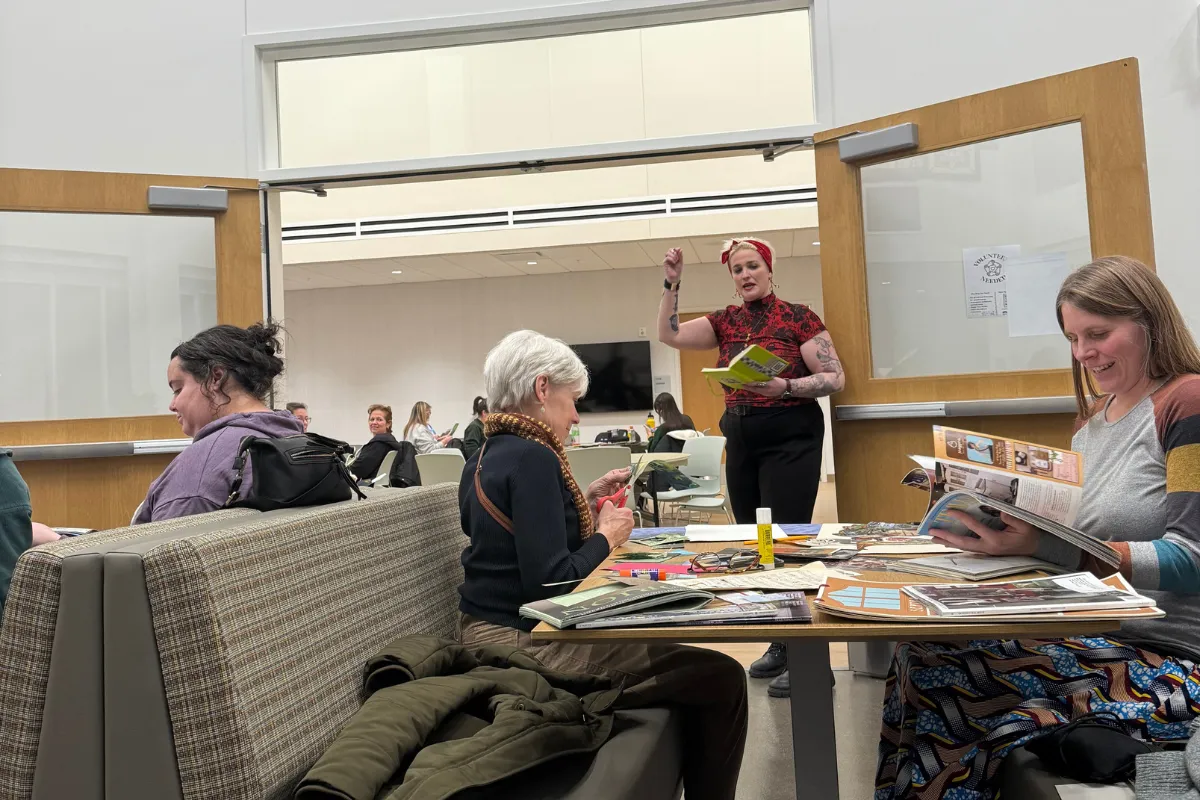
Collage is an art rooted in disruption. It resists singular narratives, building from preexisting fragments and making space for complexity, contradiction, and the unlikely artist. That spirit was alive and flowing through the Columbus Collage Collective’s meeting this January. Over 65 community members of all ages, backgrounds, and identities came together at the Fran Ryan Center for an evening of shared creativity.
I was drawn to the event for that exact reason: collage feels more like an invitation than a test. For many people, channeling your creativity can feel intimidating and unfamiliar, but collage challenges the idea that you need particular knowledge or materials to be an artist. Like many of the attendees I spoke to, I came to this event to observe, meet new people, and take intentional time in the middle of my week for art.
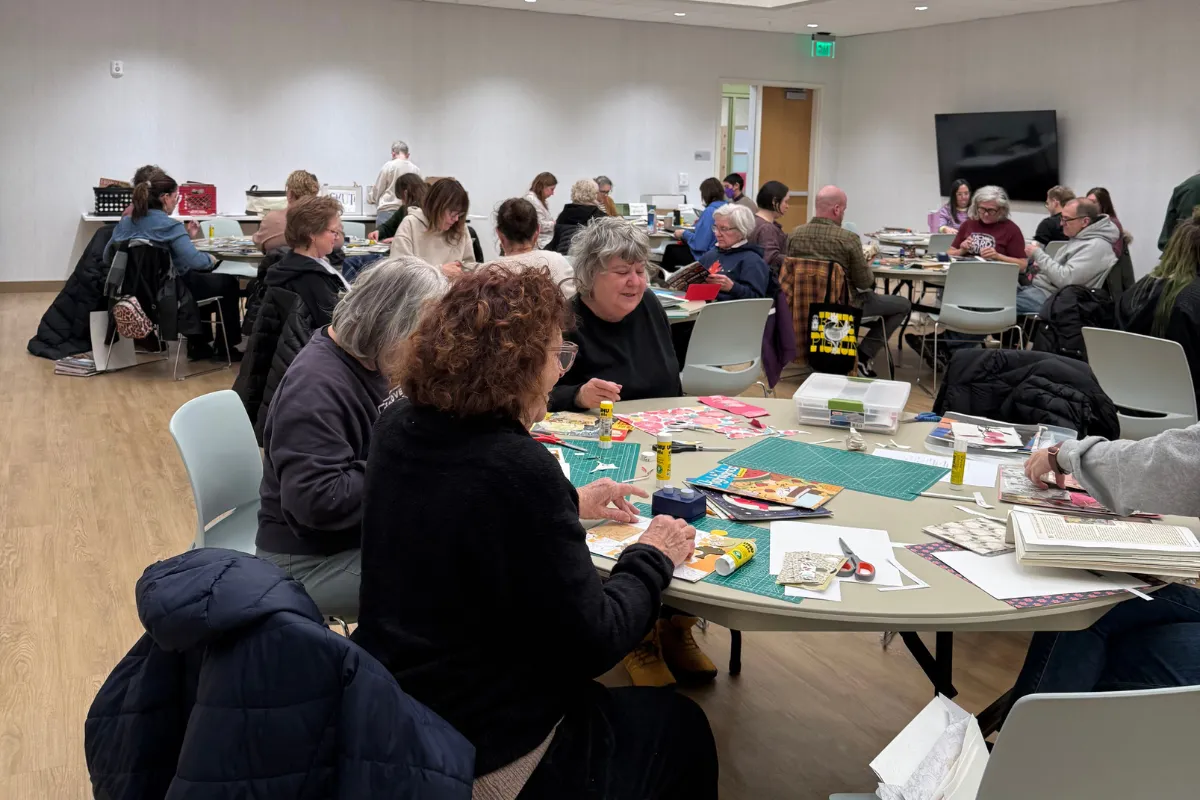
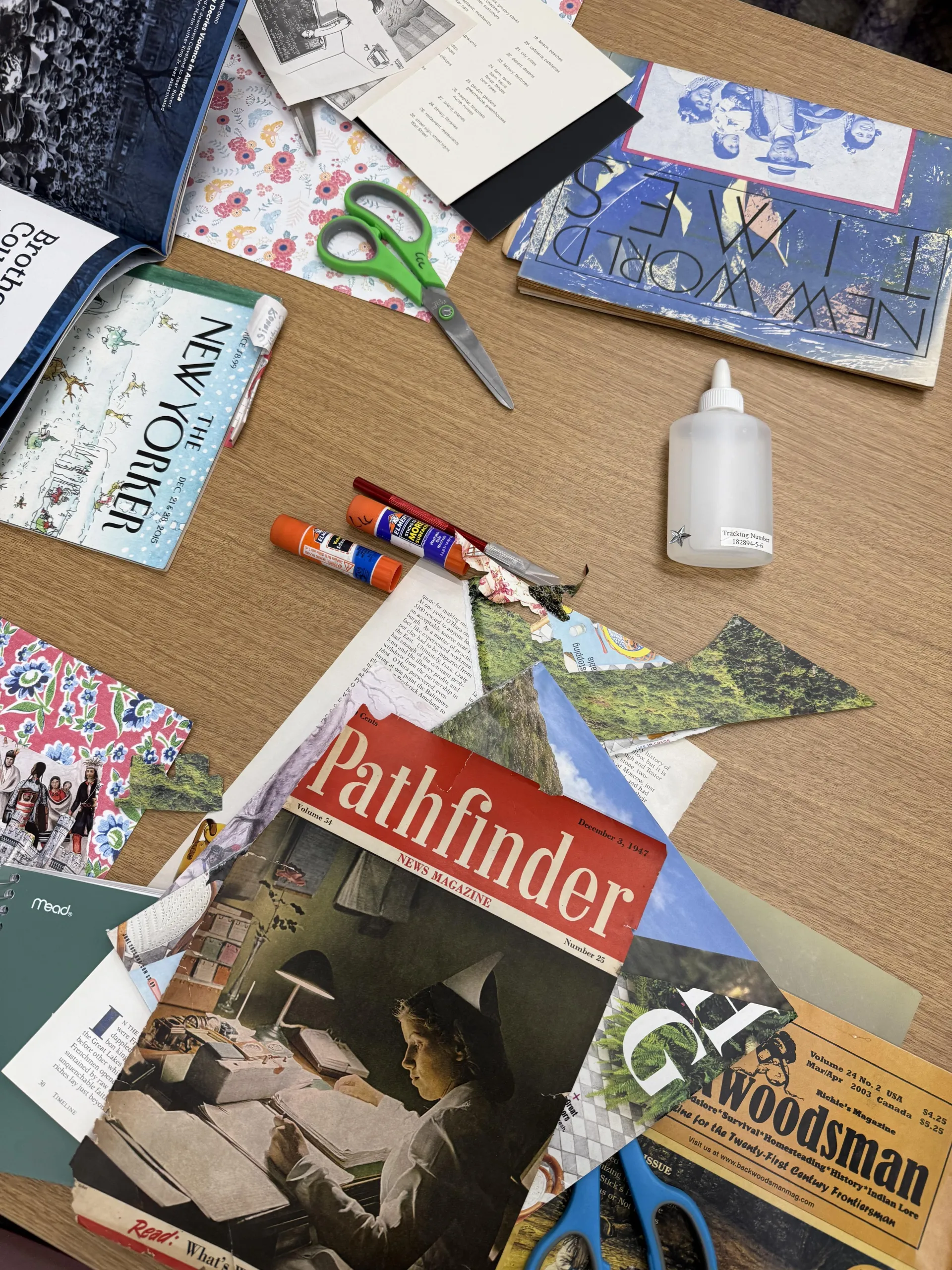
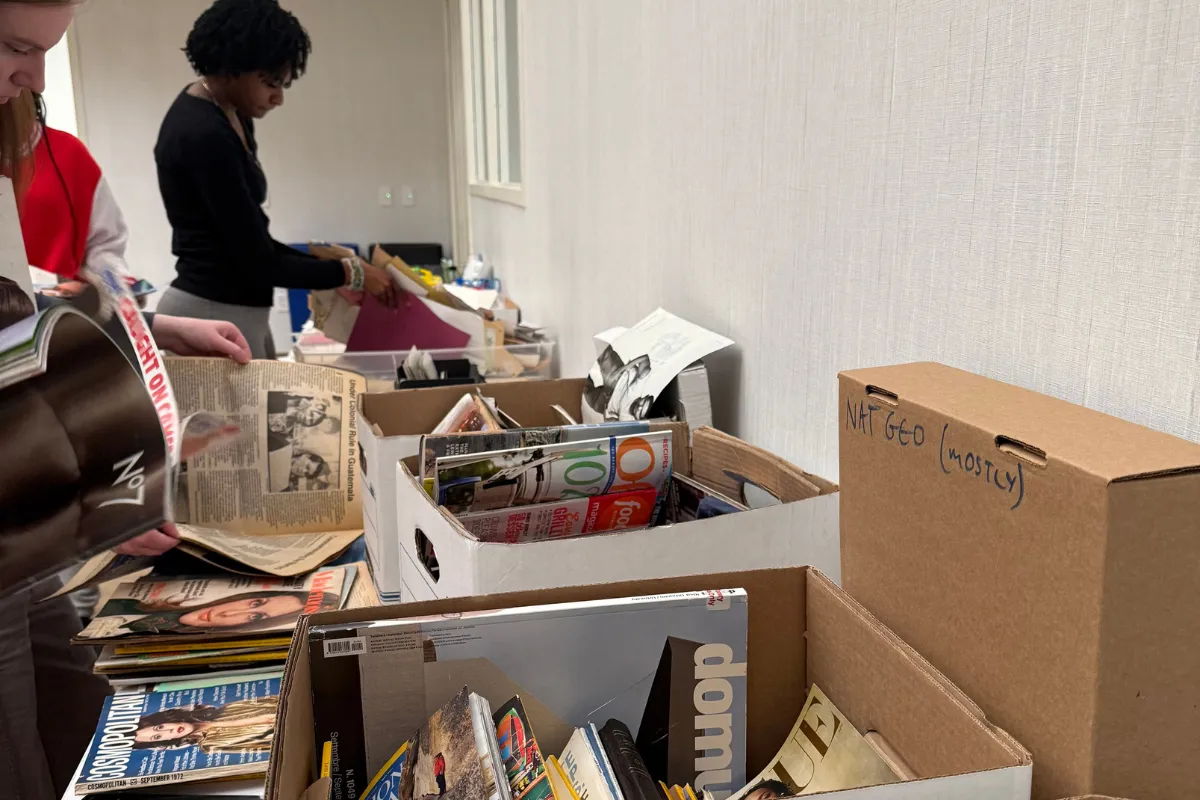
The Columbus Collage Collective (CCC) was founded in 2023 as a community organization based on a commitment to accessible art. Its monthly gatherings have grown into recurring collage parties, public events, and partnerships across Columbus. The CCC operates as a nonprofit and emphasizes mutual support and collage’s foundational idea of reusability. Its extensive collection of books, magazines, and other materials come primarily from donations, providing plenty of opportunity for unique and unexpected vintage finds. The CCC is also part of a broader ecosystem of collage groups around the world, connecting to a larger movement where collage is treated as both personal expression and cultural dialogue.
Collage is often traced back to Pablo Picasso and early 20th-century Cubism, where fragments of newspaper and printed material began appearing in fine art contexts. While those moments were influential, they often fail to include the women across the world who also laid groundwork for the practice. Looking beyond that singular origin story reveals collage as an ongoing, accessible practice shaped by many hands and experiences. In this way, collage becomes more than a medium, but also a method for questioning authority, reshaping representation, and finding agency through the simple act of rearranging what already exists.
The broader understanding of collage as communal, accessible, and culturally layered is reflected in the work of Emily Morgan, president and founder of the Columbus Collage Collective. This work relies on the shared leadership and dedication of her board of directors, including Doug Cuckler (Vice President), Jordan Fowler (Treasurer), Ella Kurutz (Secretary), and Anthony Mecca (Logistics). Throughout the evening, it was clear that their roles extend far beyond organizing and planning. They floated between tables, checking in with newcomers, answering questions, and pausing to admire works in progress. The atmosphere signaled that this was a place where people could be present without pressure.
Emily speaks about collage as a way of reclamation. Her hope for attendees is not that they leave with a perfect piece, but that they leave feeling a sense of agency, connection, and confidence in their creative voice.
“We want to be as low-barrier as possible while building a positive experience with collage and the community,” she said.
Emily’s leadership within the Collective is deeply connected to her own artistry. Her curated group exhibition, Pulp Stiction: Collage as an Act of Resistance, will be on display at Hopkins Hall Gallery from October–December 2026. Expanding on the ideas that shape the Collective, the show treats collage as a vehicle for dissent, dialogue, and shared authorship. Works from local, national, and international artists will exist alongside interactive elements like workshops, panel discussions, and a community collage station that invites visitors to participate in a collaborative art piece.
The call for collage work is currently open through June 30, 2026.
In mid-2025, Emily learned that the major project grant she planned to use to fund the exhibition would no longer be available. Rather than scale back the vision, she leaned into collage’s core themes of resistance and collective care and moved forward with the project anyway. She launched a fundraiser to keep the exhibition accessible while ensuring participating artists and collaborators are paid fairly. Those who want to support the exhibition and the artists involved can contribute here:
As I left the Columbus Collage Collective meeting, it felt clear that the power of this art form lies not only in what ends up on the page, but in what happens amongst the people. In that way, collage continues to function as a quiet form of resistance: against isolation, against perfection, and against the idea that creativity belongs to only a few.