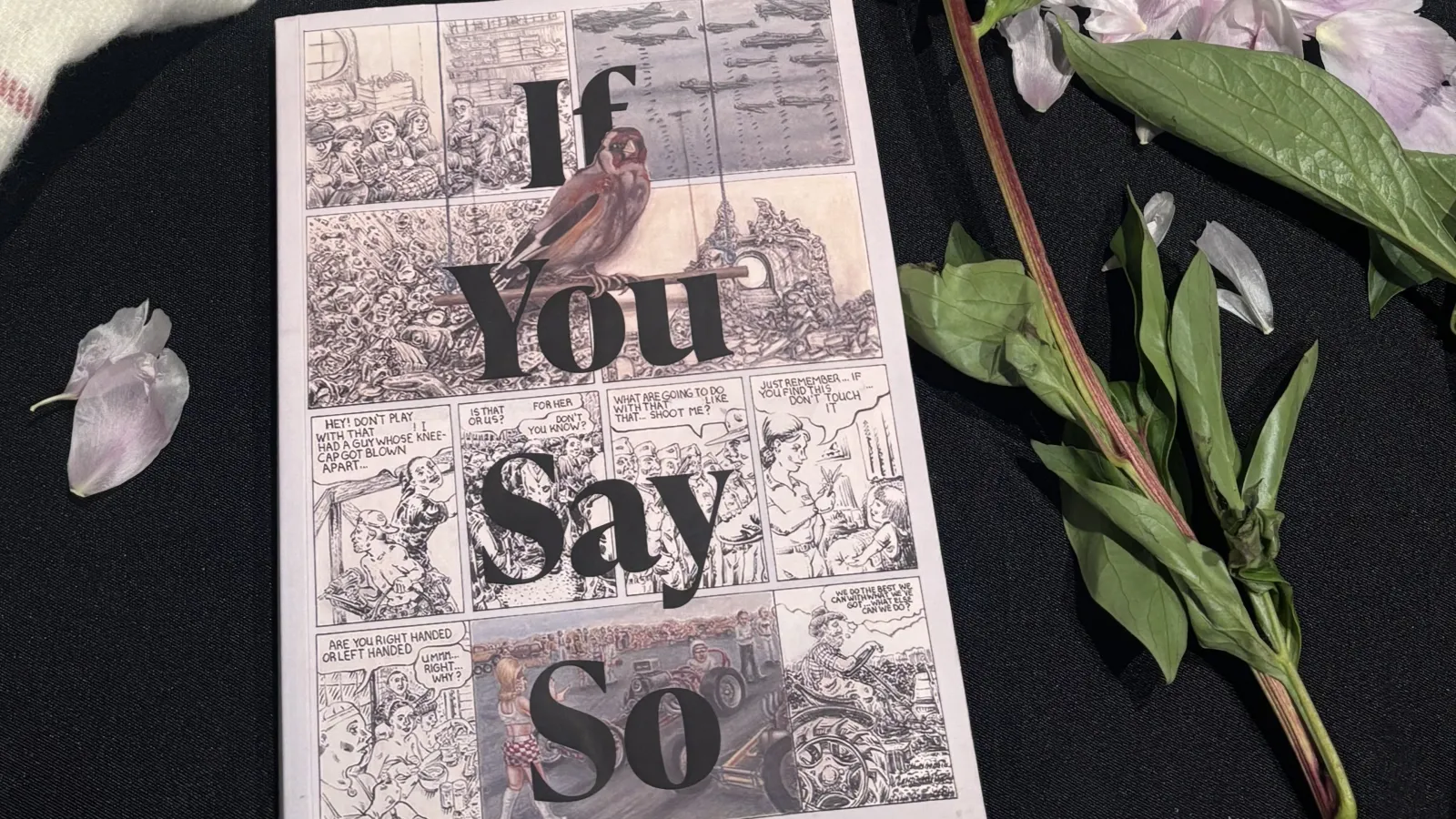
“You’ll Just Know”: A Review of Michelle Herman’s Newest Essay Collection, “If You Say So”

“My loneliness demands my attention too. I tend to it the best I can.” — Michelle Herman
In her latest book, If You Say So, Michelle Herman takes us through a series of autobiographical essays exploring love, grief, and life. As we see her learn to dance, mourn her father, and move into her “old house,” we take a step into Herman’s journey.
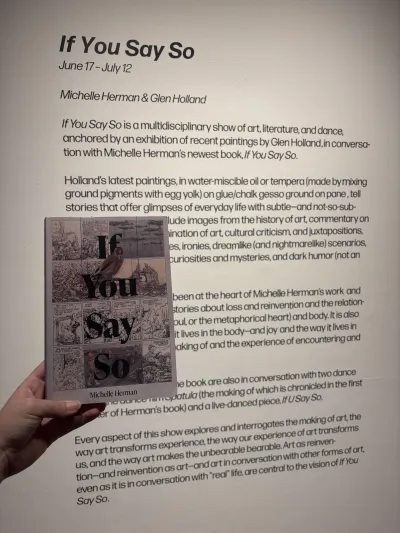
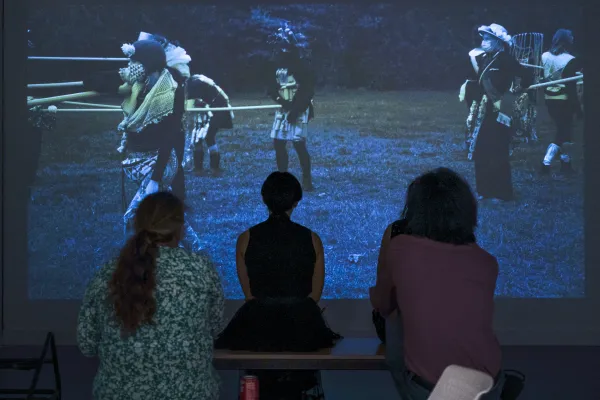
If You Say So starts with a section focusing on Michelle Herman’s relationship with dance. We see the process behind the creation of Spatula, the dance film featured in the If You Say So exhibition at Urban Arts Space, chronicled in the first chapter, “Armed.” Herman then describes her experience starting dance classes at a local studio, Flux Flow, and bringing movement back to being a focal point of her life. The rest of the collection features essays examining other key parts of Herman’s personal life and family history.
A wonderful aspect about this essay collection is that it is relatable while also allowing the reader to dive into the author’s life. While we may not all have Star Wars stickers stuck on a door that will not budge, the average reader can relate to something in their life that tells a story of someone before us—even if we slowly become blind to it. Is it common for our fathers to keep all the important documents of our lives in the back of a closet while his safety deposit box is full of a coin collection? Perhaps not. But we live in a world where all people, even those close to us, surprise us. Sometimes those surprises just take the shape of a disorganized gold bag full of mortgages, important records, and other documents.
This book had me reflecting on a lot of the same aspects in my personal life. Dance stuck out to me in particular. I have dabbled a bit in ballet—not nearly with the same dedication as Herman—and I’ve discovered that it is, in ways, reminiscent of life itself. While ballet classes start with a brief warmup and fine-tuning exercises on barre, most people are given a bit of time in life to acclimate—to fine-tune their qualities—before being sent into the throes of real life (the centre ballet work).
Herman’s writing highlights several of life’s ups and downs. Love and loss can bend and stretch the human soul beyond what we may think possible. In this sense, we are constantly living the plié and relevé of life. At times, it may seem like we will break—or buckle—beneath the weight of it all, as if all of our training and experience stands no chance against the pressure. Learning when to stop in all senses of life is reminiscent of Herman’s experience learning to cook. She would say to her grandmother, “How will I know I know when it’s done?” “You’ll just know,” replied her grandma. Most of the experiences that Herman writes of can be viewed in a similar manner: a metaphor for life itself.

Michelle Herman, uniquely, does not follow a chronological order for these essays. We take jumps along her lifetime. Reading this book is an experience that can best be described as learning a stranger’s past before you meet them. It feels like we are thrown right into Herman’s train of thought—jumping from topic to topic and story to story—as we discover her life. This conversational style benefits the author and the reader.
Michelle Herman uses her writing as a way to fight her loneliness, and the reader is able to seek a similar sense of relief in this chronicle of life stories.
Want to read the book? Many ways to buy or read the book can be found here.