Dancing Through Time: An Interview with the Creators of OhioDance’s Living Archive
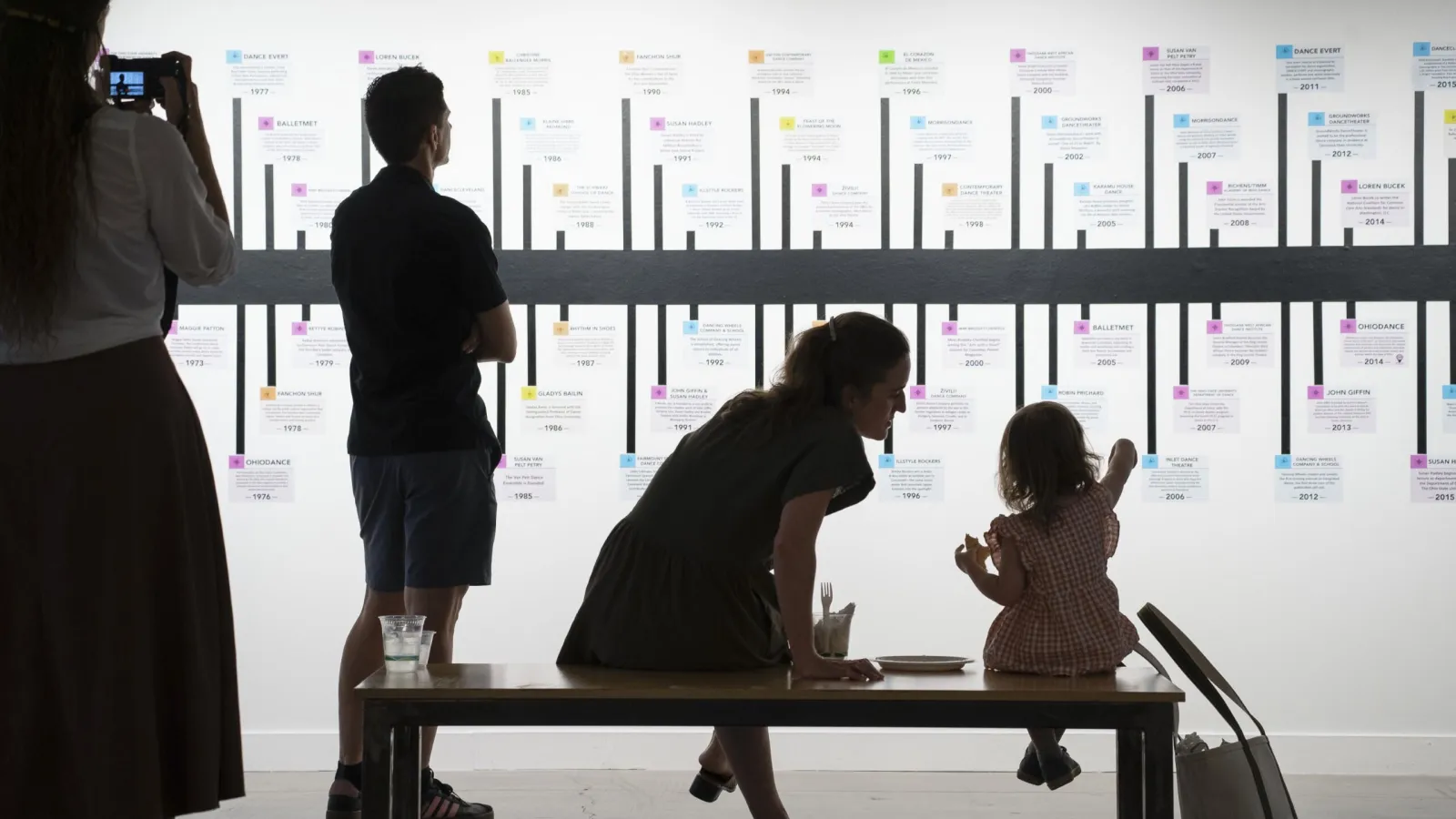
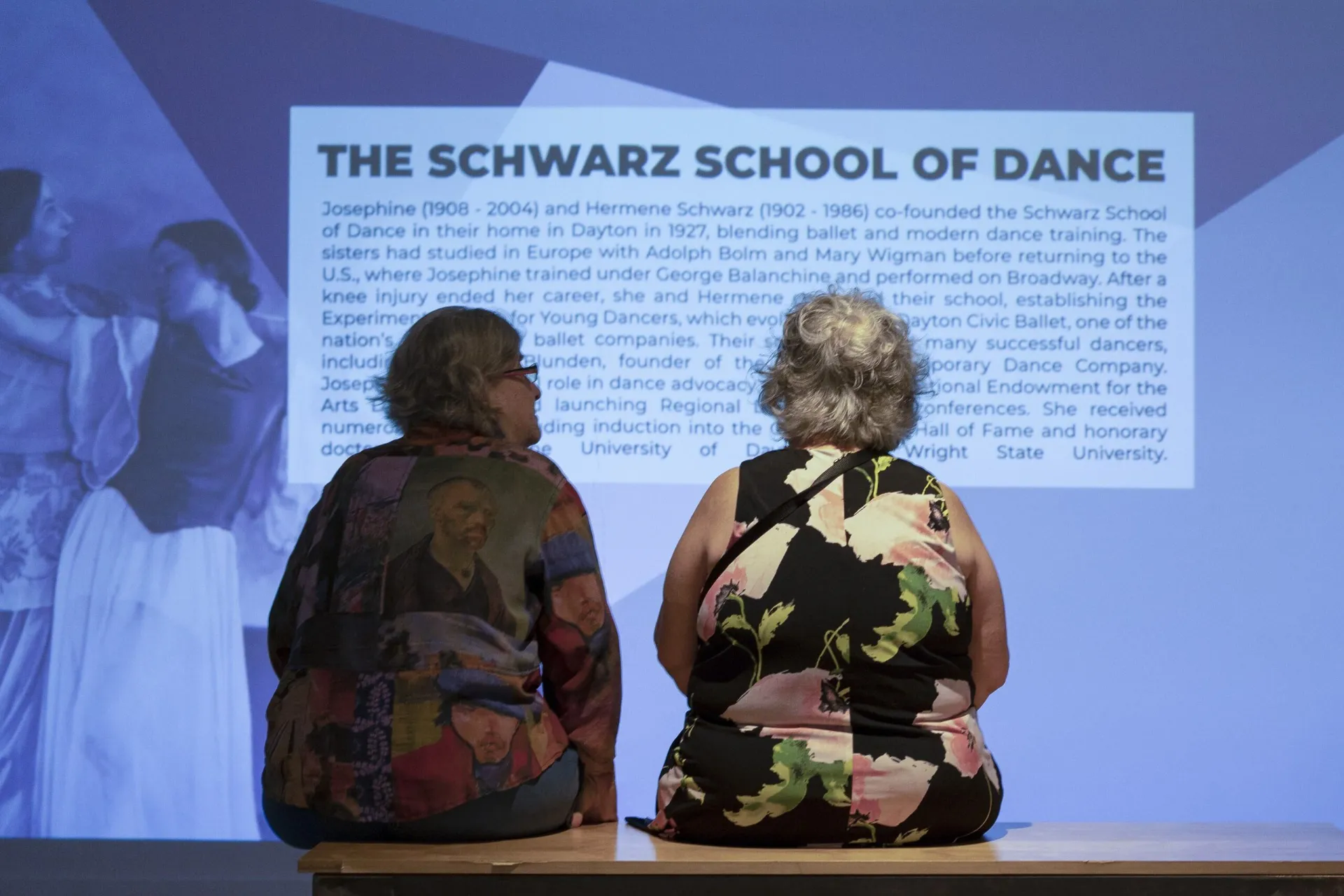
Ohio: A State of Dance is a dynamic, multimedia exhibition that invites visitors to explore the rich and diverse history of dance across the state of Ohio. Through the OhioDance Virtual Dance Collection®, this interactive experience documents and preserves the achievements of dancers, choreographers, and institutions who have shaped Ohio’s vibrant dance legacy. Visitors can engage with a gesture-based interface, explore rare archival footage, and view the award-winning documentary film that brings this legacy to life.
Mackie Mantenieks, an Urban Arts Space Community Engagement Intern, interviewed the three women responsible for the Virtual Dance Collection. Jane D’Angelo is Executive Director of OhioDance and cofounder of the OhioDance Virtual Dance Collection. Oral historian Dr. Candace Feck conducted the research for the interviews in the exhibition, wrote the script for the film, and is an overall consultant on the program. OhioDance Editor & Collections Coordinator Jess Cavender created the design for the exhibit, edited the film, and programmed the digital experience for the touchless interface.
The exhibition will be on view at Urban Arts Space through June 7, 2025, with a special live performance scheduled to cap off the experience on June 5 from 6–8 PM.
What were some of the most surprising or moving moments you encountered while gathering archival materials for the Virtual Dance Collection?
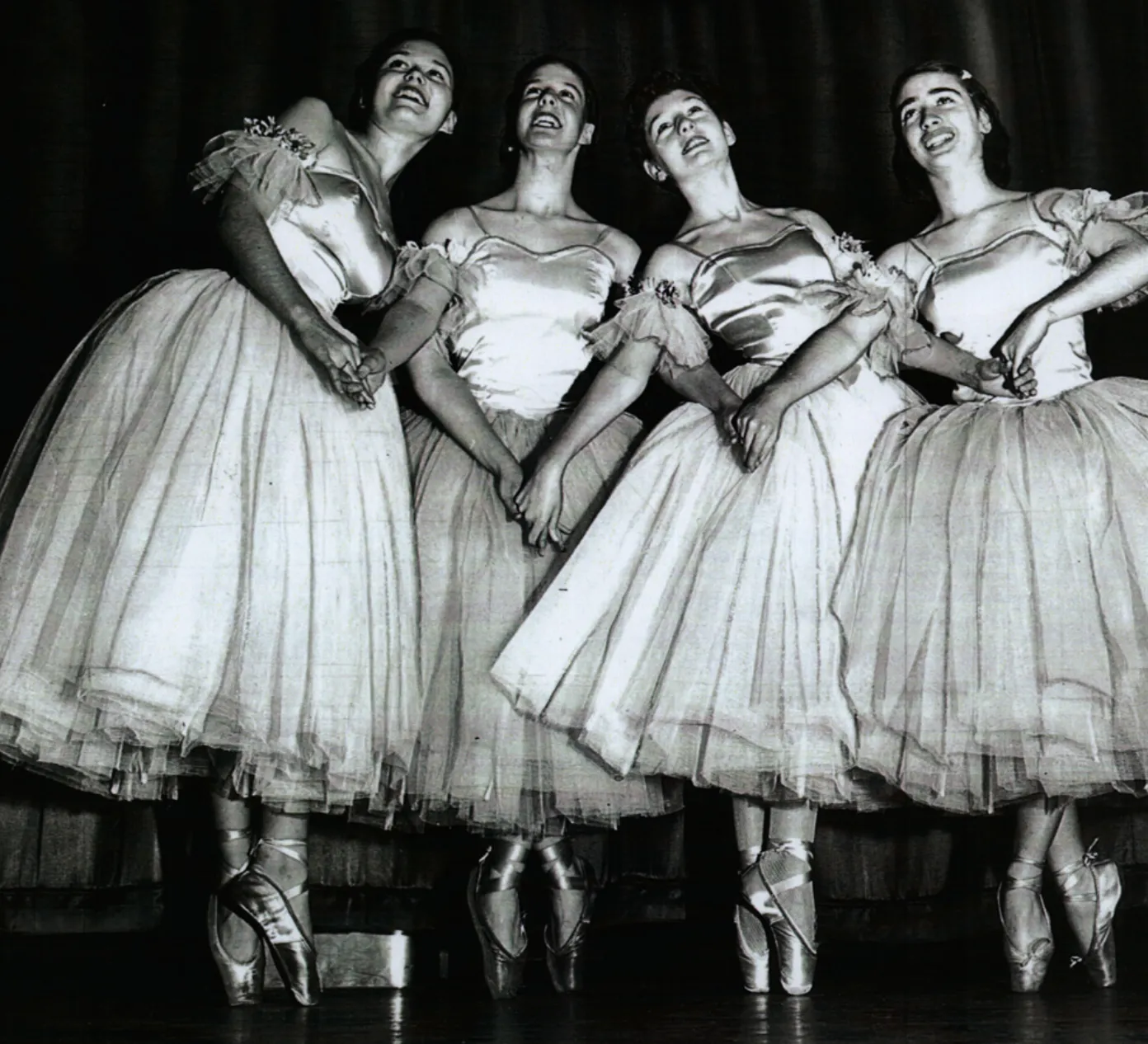
Jane: Gathering archival material for the OhioDance Virtual Dance Collection was a fascinating journey filled with countless hours of discovery and insight into the rich landscape of dance in Ohio. Materials were found in a wide variety of formats and locations—some neatly catalogued in libraries, others tucked away in photo albums, boxes, and even damp attics. Often, I would scan photos one by one, while Jess Cavender dedicated time to editing and preserving them. Among the many unexpected discoveries, one stood out: while sifting through boxes at Toledo Ballet, I came across a photograph labeled “Gloria Steinem.” To my surprise, it featured a young Steinem in a flowing tutu, posing with two other dancers. It was a powerful reminder of the unexpected intersections between the arts and broader cultural history. This photo is now featured in the gallery at https://vdc.ohiodance.org/exhibits/toledo-ballet/.
Given Ohio’s rich and diverse dance history, how did you prioritize which stories, dancers, or institutions to feature?
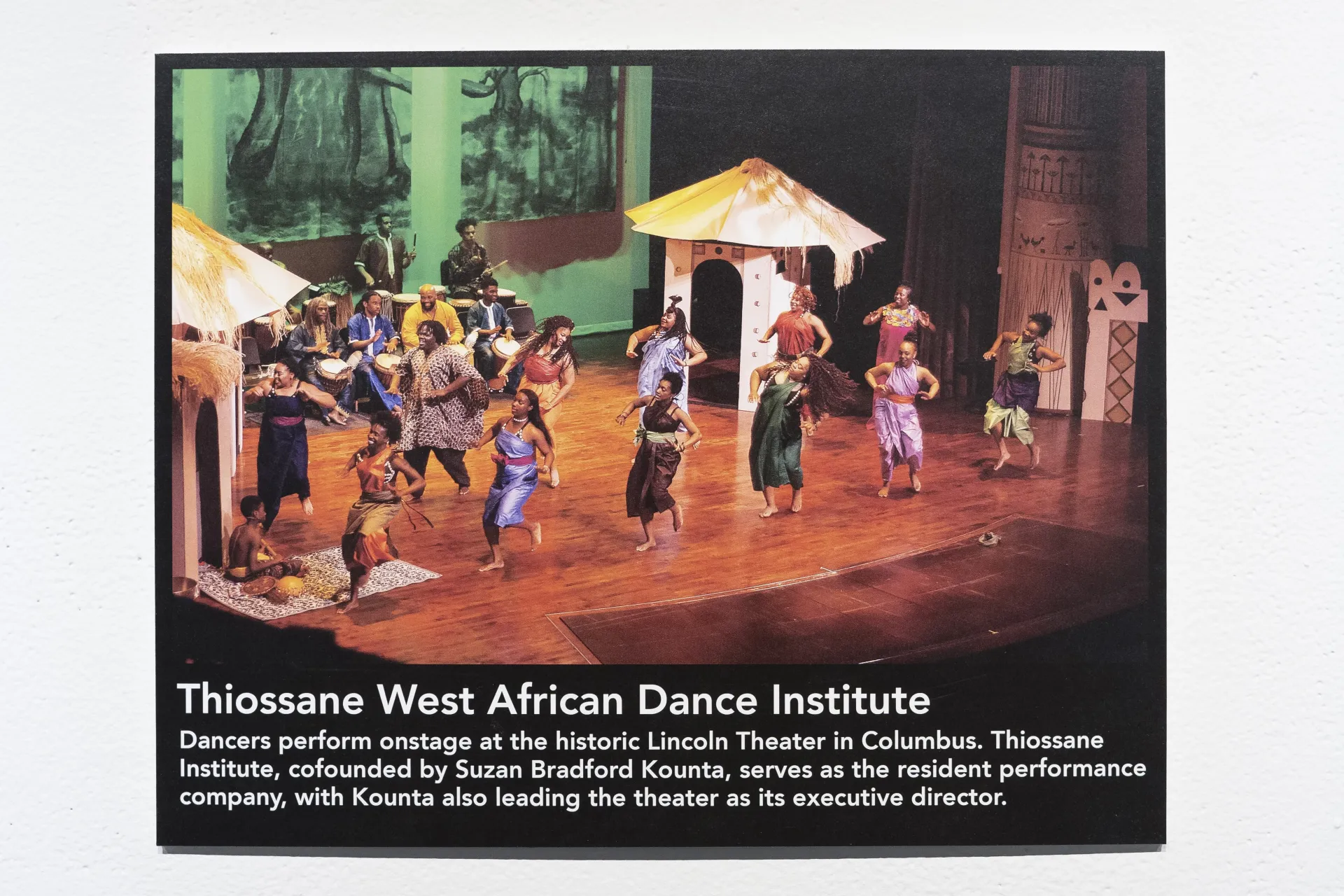
Jane: The project began in 2014, initiated by the OhioDance Board under the leadership of myself and Board President Rodney Veal. It launched with a prototype website, a series of roundtable discussions across the state, and research based on community recommendations to highlight key developments in Ohio's dance history. Each year, a call for nominations is sent to over one thousand community members through various email channels. To ensure broad representation, I also personally reached out to individuals across the state. A committee of 3–5 board and community members reviewed the nominations and selected new additions to the site. Those not selected remain eligible for consideration in future years. The collection prioritizes a wide array of dance genres, organizations both large and small, and representation from diverse geographic regions. Ultimately, the goal is to reflect the breadth and vitality of Ohio’s dance legacy.
Can you walk us through what the early planning process looked like in 2014? What were the biggest challenges in launching a digital archive like this from scratch?
Jane: In 2014, OhioDance began formalizing the idea of developing a digital archive, starting with a prototype of the website. The early planning process included engaging the community through roundtable discussions to gather input and recommendations. The first of these was held in 2015 at the OhioDance Festival at BalletMet and was facilitated by Karen Bell. During the session, Karen introduced the project and invited participants to write down names of individuals or organizations they believed should be included in the collection.
Following that initial session, five additional roundtable discussions were held across the state. In 2015, these took place at Ohio University in Athens, Oberlin College, and the Warner Main Space, and featured a panel discussion with Brenda Way, Artistic Director of the Oberlin Dance Collective (ODC), and Dr. Candace Feck. Another session was held at the University of Dayton’s ARTSTREET. In 2016, roundtables continued at Ohio Northern University in Ada and Kenyon College.
During this time, I was focused on writing grants to support the project. In 2016, we received funding from the National Endowment for the Arts, the Ohio Arts Council, the Greater Columbus Arts Council, and the Columbus Foundation. These funds enabled us to build a team and begin developing the collection in earnest.
That same year, OhioDance assembled a dedicated and passionate team to move the project forward. The team included me; OhioDance Board President Rodney Veal, host of the OhioDance podcast; oral historian Dr. Candace Feck; and media team members Jessica Cavender (Media Manager) and Megan Davis Bushway (Videographer).
Due to the overwhelming number of recommendations and a desire to launch meaningful content, we selected ten individuals and organizations to feature in the initial release. This was no small feat, but we successfully completed the soft launch at the 2017 OhioDance Festival, again held at BalletMet.
As of 2024, the collection features forty-two highlighted individuals and organizations. OhioDance is proud to have been the first to collect, archive, and publicly celebrate the diverse dance practices, practitioners, and institutions that have shaped the history of dance on a statewide basis. We hope this initiative inspires other states to undertake similar efforts to preserve their own dance legacies.
Were there any particular interviews or narratives that challenged or reshaped your understanding of Ohio’s dance history?
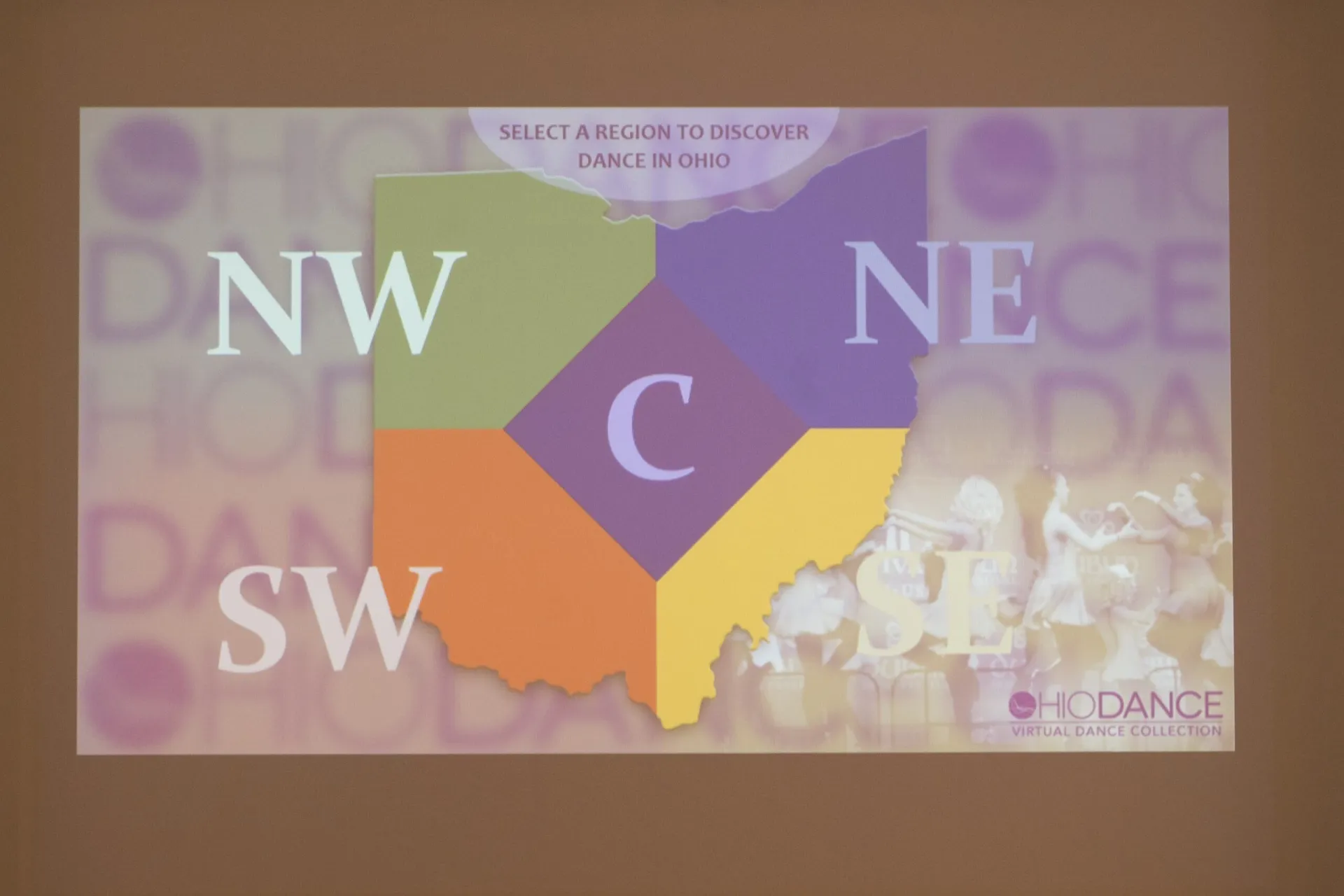
Candace: My appreciation for the richness and diversity of Ohio’s dance history has expanded like an ever-widening accordion with each set of interviews. Though two institutions outside of central Ohio were already familiar to me from earlier places of my own residence in the state, I discovered almost immediately how Columbus-centric my awareness had really been, with each new and unfamiliar region shedding welcome light on its own dance practices and histories. Also, those institutions or artists that were based in particular cultural systems of identity were largely outside of my knowledge. I am thinking here of Bettye Robinson in Columbus, Elaine Gibbs Redmond in Cleveland, and El Corazon in Toledo, among other examples.
How did your background in cultural anthropology shape your approach to this research?
Candace: A cultural anthropology sensibility of qualitative research describes my approach to this collection like a hand in a glove. This training, to observe others with curiosity and an open mind, has served me well as I have interacted with more than 125 individuals in this project. Each interview has constituted a process of discovery, and the unfolding experience of each conversation always amplifies and particularizes that discovery. The interview protocols that I develop for each encounter are always fueled by advance research, yet they are designed to be simple and open-ended. I prefer to engage in deep listening with each informant and to allow space for the subject to guide the direction of the interview— and I delight in the surprises that invariably arise!
What inspired you to use a touchless interface?
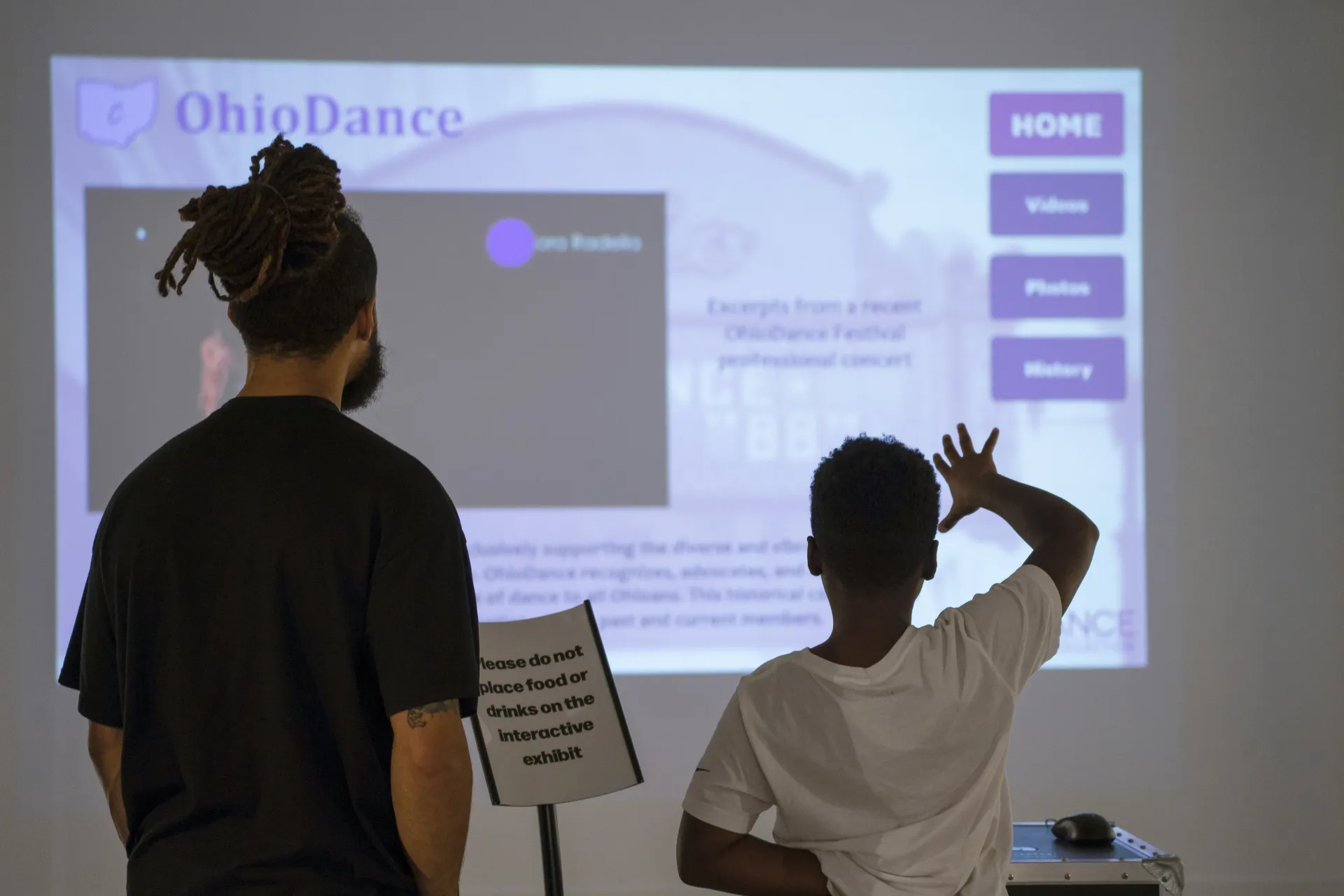
Jess: We knew we wanted to create a different kind of interface for the collection—one that could travel to various community spaces like libraries, schools, and galleries and operate offline. Our goal was to provide a new entry point to the collection while also engaging viewers in a more physical, interactive way. We initially envisioned a touchtable; with such a vast amount of visual material in our archive, it seemed ideal to let people explore it by physically moving, zooming, and interacting with the images and videos using their hands.
However, we started this work in late 2019, and just as we began developing the program side of the exhibit, the pandemic struck. By mid-2020, it became clear that a shared, public touch surface wasn’t a desirable option during a public health crisis. So, we reimagined the interface. I’ve long been interested in movement tracking and had experience working with various related devices and software. I suggested we explore mid-air gesture control—tracking users’ hand movements to replace the traditional mouse cursor. This way people could engage with the exhibit without needing to physically contact anything, and we ran with it.
Can you share a behind-the-scenes story or moment from developing the interface where things either clicked or almost fell apart?
Jess: There have been several highs and lows throughout the development process. The unexpected switch to the gesture-based interface actually offered a deeper alignment with our focus on the moving body, so there is some serendipity at play, but it was staying flexible and adapting to the present moment that led us to the final design. The interface has a bit of a learning curve and requires users to be in the moment and focused on a physical exploration to learn how to control the cursor with their hand, which felt like a meaningful extension of our goals.
We went through multiple technical phases and, naturally, plenty of troubleshooting. To be honest, there were days when Jane’s confidence in the project was what kept me going. I had moments of doubt—wondering if people would really have the patience for such a novel interface. We did make a mouse available as an alternative for users who preferred not to engage with gesture control, but in the end, Jane was right. I’ve seen so many people experience real moments of joy and curiosity while playing with the interface. It invites a kind of focused, physical exploration that is uncommon in digital applications—and I’m genuinely glad we chose this path.
Did this project turn out exactly like you planned it to? If anything changed along the way, what caused you to create that change?
Jess: The core purpose is the same as day one, but the actual system has transformed quite a bit. Happily, after the major shift from touch to touchless interaction, things went quite smoothly. The main challenge was laying out the entire collection—which was no small task—in a completely new visual and interactive format. Beyond that, most of the work involved the usual troubleshooting that comes with any computer system. Our initial setup simply wasn’t powerful enough to handle both the massive volume of collection material and the motion tracking processing. So, we built a fully custom computer to run the system and upgraded our infrared cameras. Since then, everything has been running smoothly, though I'm all ears for feedback and forever thinking of ways to enrich the experience.
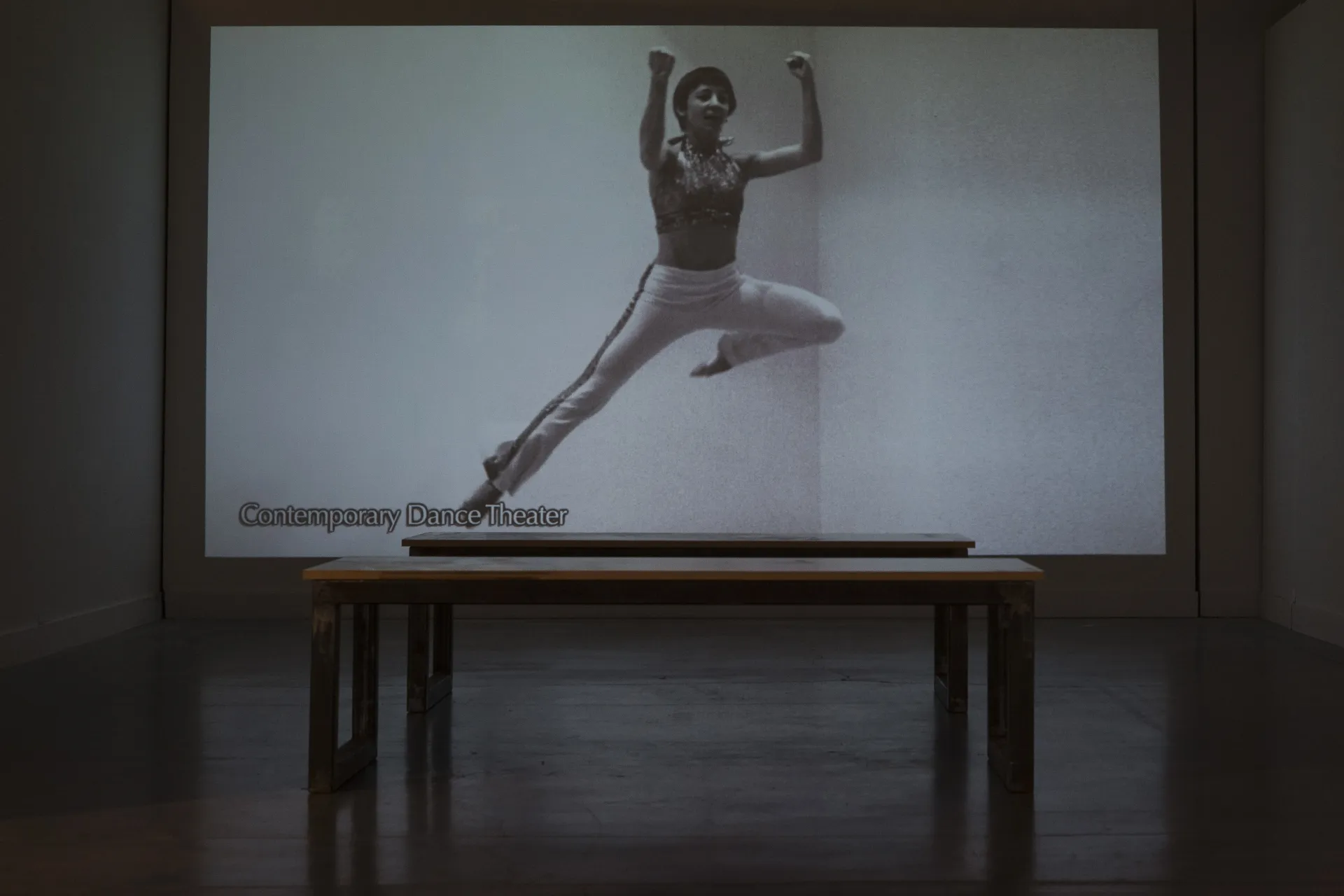
Visit Urban Arts Space to experience Ohio’s dance history through June 7, or explore more about the Virtual Dance Collection at vdc.ohiodance.org/.