Thurber House: The Legacy of Author James Thurber
As Urban Arts Space Community Engagement Interns, our days commonly feature site visits and collaborations with various arts and culture organizations around Columbus. My first site visit earlier this year was Thurber House—the home of the renowned humorist and cartoonist, the late James Thurber. Popular short stories of his include "The Secret Life of Walter Mitty," "The Catbird Seat," and many more that are distinguished by their ability to coax out the absurdity of everyday life. "The Catbird Seat," for example, is about filing department head Erwin Martin, who successfully ascends the corporate ladder by making an absolute fool out of himself in front of his superior before denying her factual recall of events to make her look unhinged, resulting in her termination.
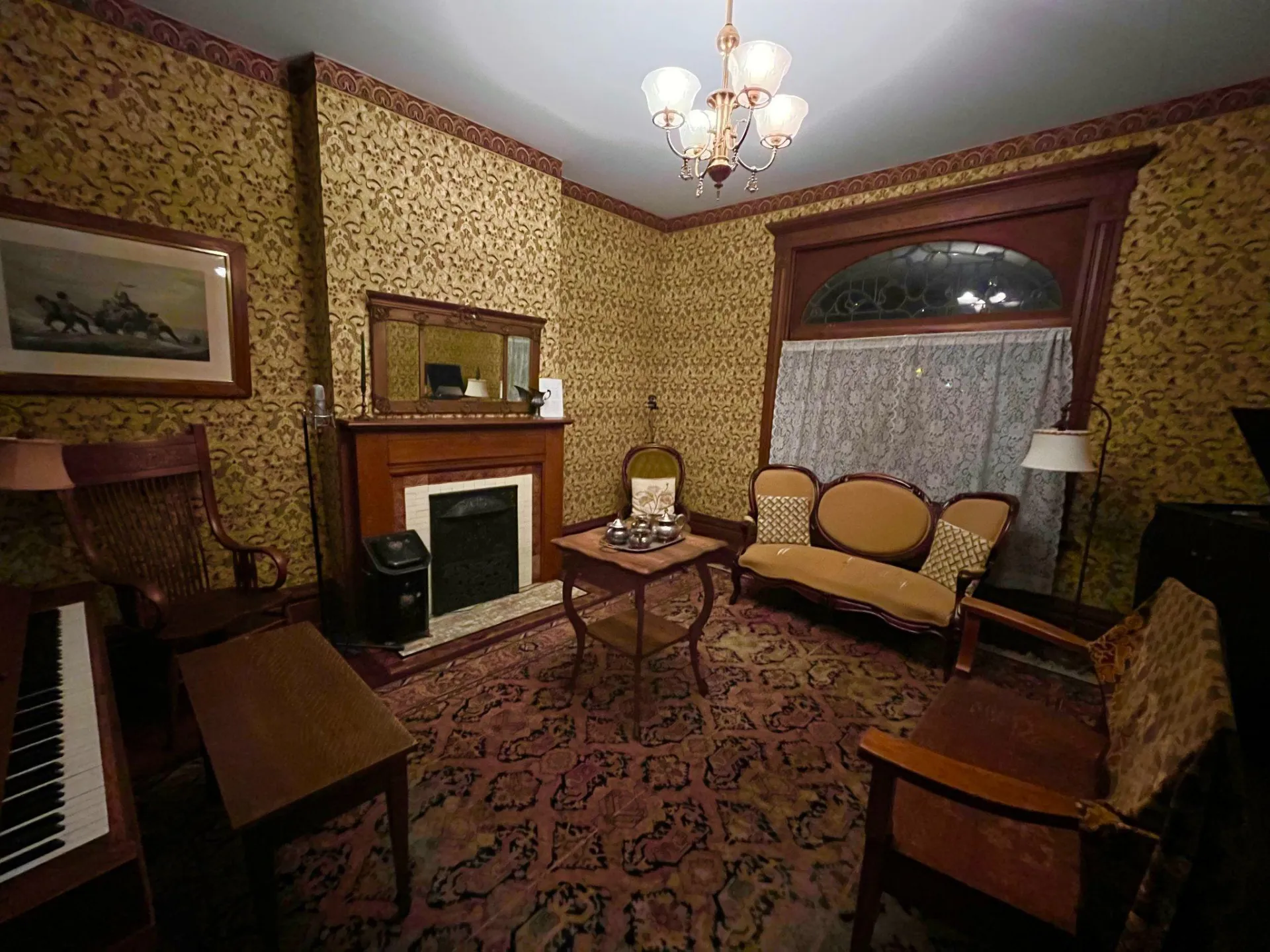
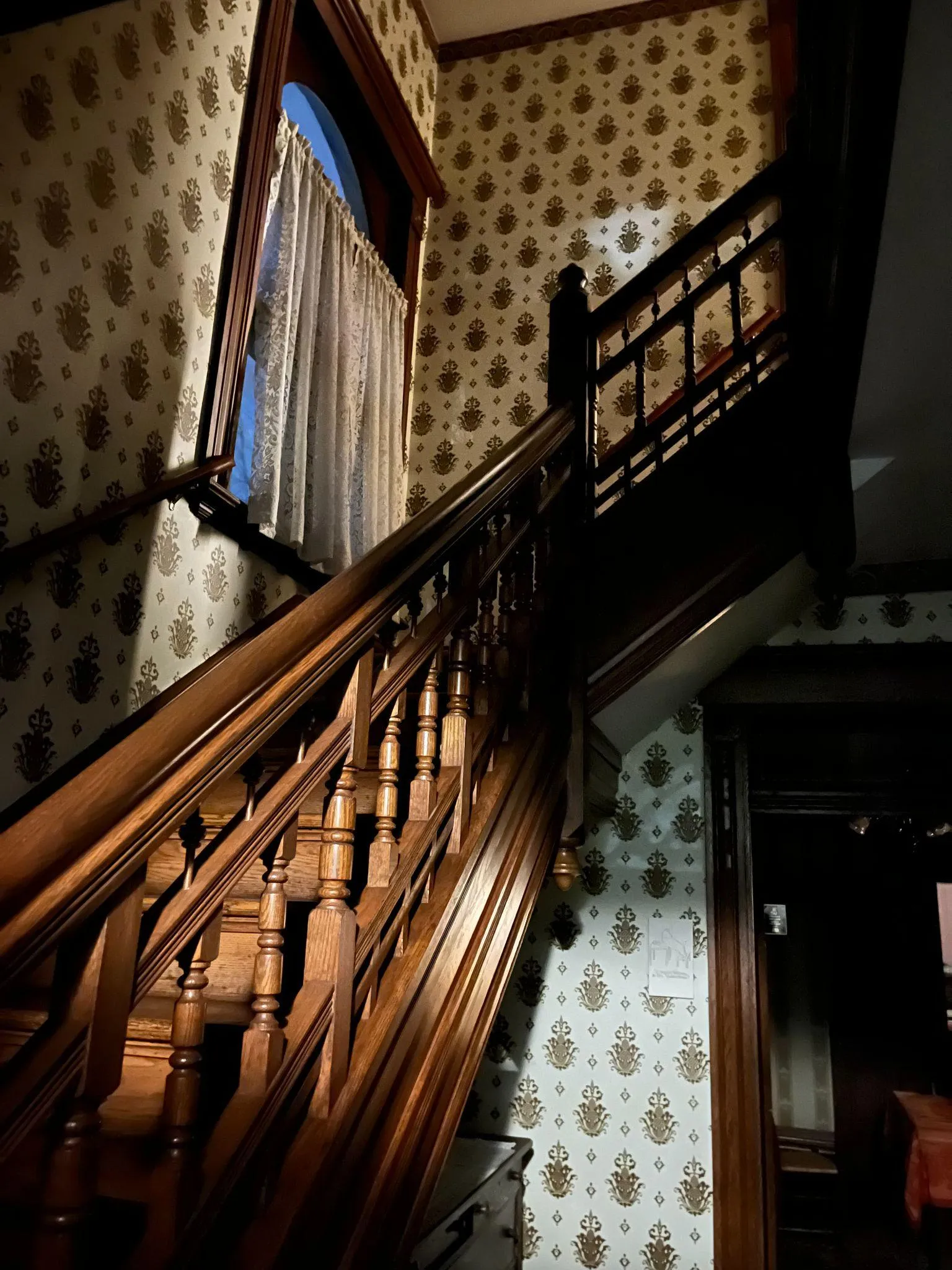
Walking through the doorway of Thurber House gave me a distinct feeling, one I later understood to be as if I were being placed by a giant hand in the entrance of a dollhouse. The house was built and decorated in the style of Folk Victorian, the standard for well-to-do Americans: dark brick, green trims on the outside, damask wallpaper. The furniture was carved out of antique mahogany, a piano on one wall, a sewing table on another.
While attending Ohio State as an undergraduate, Thurber wrote for The Lantern and The Sundial Humor Magazine as editor-in-chief before close friend E.B. White removed Thurber’s doodles from a trash can and submitted them to The New Yorker. Thurber was initially brought on to The New Yorker as a staff editor before transitioning to reporting and writing. The style of The New Yorker was prominently featured in Thurber House, framed and hung in the form of both his visual artwork and columns published in the newspaper.
Besides short stories, James Thurber contributed hundreds of stories and graphics to The New Yorker magazine, which shaped its trajectory, laying the roots from its free-flowing, bold graphics to its features of working-class Americana. Today, the Thurber legacy endures as a literary hub both for local Columbus authors and those who visit, with book-themed events for the public, writing workshops for aspiring authors, and their annual award show for the Thurber Prize of American Humor, previously awarded to writers David Sedaris, Patricia Lockwood, and Trevor Noah.
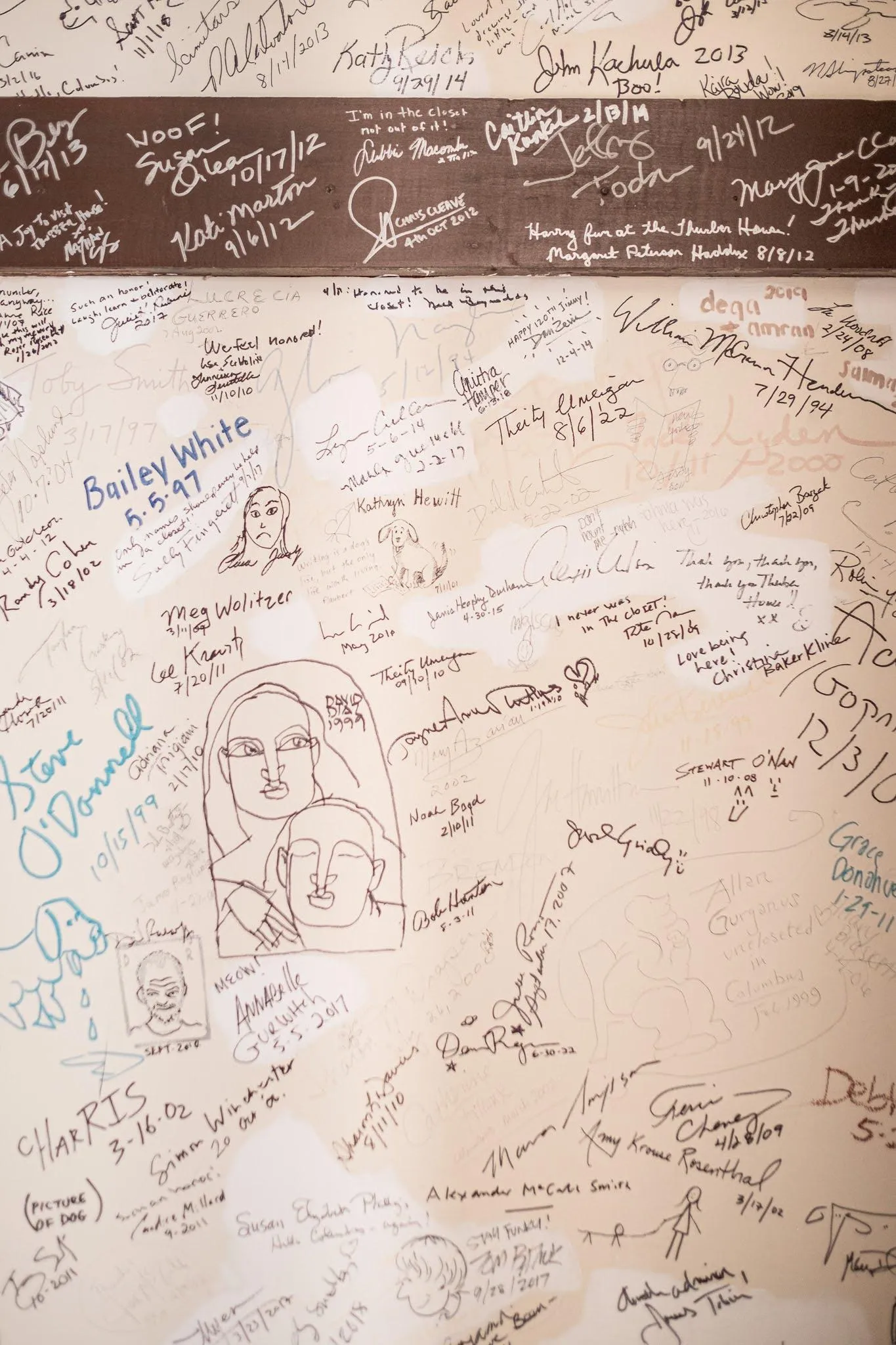
Speaking of writers, the austerity of the interior ended up being a foil to certain “messier” elements—this is a closet in one of the upstairs bedrooms, boasting signatures of authors who have visited the house throughout the years.
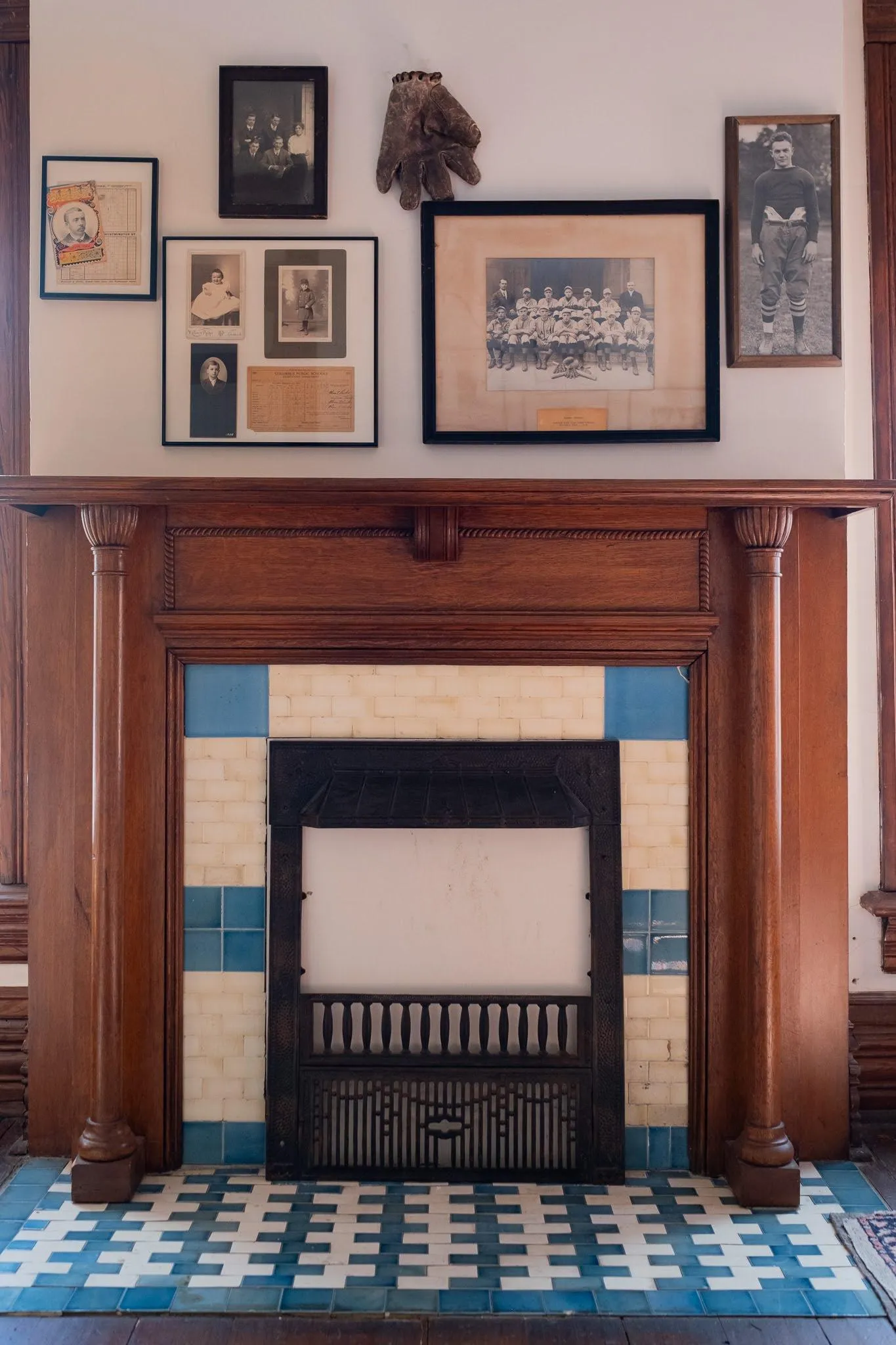
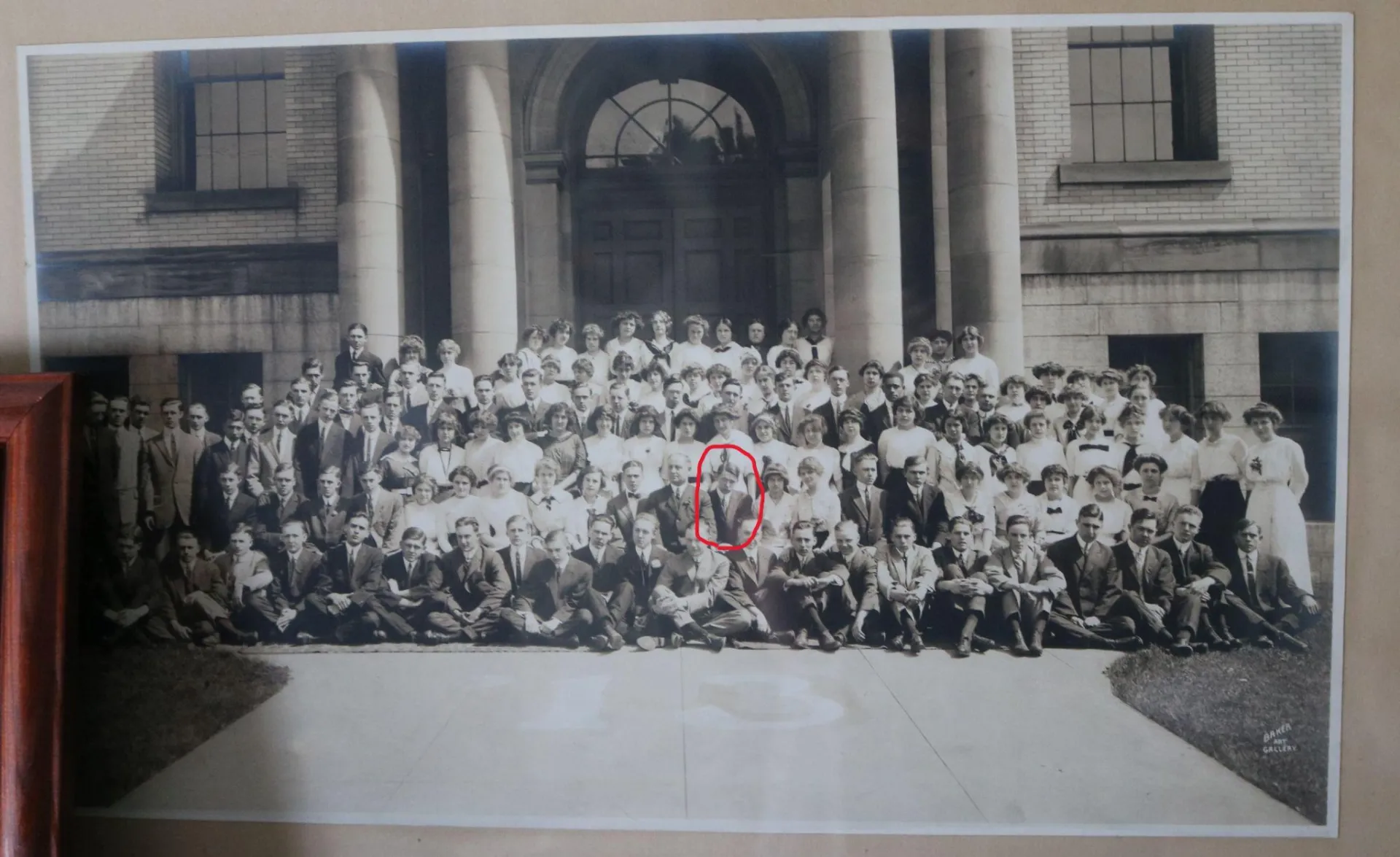
As I was led up the stairwell, a few school pictures in black and white caught my eye. In one of them, an elementary school-aged Thurber looks into the camera with his one right eye, the other patched up, with an expression glaringly serious for a kid his age. He never liked having his picture taken, I was told.
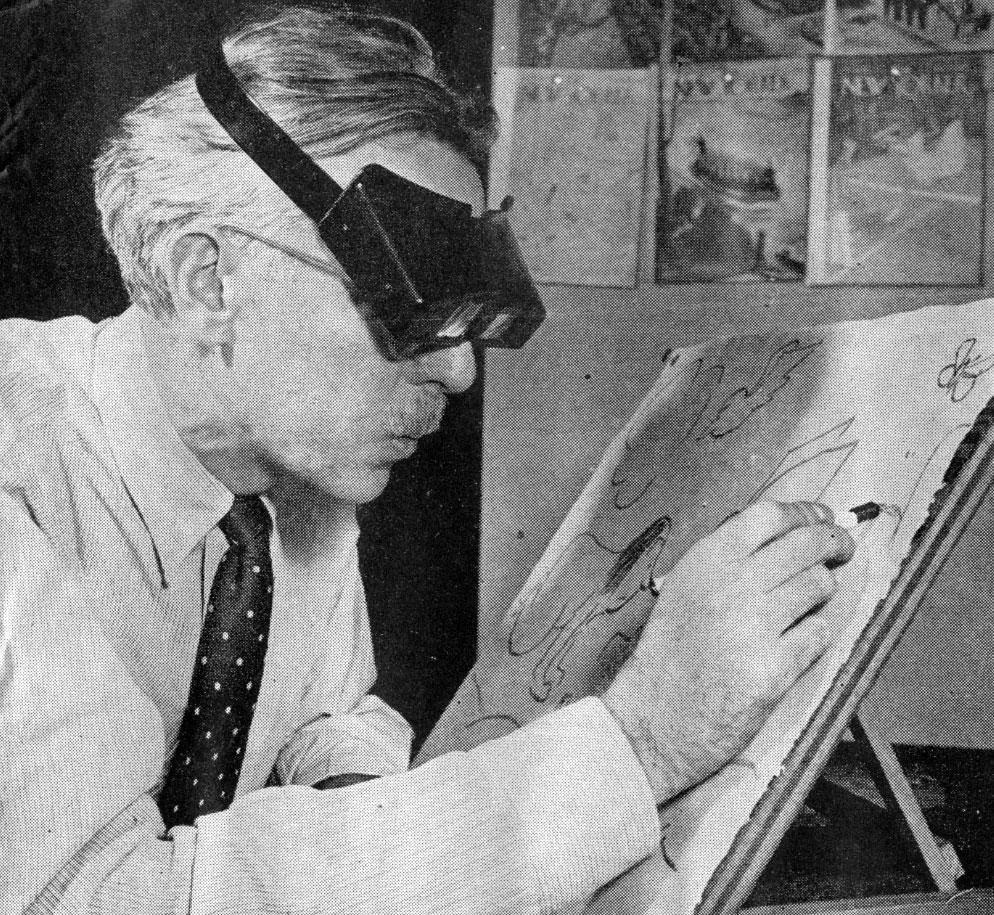
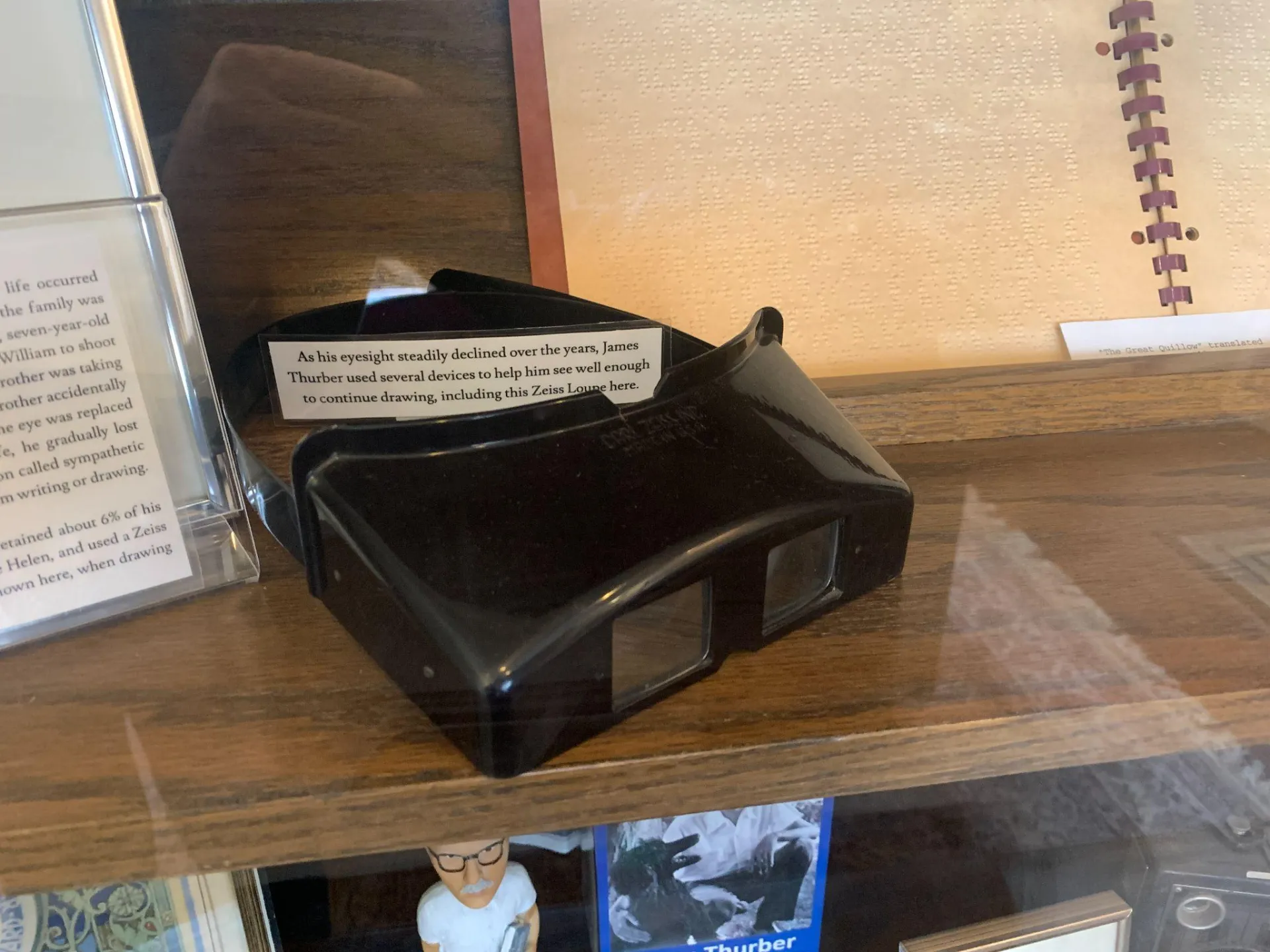
Up until his younger brother William’s arrow lodged itself there during a childhood game, Thurber’s left eye worked fine. He was blinded in his left eye at age seven, which triggered a progressive blindness in his right as well over the next few decades under a condition called ophthalmia. A cabinet on the upper level of the house contains a bulky pair of goggles, resembling a VR headset, which he wore while drawing to accommodate his degenerating eyesight.
I turned to one of my guides through the Thurber House, Deputy Director Leah Wharton. “Do you think he resented William for a long time?” I asked this, thinking he must have—even if it was really nobody’s fault—as a cartoonist deprived of arguably his most important of the five senses.
“There was nothing to suggest he ever did." Leah shrugged. “But William still felt guilty about it all his life, even though James had always forgiven him.”
As Leah and Meg—the Children's Education Director at Thurber—led us back down the staircase and into the living room, I continued to absorb the little details of the house. The blankets and tapestries were vintage, floral-embroidered, silk and cotton. I had a strange thought that they were once folded with a finality, would stay folded forever, and if I reached out, some natural law would stop my fingers from lifting one of the edges. There was a painstaking but intimate deliberateness to everything, as if each wooden frame were polished on the hour, each piece of furniture placed according to optimized angles calculated out of reverence for what’s past. You could make the case that the staff were meticulous in their upkeep; after all, the way they presided over the house made it clear from the start that the most important artifact in this particular museum was the museum, the house, itself.
In meeting the women who held the honor of personally preserving Thurber House from within, I admired their talent for etching in these walls the irony that made the late artist himself, from the perspective of a visitor who knew little prior, seem so dimensional. Thurber’s work taught his readers in his lifetime, those swept by his legacy in the present, and those who will follow even without knowing, that there is a sort of lightness in it all: the adventures in suburban domesticity, the absurdity of the mundane, even when life seems stilted.
In Fall 2026, Thurber House will be an Urban Arts Space externship placement site as part of the Mellon Foundation Community Engagement Internship Program, led by Internship Program Coordinator Ashley Martin.